New Delhi:
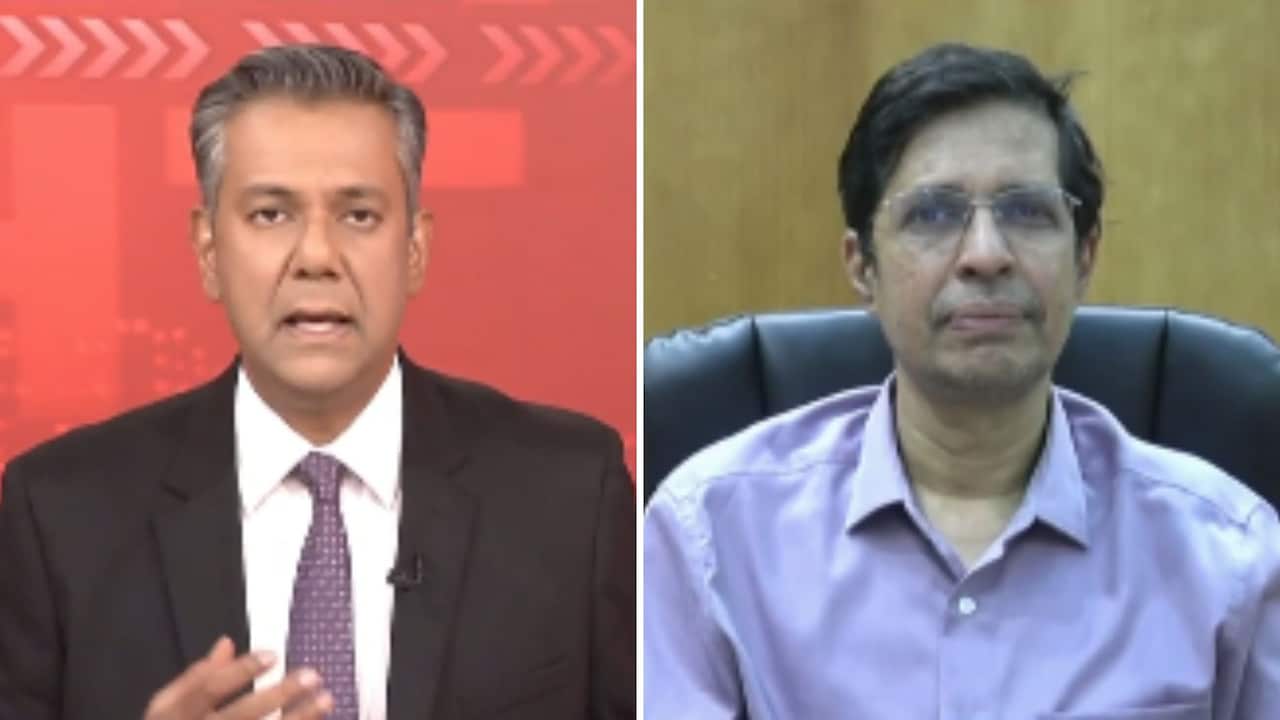
The NEET paper leak happened at the stage where people were hired to set the question papers and not during printing or distribution, IIT Madras Director V Kamakoti told NDTV on Monday.
Kamakoti is one of the experts on Prime Minister Narendra Modi’s exam reforms task force, brought in to fix vulnerabilities that compromised India’s examination system.
“In NEET 2026, the point is that there was no leak after the question paper left the NTA (National Testing Agency) premises and then it was printed, it was put in boxes, circulated and given to that many examination centers,” he said.
“Unfortunately and shockingly, the leak happened by the question paper setters. This is the biggest issue here,” he added, indicating a collapse of institutional integrity and not a technological failure.
Other exams such as JEE Main, JEE Advanced and GATE have successfully integrated heavy encryption, air-gapped networks and rigorous security checks over the last decade, NEET 2026 bypassed these technical firewalls entirely.
“For any operation, there is a root of trust. The root of trust for any examination is the question paper setter. The major challenge before our task force is how do we fix this particular problem,” Kamakoti said. “Today, the primary issue is human integrity, and that is the major thing here.”
The inclusion of former Intelligence Bureau director Tapan Deka in the task force shows the government sees the paper leaks as coordinated criminal operations and not just an administrative lapse.
“Once the question paper setter is compromised, how does the question paper leak? That can be an organised crime,” the IIT Madras chief said, referring to the complex logistics that are needed to distribute a leaked paper without immediately raising red flags. “Tapan ji’s presence in the committee will certainly add value about how organised crimes can happen in this entire process.”
The task force is looking at shifting NEET from a vulnerable single-session physical paper format (using optical response sheets) to a multi-session computer-based test (CBT).
With over two million medical aspirants taking NEET, a CBT format would need breaking the exam into multiple sessions over several days, a model already in the JEE using a mathematical “normalisation” process.
“If multiple sessions can be permitted, then we can go through a computer-based test,” Kamakoti said, adding capacity could be scaled to conduct the exam in two or three large sessions.
“The only challenge now is to set that many question papers. That’s very, very important,” he said.
The task force to bring about a radical overhaul of the NTA and reform the examination system is led by Infosys co-founder Nandan Nilekani.