New Delhi:
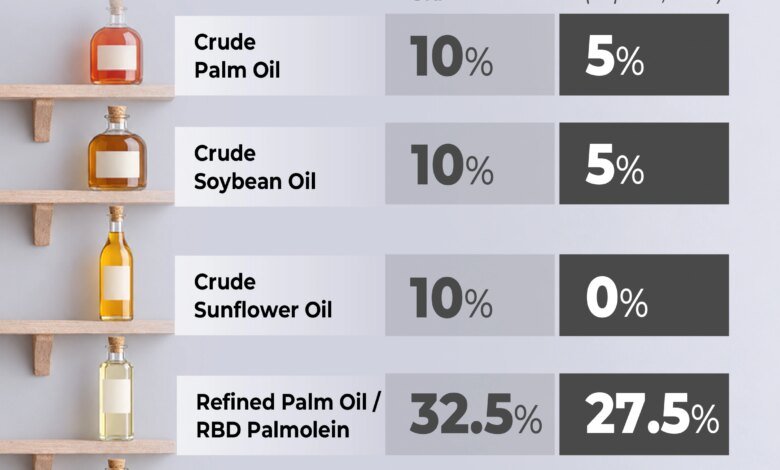
The government on September 24 cut the Basic Customs Duty (BCD) on major edible oils, citing rising international prices and higher domestic landed costs.
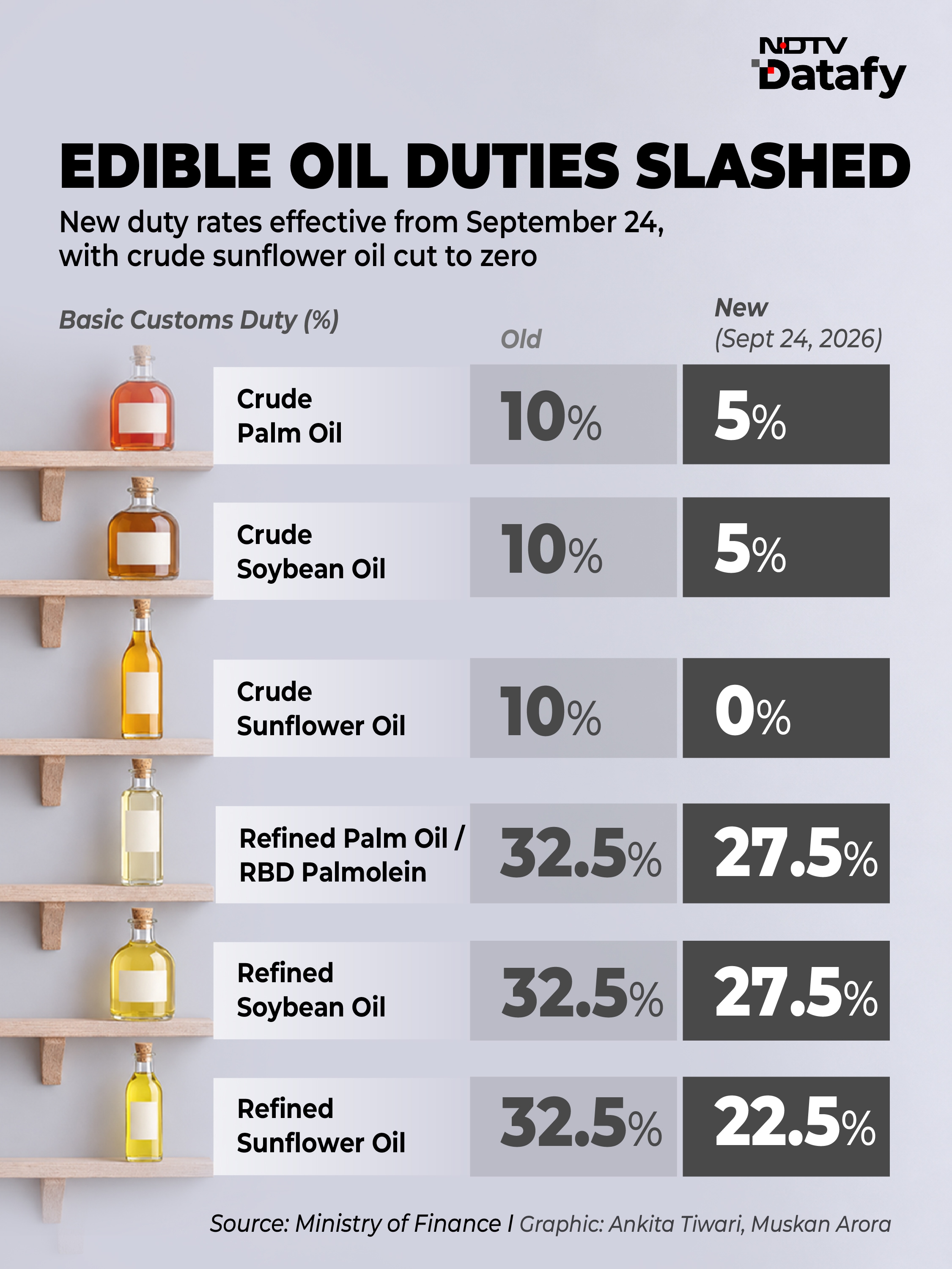
The duty on crude palm oil and crude soybean oil was reduced from 10 per cent to 5 per cent, while crude sunflower oil saw the duty cut to zero. Duties on refined oils were also reduced. The government said the move was aimed at moderating domestic prices and providing relief to consumers.
But how important is this duty cut for India?
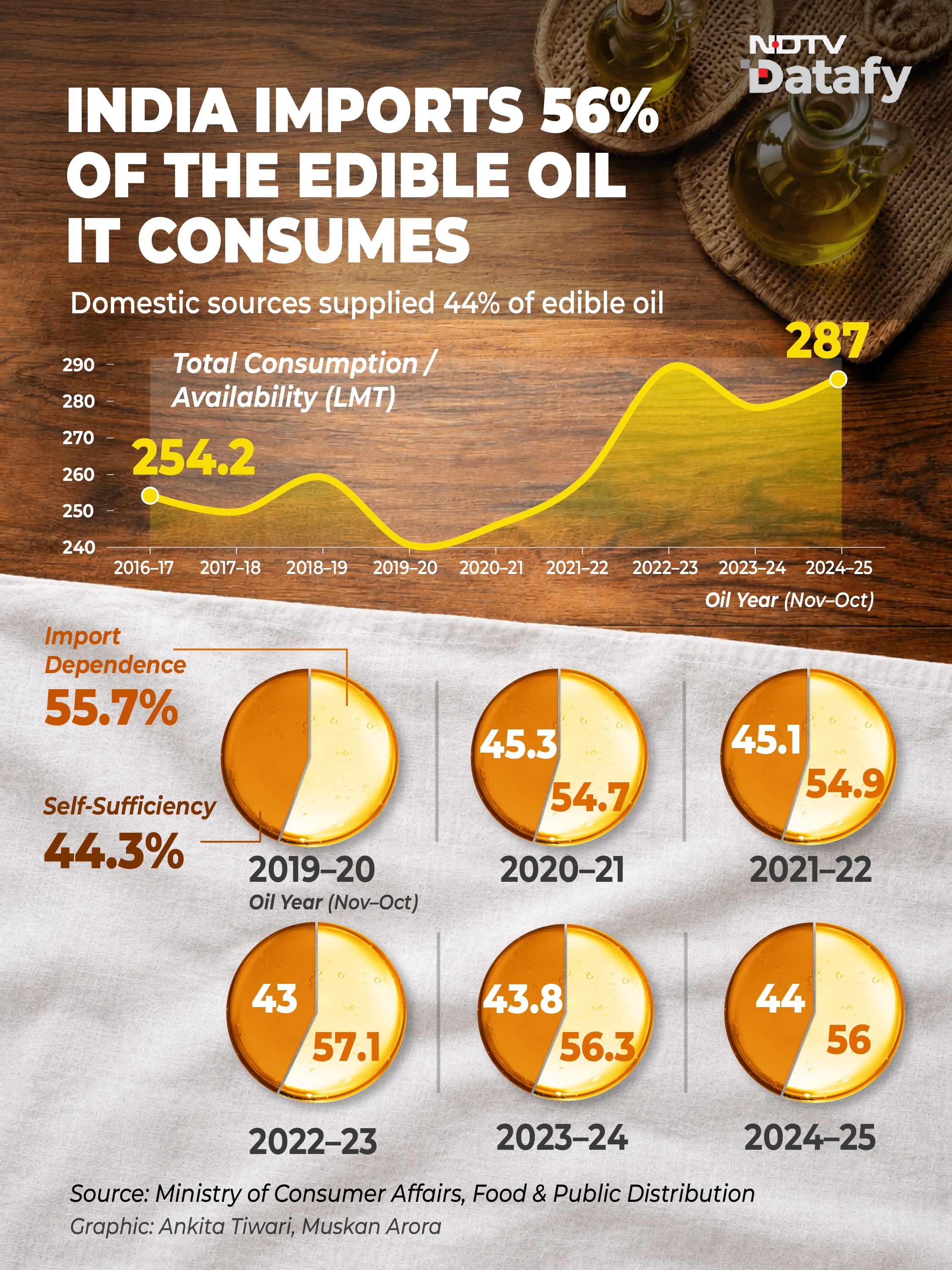
The country remains heavily dependent on imports to meet its edible oil requirement. In 2024-25, imports accounted for 56 per cent of India’s edible oil availability, while domestic sources met only 44 per cent.
Import dependence has remained above 54 per cent in every oil year since 2016-17. It was 60.3 per cent in 2016-17 and stood at 56 per cent in 2024-25.
Palm oil is the largest imported edible oil. India imported 75.17 lakh tonnes of palm oil in 2024-25, including crude palm oil and RBD palmolein.
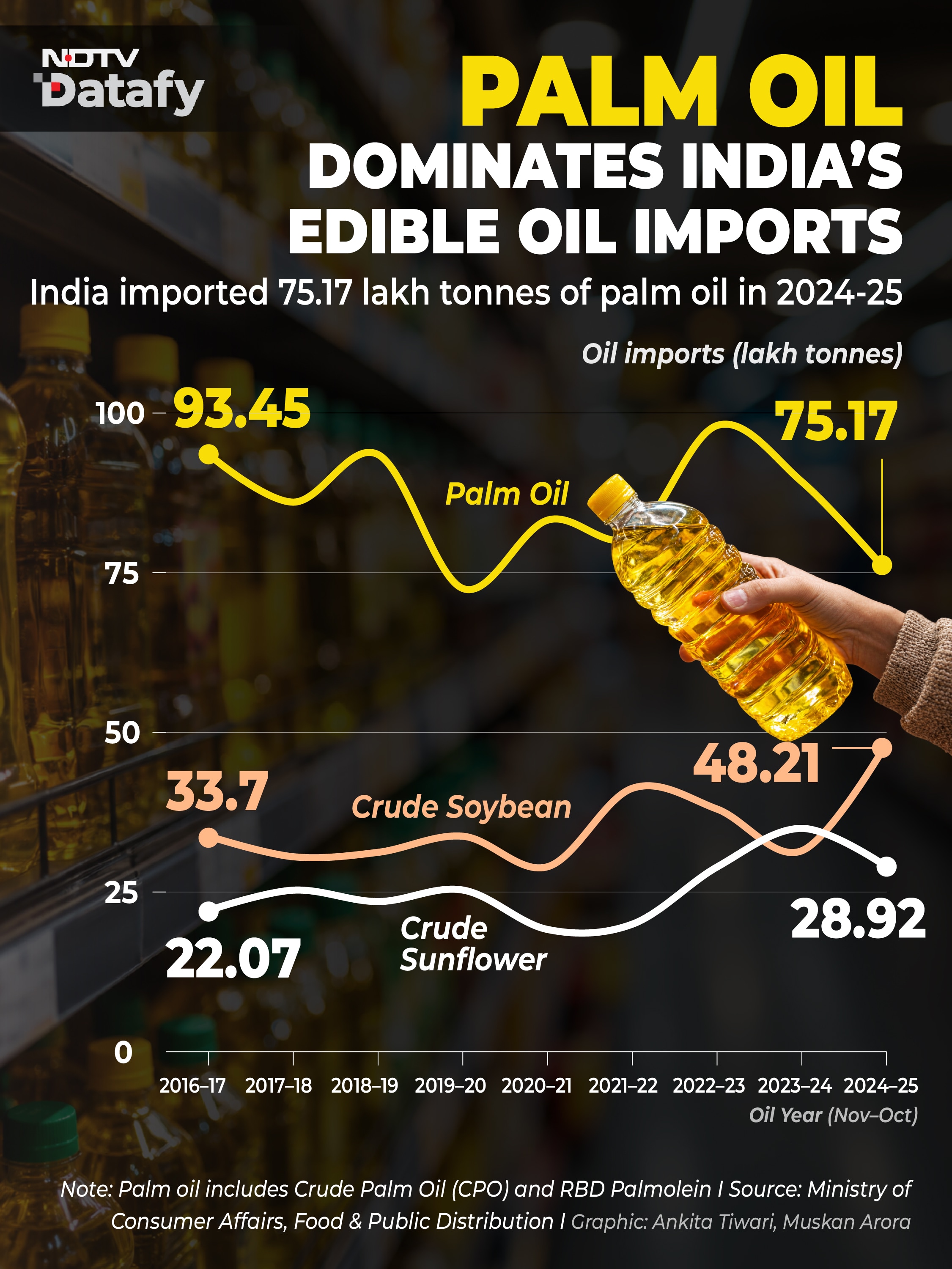
Crude soybean oil imports stood at 48.21 lakh tonnes, while crude sunflower oil imports were 28.92 lakh tonnes. Together, these three oils make up most of India’s edible oil imports. The government also notes that palm oil accounts for the largest share of India’s imported edible oils.
How prices changed
The rise is visible across all three major packed edible oils, but the pace differs. Sunflower oil saw the sharpest increase, with its average retail price rising from Rs 161.93 per kg on October 1, 2025, to Rs 192.46 per kg on October 1, 2026. This is an increase of Rs 30.53 per kg, or 18.7 per cent.
Palm oil also recorded a significant increase during the same period. Its average retail price rose from Rs 131.65 to Rs 153.60 per kg, an increase of Rs 21.95 per kg, or 14.3 per cent.
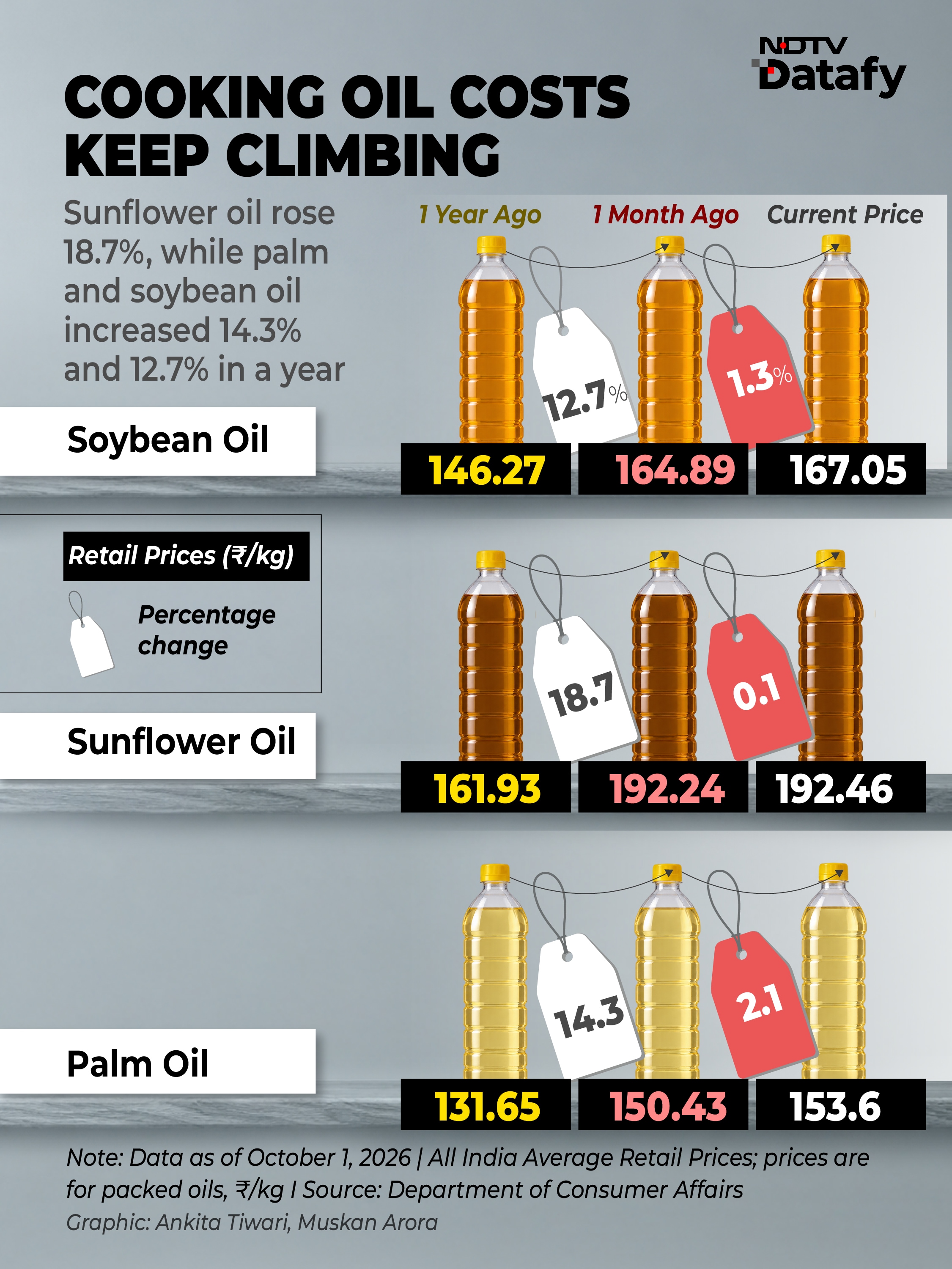
Soyabean oil saw a relatively smaller rise, but prices still increased by Rs 20.78 per kg, from Rs 146.27 to Rs 167.05 per kg, marking a 12.7 per cent increase.
The latest monthly movement, however, has been much smaller. Between September 1 and October 1, 2026, sunflower oil prices were almost unchanged, rising just 0.1 per cent. Soya oil increased 1.3 per cent, while palm oil recorded a 2.1 per cent increase. This shows that the sharp rise in retail prices has largely occurred over the year rather than in the most recent month.
This means the import duty cut can matter because a large part of India’s edible oil supply comes from abroad. But retail prices are not determined by import duty alone. International oil prices, the rupee-dollar exchange rate, freight, refining, packaging, distribution and margins also affect the final price. So, if retail prices do not fall immediately after the duty cut, that alone would not be surprising.
The key question is how much of the lower import cost is passed on to consumers.