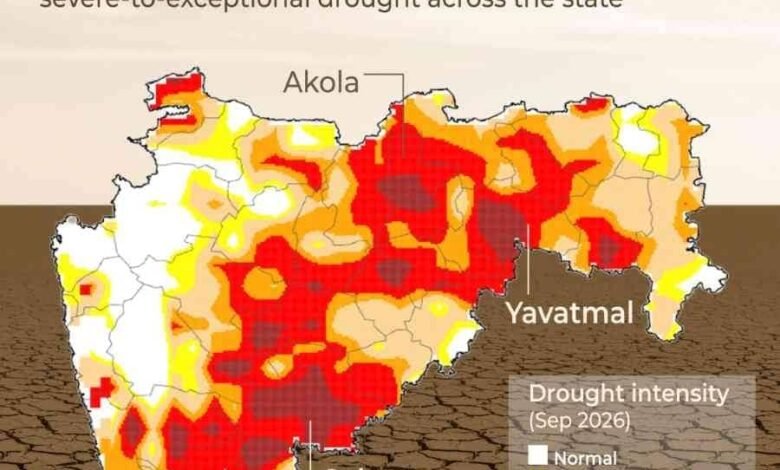
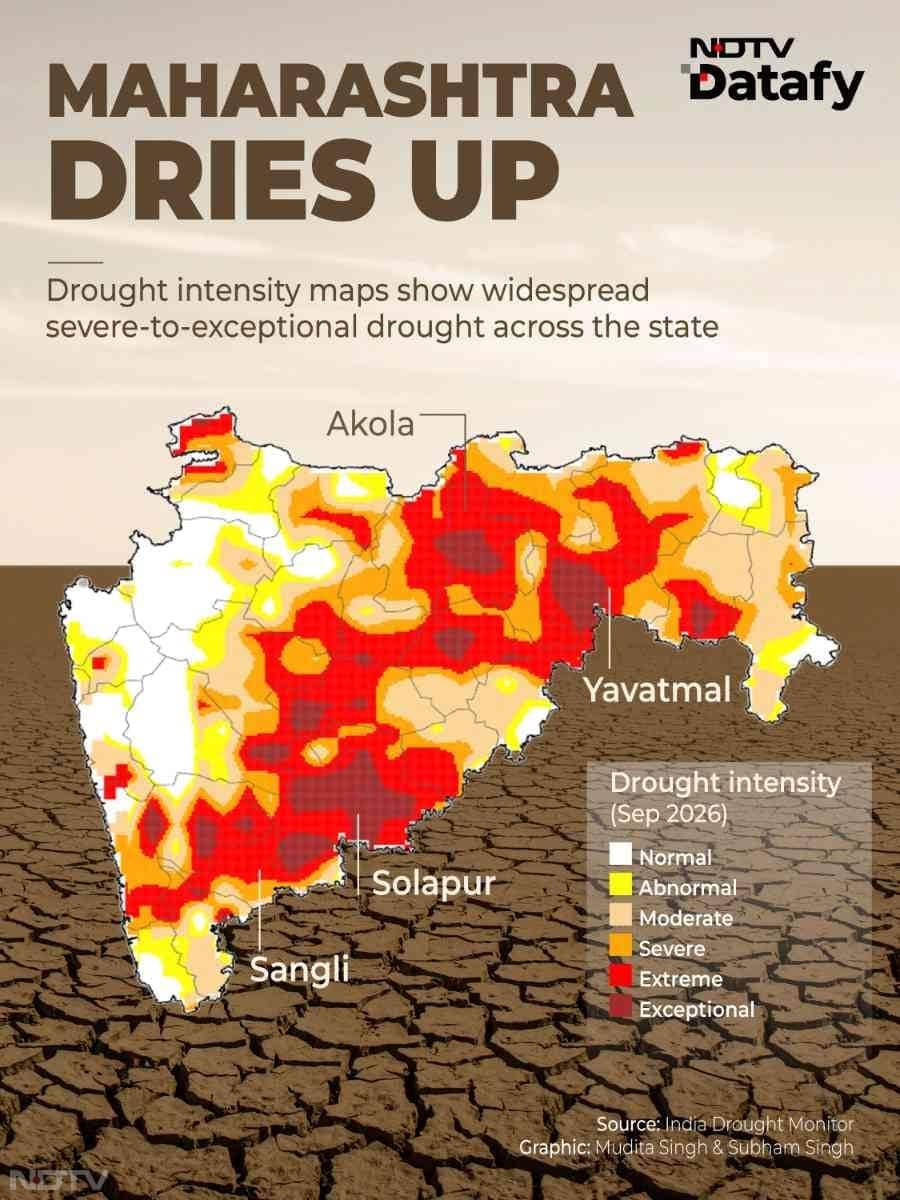
It’s only October, but parts of Maharashtra are already facing mounting water stress. With soaring temperatures and a weak monsoon adding to concerns over dwindling reserves, the state government has rolled out emergency measures to conserve water.
Steep fines for wastage, FIRs against those stealing water and mandatory supply cuts are among the measures being implemented in cities from Nagpur to Pune and Chhatrapati Sambhajinagar. The restrictions amount to a form of water curfew, as authorities scramble to make dwindling supplies last.
The impact of El Nino and an inadequate monsoon have brought Maharashtra to a critical juncture, with water scarcity emerging not just as a public health and livelihood concern, but potentially a law-and-order challenge.
Read | Maharashtra’s 10% Water Cut From October 16, Industries Told To Reuse Water
Even in October, temperatures have soared beyond 38 degrees Celsius. The ground is parched, dam levels are under pressure, and the threat of a wider water crisis is being felt across urban centres. Directives emerging from three major cities-Nagpur, Pune and Chhatrapati Sambhajinagar-point to increasingly stringent measures in the days ahead.
Nagpur: Rs 5,000 Fine For Wasting Water
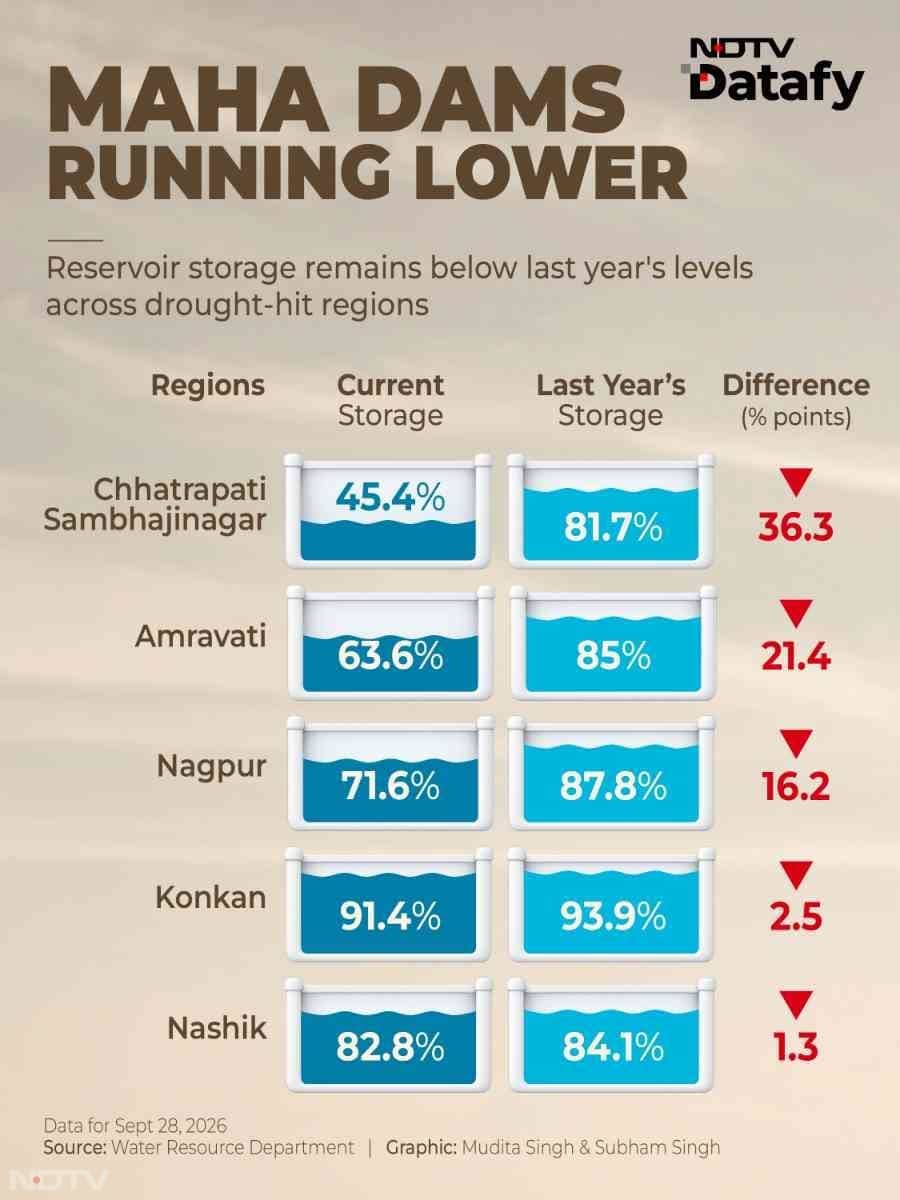
In Nagpur, the state’s second capital, popularly known as the City of Oranges, reservoirs are holding only 58 per cent of their capacity. The Nagpur Municipal Corporation (NMC) has announced a series of restrictions to curb consumption.
Wasting water will no longer be treated as a minor lapse. Those found violating the rules could face hefty penalties, while illegal connections and water-meter tampering could invite criminal action.
Read | Maharashtra Deploys 611 Water Tankers Amid Drought, Central Team Visits State
The key measures in Nagpur include:
Rs 5,000 fine: A penalty of Rs 5,000 will be imposed for each instance of water wastage, including washing vehicles, cleaning streets or courtyards, watering gardens and using potable water for construction.
FIRs against water theft: Raids will be conducted to detect illegal tap connections and tampering with water meters. FIRs will be registered against offenders.
Legal connections and water meters: Camps will be organised at the zonal level to facilitate legal connections, while water meters will be made mandatory for every connection.
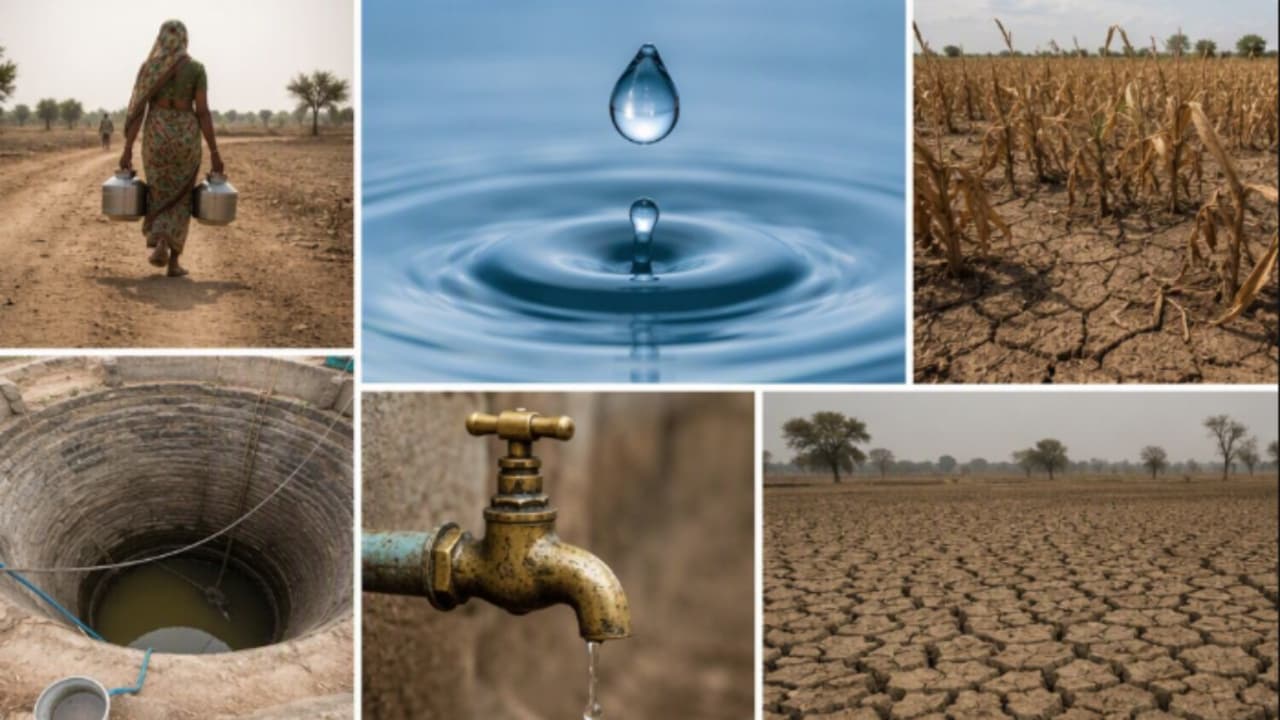
To ease the pressure on dams, old wells will be cleaned and equipped with solar-powered pumps. Recycled water from sewage treatment plants will be used for watering parks and construction activities.
Pune: Thursday Water Cuts
The situation is equally concerning in Pune, Maharashtra’s cultural and IT hub. As of October 12, the Khadakwasla dam chain, which supplies water to the city, held 26.22 TMC of water.
The state government has directed a reduction of at least 10 per cent in water consumption from October 16, with the aim of stretching available reserves until August 31, 2027.
The proposed measures include:
Dry taps on Thursdays: A city-wide water supply cut will be implemented every Thursday, beginning October 15.
Washing centres shut: Government and private vehicle-washing centres have been directed to remain closed until further notice.
Restrictions on swimming pools and gardens: The use of potable water for construction, gardening and swimming pools will be prohibited.
No washing vehicles or public spaces: Washing vehicles, courtyards and footpaths with municipal or borewell water will be prohibited.
Housing societies under scrutiny: Housing societies must keep their sewage treatment plants operational and use treated water for gardening and flushing. FIRs will be registered against those found using illegal connections, while residents have been urged to report leaks promptly through the PMC Care platform.
Chhatrapati Sambhajinagar: Jayakwadi Loses 1.649 Billion Litres A Day To Evaporation
While Nagpur and Pune are tightening restrictions to curb water wastage, the situation in Chhatrapati Sambhajinagar, in the drought-prone Marathwada region, presents another challenge: the sheer volume of water being lost to evaporation.
The Jayakwadi Dam, the region’s largest reservoir and a crucial source of water for the city, is losing an estimated 1.649 million cubic metres of water to evaporation every day. That is equivalent to approximately 1.649 billion litres.
The figure is particularly alarming given the persistent heat, with temperatures even in October climbing beyond 38 degrees Celsius.
To put the loss in perspective, the amount of water evaporating from the dam in a single day is equivalent to roughly seven days of consumption for the city’s 1.8 million residents.
Chhatrapati Sambhajinagar requires between 200 and 230 million litres of water per day (MLD). This year, 184 million cubic metres (MCM) of water has been reserved for the city.
With temperatures remaining high and water reserves under pressure, the challenge for Maharashtra’s cities is no longer simply about managing consumption. It is about ensuring that the water available today lasts through the months ahead.
(With Inputs from Mohsin Shaikh in Chhatrapati Sambhajinagar, Sanjay Ramakant Tiwari and Pravin Mudholkar in Nagpur; Ajinkya Patil in Pune).