New Delhi:
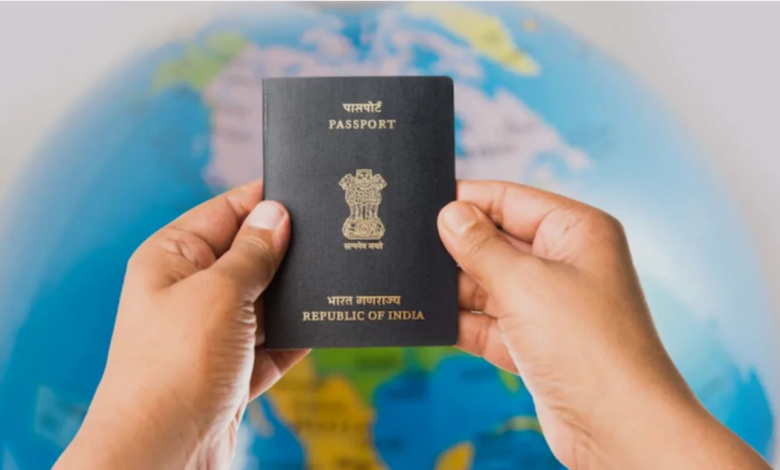
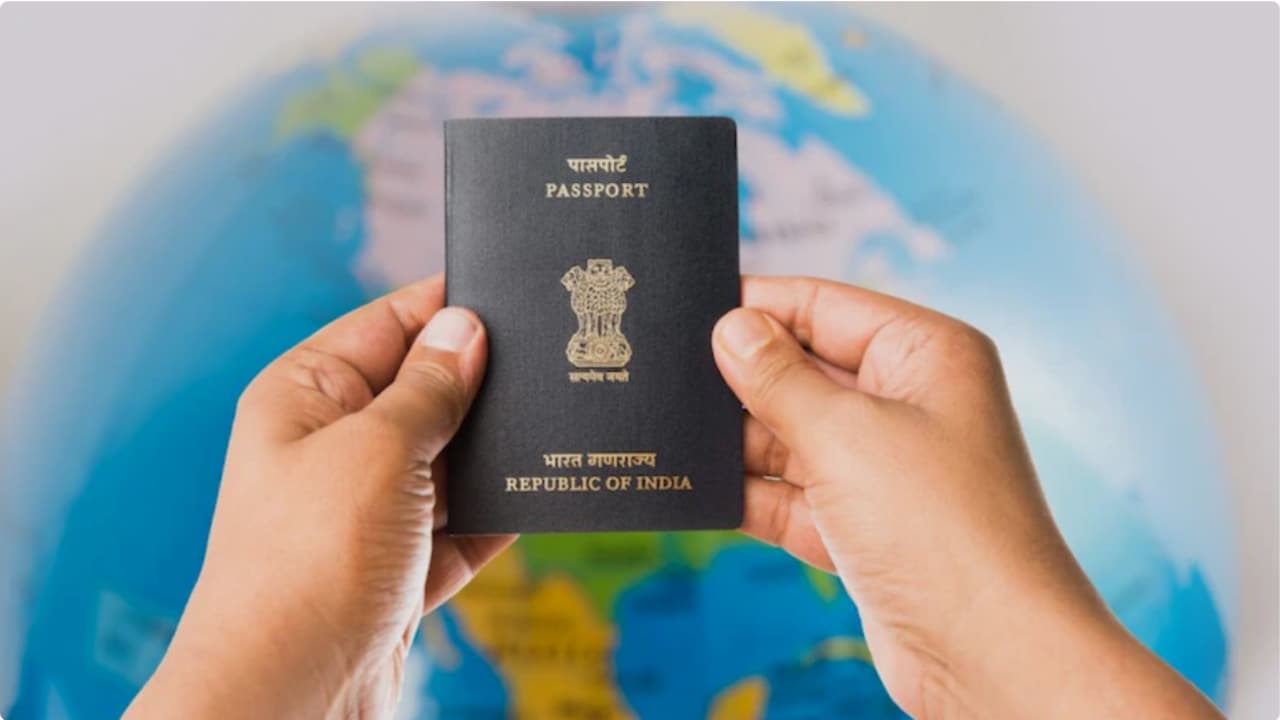
A pocket-sized booklet of 36 or 60 pages. The national emblem printed in gold in the centre of a navy blue, white, or maroon cover made of a heavy-duty fabric-based material. The first page identifies the holder – their name and their nationality.
This is the passport and till now many believed it recognised the holder as an Indian citizen. But now the government has said it doesn’t, not legally anyway, and this has stirred up a hornet’s nest over its purpose, legal and in common practice.
The row broke after a foreign ministry official observed a passport is ‘strictly a travel document’ and cannot be treated as proof of citizenship. Its grant, the official stressed, does not give access, for example, welfare schemes for Indian citizens.
X erupted with tweets serious and sarcastic.
‘Not citizenship proof? Absurd’
Many pointed out that the passport is issued solely by the Government of India after exhaustive background checks – which include physical police verification of an individual’s residential status – and literally identifies the holder as an Indian.
Award-winning lyricist Javed Akhtar called the ministry’s position “absurd” and questioned the logic of the government issuing passports if it is unconvinced the holder is not, in fact, an Indian citizen.
The ministry of external affairs says that a passport is a document travel not the proof of citizen ship . Really ??? . So are they providing this travel document to some people with out being totally convinced that this person is an Indian citizen ?? . It is absurd .
— Javed Akhtar (@Javedakhtarjadu) June 24, 2026
Shiv Sena (UBT) leader Aaditya Thackeray had similar questions for the government. He also asked if the government’s position – that passports can also be issued to non-Indians – could undermine foreign nations’ trust in the document.
If the MEA believes Passport is not a document of citizenship:
1) What do the police verify before granting a passport?
2) Does our country give passports as travel documents to non Indians as well?
3) Wouldn’t this announcement create doubts in the minds of other countries,… pic.twitter.com/p3ebg90A3C
— Aaditya Thackeray (@AUThackeray) June 24, 2026
And others rattled off the list of other government ID now also discounted as citizenship proof, including the Aadhaar and the Election Commission’s voter card, both of which had been rejected for use by voters for re-verification in state electoral rolls.
Ex-Congress leader Kapil Sibal was among those who then asked which document is proof of citizenship.
MEA
June 24, 2026 :“A passport is a travel document, and not a document of citizenship.”
Which document then is proof of citizenship?
BLO can doubt my citizenship
Deprive me of my voteResult
BJP wins the election
Over to Supreme Court !
— Kapil Sibal (@KapilSibal) June 24, 2026
Bu isn’t passport also proof of citizenship?
No. Because it has “never been” that, government sources told NDTV Thursday.
Referring to the 1967 law that governs issue of passports, sources pointed out these documents can technically be given to non-citizens too. The Bombay High Court made the same point in a 2013 judgment and held that because the law allows for passports to non-citizens, mere possession cannot be considered ‘conclusive’ or ‘definitive’ evidence of citizenship.
Citizenship, NDTV was also told, remains a subject governed by an older law – the Citizenship Act of 1955.
This is the law used to establish an individual’s status as a citizen, sources said.
Former diplomat Nirupama Menon Rao offered a lengthy and detailed post explaining the controversy, and highlighting how “law and public understanding are not always the same”. Rao highlighted the difference between the Passports Act and the Citizenship Act, and explained, “One law regulates the document; the other regulates the legal status.”
The discussion sparked by a recent statement on Passport Seva Divas has generated more heat than light.
The Ministry of External Affairs stated that a passport is a travel document, not a document of citizenship. Legally, that is correct. A passport is issued under the Passports… https://t.co/fz8Ct3OqIj
— Nirupama Menon Rao 🇮🇳 (@NMenonRao) June 25, 2026
That difference is critical.
The law governing and conferring citizenship does so on criteria that extend beyond those outlined for the issue of passports, which only links to a state to protect rights while travelling and to show foreign immigration the holder is who they claim to be.
The fact that a passport remains the property of the government and can be impounded, while citizenship cannot be taken away, at least not as easily if not voluntarily surrendered, is key.
‘Most authoritative document’
But, as Rao and others have noted, in practice the passport remains “the most authoritative document” because it is accepted around the world as definitive proof of one’s citizenship. What this row has done, Rao continued, is highlight ‘unevenly developed systems of civil registration’, which includes a number of identity documents that each require the other.
One X user made that point: “There is a loop of verification. Aadhaar is needed (for) PAN and passport… passport renewal needs Aadhaar…. banks ask for Aadhaar and PAN.. whole game of identity and citizenship is nothing less than mockery…”
There is a circular loop of verification. Aadhaar card needed both certificate, PAN and passport, passport renewal needed aadhaar card. Now for the bank account they ask aadhaar and PAN how funny.. The whole game of identity and citizenship in India is nothing less than a mockery..
— Amit Kale (@amitsharadkale) June 25, 2026
So is there that one definitive piece of paper identifying you as Indian?
Yes. The birth certificate. Or, in the case of individuals granted citizenship, the certificate confirming that grant.
But in a civic and governance ecosystem that has created, and pushes for the use of, multiple government IDs, each supposedly for a particular use, it becomes impractical for one person to bear all of them all the time.
That administrative gap is what many have raised in response to this row over passports and proof of citizenship, arguing the country needs a ‘clean, universally accessible answer to this question’, a question that will continue to haunt lakhs of Indians asked to ‘prove’ their citizenship every day.