New Delhi:
The delimitation bill about to be tabled again in parliament over the next two days, speculation has started about the government’s next big project. This, many say, could be the “One Nation One Election”.
A major question is whether the government will present the report of the Joint Parliamentary Committee on “One Nation, One Election” during this special session, with the aim of implementing it by the 2029 Lok Sabha elections as well.
Sources said once the Delimitation Bill is passed, the issue of “One Nation, One Election” will be at the very top of the government’s agenda.
In this context, there are also questions on whether a new Delimitation Commission will be able to submit its report within two years.
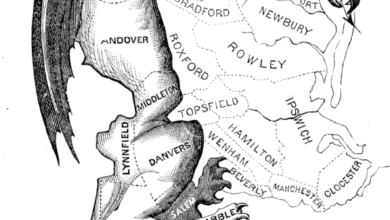
Till date, five such commissions have been formed. The first, established in 1952, used the 1951 Census as its basis, setting the number of Lok Sabha seats at 498 and Legislative assembly seats at 3,280.
The second commission, formed in 1963, increased the number of Lok Sabha seats to 522 and assembly seats to 3,771.
The third commission, constituted in 1973, relied on the 1971 Census; it raised the number of Lok Sabha seats from 522 to 543, while the number of assembly seats reached 3,997.
The fourth commission, chaired by Justice Kuldeep Singh, was established in 2002. It used the 2001 Census as its basis but did not increase the number of Lok Sabha seats, which remained at 543.
The Commission, however, did increase the number of assembly seats from 3,997 to 4,123.
The Kuldeep Singh Commission submitted its report in December 2007 — five years later — which received presidential assent in 2008 and was subsequently implemented during the 2008 Karnataka Legislative Assembly elections.
More recently, delimitation was carried out in Jammu and Kashmir in 2022 and in Assam in 2023, though the Opposition has consistently raised questions regarding the delimitation processes in these two regions.
The most significant aspect is that the Delimitation Commission’s report cannot be challenged in any court of law; its decision will be final.
The Opposition — the Congress in particular — has repeatedly raised concerns that the government will exercise complete control over the Delimitation Commission.
Rahul Gandhi has even alleged that the government has already determined the boundaries of the Lok Sabha constituencies, which will just be formally implemented through the Commission.
The Delimitation Commission will be chaired by a retired Supreme Court judge, and will include the Chief Election Commissioner (or an Election Commissioner nominated by them), along with the Election Commissioner of the specific state undergoing the delimitation process. So this particular member will vary from state to state.
Additionally, there will be 10 associate members for each state: Five Members of Parliament (MPs) appointed by the Speaker of the Lok Sabha, and five MLAs appointed by the Speaker of the respective state’s Legislative Assembly.
These 10 members will also vary depending on the state.
These associate members, however, will have no right to vote on the report, nor will they be permitted to sign it; their role will be purely advisory.
This is the basis for the Congress party’s allegation that the government will maintain full control over the Delimitation Commission.
The most pressing question now is whether the new Delimitation Commission will be able to submit its report in time for implementation by the 2029 elections.
The government’s intent suggests that it has made thorough preparations to ensure this is implemented in time.