New Delhi:
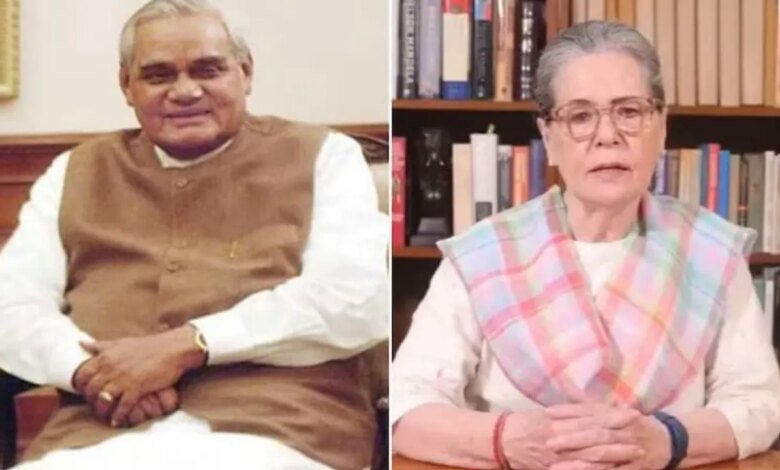
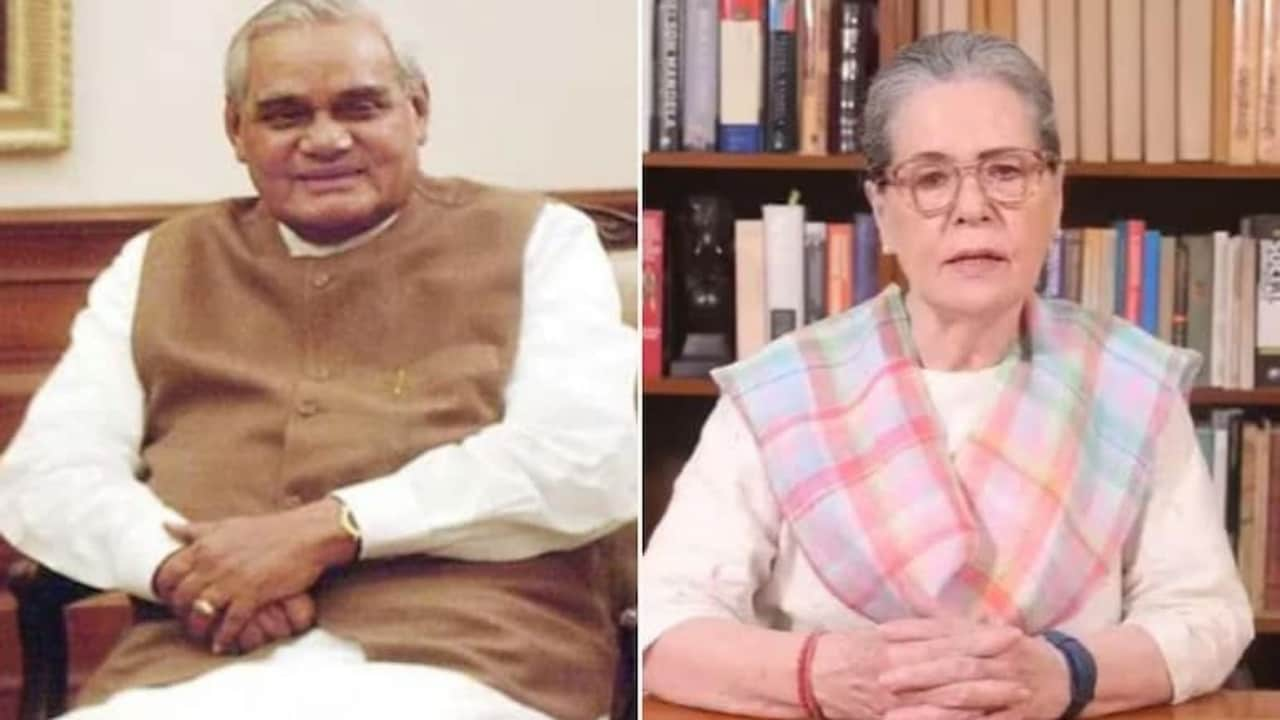
Sonia Gandhi has recalled how her “heart sank” as she walked across the forecourt of the Rashtrapati Bhavan in 1999 to face a large group of journalists after staking claim to form the government, carrying assurances of support that would soon collapse.
In her memoir Belonging: A Journey of Love published yesterday, the former Congress chief described the strain behind one of the most consequential public appearances of her early political career when she found herself surrounded by colleagues, amid her attempt to project confidence despite “quaking inwardly”.
“As I walked towards them, I could feel my heart sink. I was facing that kind of en masse media for the first time; even with colleagues flanking me, it was an excruciating strain to appear confident,” she said about the events that followed the fall of the Atal Bihari Vajpayee government after AIADMK chief J Jayalalithaa withdrew support.
The Congress, then the largest Opposition party, began negotiations with regional and Left parties to assemble an alternative government. The majority mark in the 543-member Lok Sabha was 272.
Sonia Gandhi wrote that the Congress and its allies had gathered 233 MPs, with others assuring support. She believed the numbers would add up finally, so she met the president to present her claim.
But outside the Rashtrapati Bhavan the numbers she had expected and the reality seemed disappointing as questions came from reporters, according to the memoir.
“Mrs. Gandhi, spell out how you have reached this number you claim, 272,” one journalist asked, Sonia Gandhi wrote.
“Isn’t it true that it is the arrogance of your party that has caused the mess?” came another question. Reporters also told her that informed sources believed her calculation was wrong.
Sonia Gandhi said she replied that the number had been calculated in consultation with allied leaders.
“Even though we are short of some at this moment, we are confident we will reach the required number,” she said, adding “further talks with other parties” were on when questioned whether it was premature to believe that the Congress would succeed.
She wrote that she tried to keep her “voice and gaze steady” through the questioning but the confidence could not survive the negotiations.
“As it turned out, the promised support failed to materialise,” Sonia Gandhi wrote, describing the failed attempt as a result of competing ambitions among leaders involved in the talks. Several of them wanted to become prime minister which ended up producing more contenders than the coalition could accommodate, she said.
Some Congress leaders were also opposed to the emerging arrangement, though Sonia Gandhi said she had no wish to become prime minister herself. But she accepted that she had moved too quickly in trying to remove the BJP-led government.
“I’d been too hasty, single-mindedly focused on trying to dislodge the right-wing government,” she wrote.
According to her, she should have listened to Congress leader Arjun Singh, who had counselled caution, instead of another leader whom she did not identify and described as having later proved “thoroughly dishonest”.
The failure of the plan exposed how far the Congress remained from the majority mark despite its public claim as it could not bring a viable alternative to the Vajpayee government which had fallen.
The BJP then sought a fresh election and following a month-long campaign, the National Democratic Alliance (NDA) comprising 20 allies returned to power under Vajpayee.
To a question whether bringing down the Vajpayee government was a mistake, Sonia Gandhi said it was not the correct way to see the matter. “We didn’t bring them down; it was their coalition that collapsed,” she wrote.
However, she admitted to her own error. “Nevertheless, it was a miscalculation on my part. Our group was depending on assurances given by certain persons, and those were not fulfilled.”
The failed government-building attempt was followed by another internal crisis when in May 1999 Sonia Gandhi got a letter from three members of the Congress Working Committee, including Sharad Pawar, objecting to the possibility of a foreign-born person holding high office in India. The issue was repeated at a CWC meeting.
“I felt tears welling up and walked out of the meeting. I hadn’t entered politics to grab position and power,” she wrote.