New Delhi:
A dip, a sip, a grand declaration and a political dare. The Yamuna is once again at the centre of a political storm in the Capital.
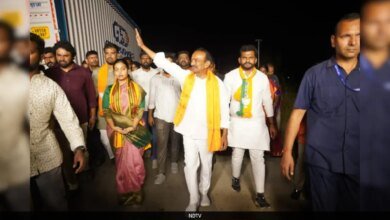
BJP MP Manoj Tiwari took a dip in the river at Sonia Vihar ghat on Thursday, claiming that pollution levels had dropped by half over the past year, thanks to the cleaning work undertaken by the Rekha Gupta government.
The BJP leader went a step further, asserting that people could now celebrate Chhath Puja in the Yamuna once again.
Tiwari, who represents the North East Delhi Lok Sabha constituency, said the presence of migratory birds at certain stretches of the river indicated an improvement in its condition. “These birds would not have come here if the river wasn’t clean,” he asserted, adding that “there might be crocodile in water here but crocodiles come only in clean water”.
केजरीवाल जी और राहुल गांधी जी, यह रील नहीं, हकीकत है। यह दिल्ली की ही यमुना जी हैं। आज मैंने यहाँ स्नान भी किया और आचमन भी किया। केजरीवाल जी राहुल गांधी जी आप कब आ रहे हो डुबकी लगाने? @ArvindKejriwal @RahulGandhi https://t.co/cjrvQNUCqN
— Manoj Tiwari (@ManojTiwariMP) October 29, 2026
He also claimed to have performed aachman (ritual sipping of water) at Sonia Vihar, praising the BJP government for its efforts to clean the river and accusing the AAP of failing to do so.
“AAP used to blame Haryana for polluting the river. Since the BJP came to power, it has cleaned half of the river in one-and-a-half years,” Tiwari claimed, adding that the remaining work would be completed over the next three years.
In a post on X, the Delhi BJP claimed that the work undertaken by its government in two years had achieved what the Congress and AAP could not in 27 years. It also challenged former Delhi Chief Minister Arvind Kejriwal to take a dip in the river.
AAP’s Counter-Dare
The AAP’s response was swift. The party’s Delhi president and former minister, Saurabh Bharadwaj, wrote on X: “These BJP frauds know nothing about Delhi. It is well known that the 26-km stretch of the Yamuna from Palla to Wazirabad has always been comparatively clean. It was cleaner during the AAP government, even according to DPCC reports.”
These BJP frauds know nothing about Delhi. It is well known that 26 km stretch of Yamuna river from Palla to Wazirabad has always been comparatively clean. It was cleaner during AAP Govt even as per DPCC reports. The first Nallah (Najafgarh drain) enters Yamuna river at Wazirabad near Signature bridge. That’s 862 MGD drain which pollutes Yamuna first after 26 kms of its entry into Delhi. That has always be cleaner. Stupid BJP leaders does not know the basics of Delhi. Like last year around Chhath, BJP’s Haryana Govt has been asked by Centre to release extra fresh water into Yamuna from Hathnikund barrage in Haryana. This extra water further dilutes the pollutant load and these jokers start their circus to fool the people of Delhi. They are the set of same BJP frauds who wasted public money to construct a Nakli Yamuna of bisleri water last year. When they were exposed, the PM had to cancel his plans to take dip in Nakli Yamuna. I invite Manoj Tiwali and Water Minister Parvesh Verma to drink water at Kalindi Kunj Ghat. Last year also they ran away from the challenge. This year too, they will run away. https://t.co/iOrald9sXR
— Saurabh Bharadwaj (@Saurabh_MLAgk) October 29, 2026
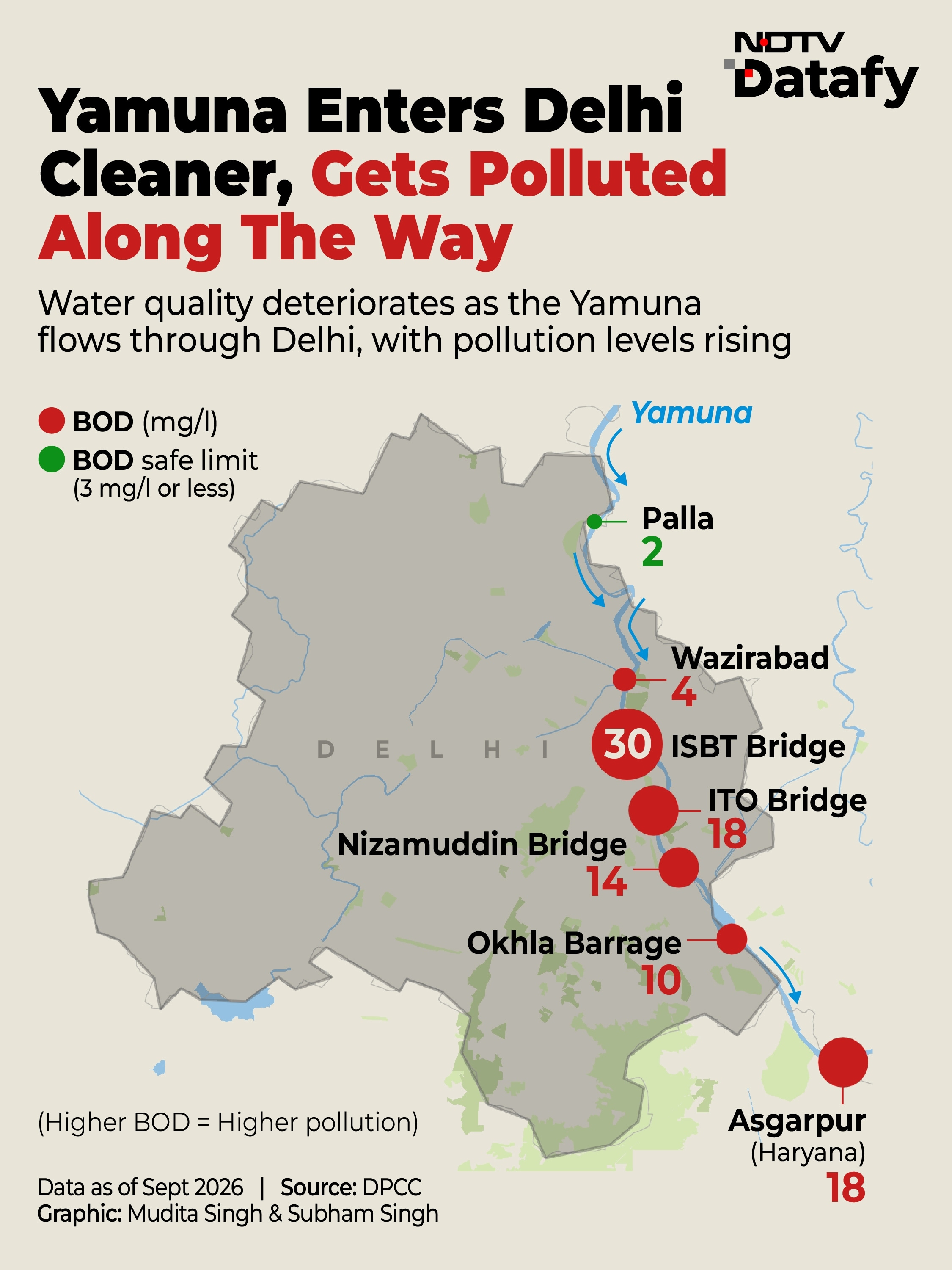
The Yamuna becomes increasingly polluted as it flows downstream through Delhi. The 22-km stretch between Wazirabad and Okhla is considered particularly polluted and has been the focus of multiple government interventions.
Bharadwaj then threw down a counter-challenge.
“I invite Manoj Tiwari and Water Minister Parvesh Verma to drink water at Kalindi Kunj ghat (near Okhla barrage). Last year also, they ran away from the challenge,” he wrote.
Forget The Dare, Look At The Data
But can one dip in the river establish that its water is safe for the millions of devotees preparing to celebrate Chhath?
NDTV Datafy’s analysis of DPCC monitoring data reveals a striking picture of the Yamuna as it flows through Delhi.
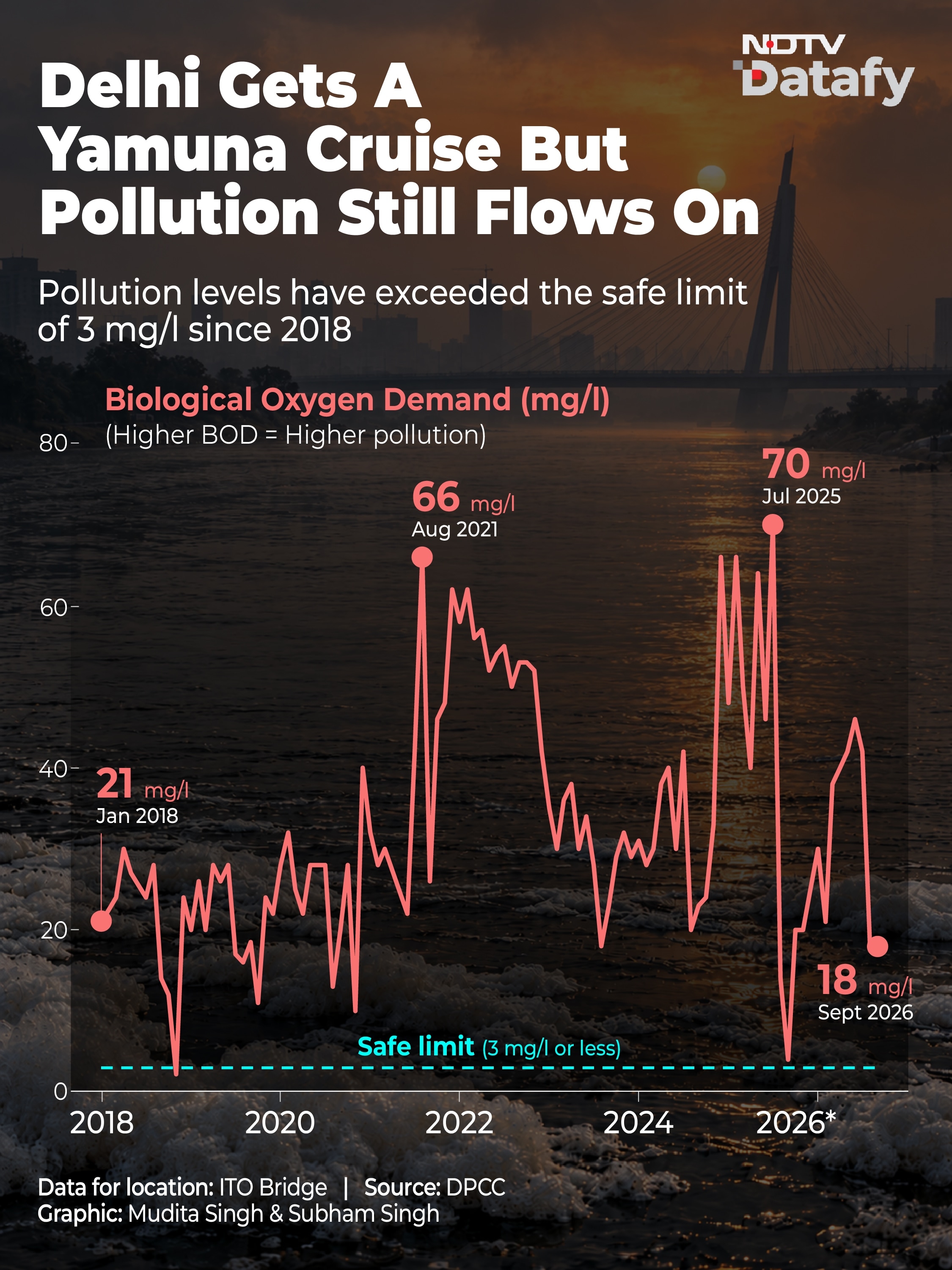
Biochemical Oxygen Demand (BOD), which measures the amount of oxygen required by microorganisms to break down organic waste in water, is a key indicator of river health. Higher BOD levels generally indicate greater organic pollution.
Credit: NDTV Datafy
The prescribed bathing-water standard for BOD is 3 milligrams per litre (mg/l) or less. However, readings from several monitoring points along the Yamuna have consistently remained above this threshold.
At Palla, where the river enters Delhi, the BOD level stands at 2 mg/l, within the prescribed bathing-water limit.
But the picture changes dramatically downstream.
At the ISBT Bridge, BOD shoots up to 30 mg/l, while at ITO, it stands at 18 mg/l. Both readings are significantly above the prescribed limit.
There has been some improvement, though. At ITO, BOD levels have fallen from 70 mg/l in July 2025 to 18 mg/l in September 2026.
That is progress. But the current reading is still six times the prescribed limit.
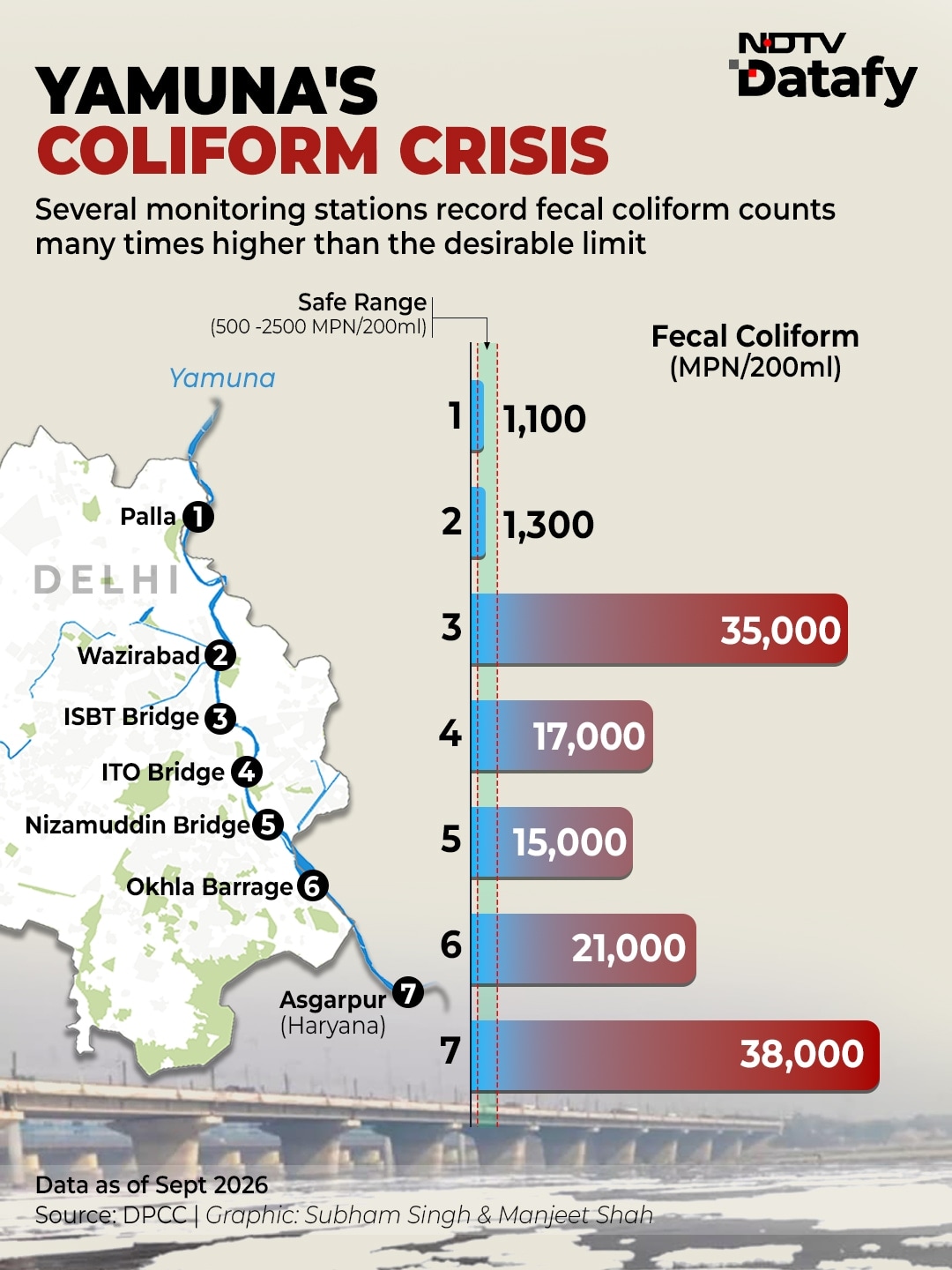
The faecal coliform count, which indicates contamination from human and animal waste, is even more concerning.
At the ISBT Bridge, the count stands at 35,000 MPN per 100 millilitres. The upper desirable limit for bathing water is 2,500 MPN per 100 millilitres – making the reading 14 times higher.
In other words, some stretches of the river may have become cleaner, but that is a far cry from declaring the Yamuna safe.
The River Still Has A Long Way To Go
The political claims and counterclaims come amid ongoing efforts to clean the Yamuna, which flows for around 52 km through Delhi.
Just days ago, Union Home Minister Amit Shah launched 43 projects worth Rs 8,941 crore aimed at cleaning the river. He also pledged that the BJP government would ensure that the Delhi stretch of the Yamuna was cleaned by May 2029.
Earlier, Delhi Water Minister Parvesh Verma had acknowledged that the task would take time.
“It will take around two-and-a-half to three years for the Yamuna to be completely clean. We have never claimed that the Yamuna has been completely cleaned,” he had said.
The minister maintained that the stretch between Palla and Wazirabad had been completely cleaned, while work was underway on the stretch between Wazirabad and Kalindi Kunj.
For now, however, the political declarations seem to be running ahead of what the water-quality data reveals.