Canada has faced insults and contempt from US President Donald Trump as well as economic pressure. This has goaded Prime Minister Mark Carney to widen his country’s geopolitical and economic options. At the Davis Economic Forum, he spoke of “middle powers” joining together to carve out a more autonomous role for themselves at the international level.
This has triggered discussions on many platforms on the international role of “middle powers” in the light of huge geopolitical, economic, technology and security disruptions caused by the Trump administration.
Advertisement – Scroll to continue
There is no agreed definition of the attributes of “middle powers”. It would seem that major European countries, such as the UK, Germany and France, are now seen as “middle powers”. Former UK Prime Minister Rishi Sunak in a panel discussion at the recent Munich Security Conference in Delhi on “middle powers” was comfortable with the idea of the UK being a “middle power”. Japan, Brazil, Turkey and Indonesia are also classified as such in the current discourse.
The genesis of this “middle powers” concept is essentially the disarray in the western world because of the manner in which the Trump administration is bullying Europe and its other allies. Trump has discomposed the NATO alliance at a time when the alliance is deeply involved in a proxy war against Russia in Ukraine. Trump, Vance and others are openly interfering in the internal political affairs of Europe, attacking personally some European leaders, supporting right wing parties, lambasting European policies on uncontrolled migration to the point of wondering whether the European allies can remain dependable when political power slips eventually into the hands of Muslim migrants.
Advertisement – Scroll to continue
With Trump’s hectoring of Europe and a growing recognition that Europe faces a structural change in its relations with the US, Europe sees the necessity of re-ordering its ties with the non-western world. Drawing closer to India is an option, which explains the FTA with India as well as an intensive engagement of India by major European countries. This, of course, is in India’s interests too as the Trump administration has delivered serious blows to bilateral ties on a number of issues. Once again the issue of trust has arisen in India-US ties, which in the last couple of decades had begun to dissipate.
Is India a “middle power” is a question now being discussed in think tank and other circles. The question got attention when at the Munich Security Conference organised in New Delhi, a “middle powers” panel was organised in which India participated.
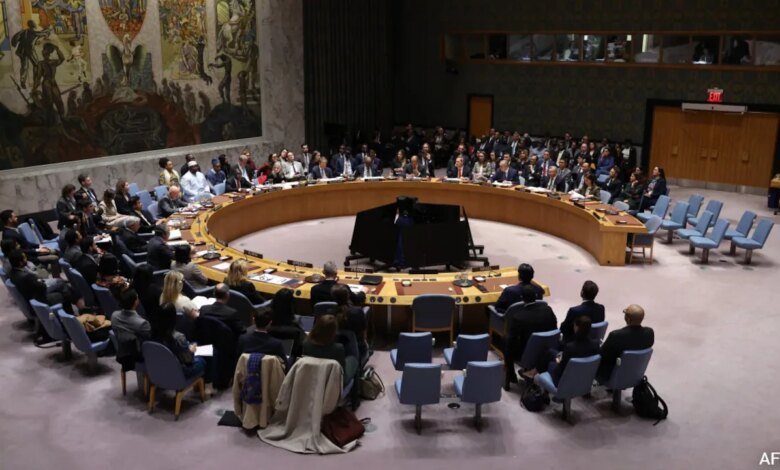
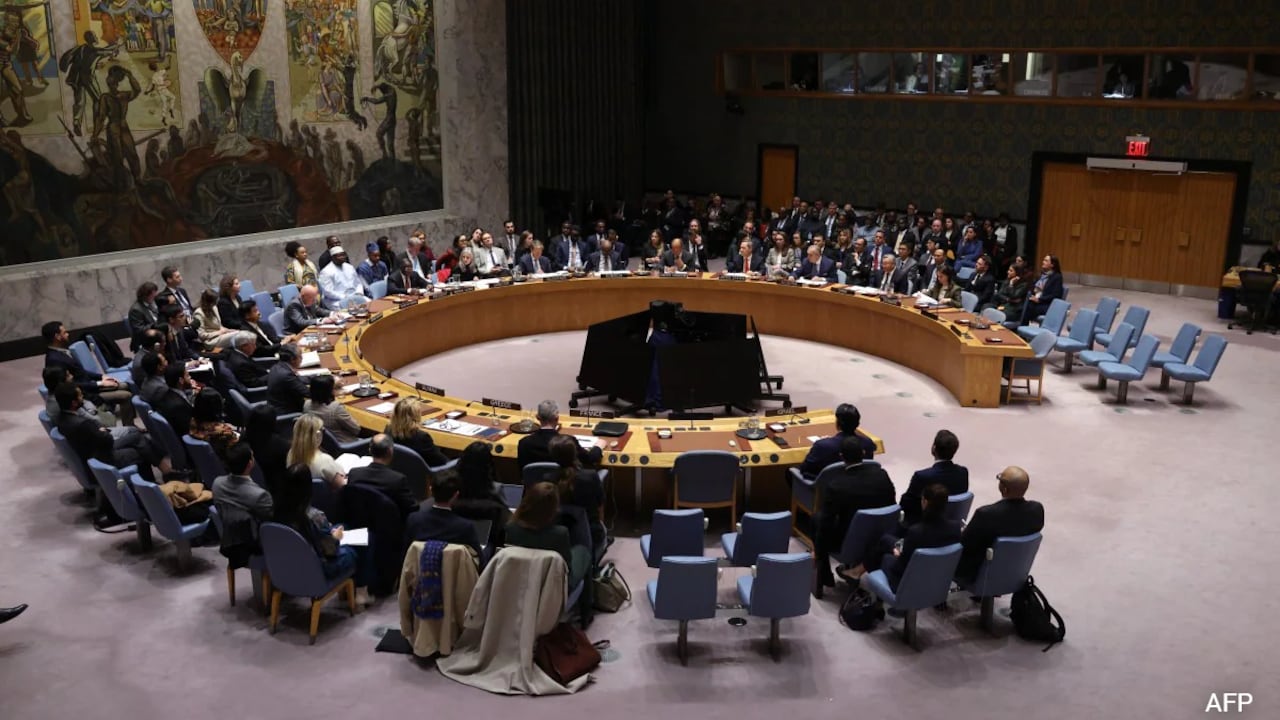
India is obviously not a “great power” yet. It is not a permanent member of the UN Security Council. It is, however, a nuclear and missile power as well as a space power. It possesses large and strong military although its domestic defence manufacturing base is still deficient. India exercises strategic autonomy but it still has many vulnerabilities and external dependencies.
But India is not a “middle power”. Its status is sui generis. It is the biggest country in the world population-wise. It has a young population. Its economy is growing, with a general international consensus that it will be the third largest economy in the world in a few years. In PPP terms, India is already the third largest. It has very considerable human talent, which in scale is a big national and even an international asset.
The big European countries are still powerful but they are not rising powers. They are declining powers, with a declining population, and the issue before them is to manage their decline and preserve their prosperity. Unlike India they are dependent on their security on the US. Germany hosts several US bases and US nuclear weapons are stationed on its soil. In a sense, Germany is still an occupied country.
Unlike most of the other “middle powers” which are compelled by alliances to operate in blocs, India engages all sides, be it US, Russia and even China. Europe today has essentially cut off ties with Russia. How many “middle powers” have the capacity to straddle the rich North and poor South. India has more geopolitical manoeuvrability. That India has dependencies does not make it a “middle power”, as we are not unique in this regard in this interdependent and connected world. Even the hands of the US are tied to a degree because of its dependence on China for critical raw materials and technologies.
India is a rising power. It is managing its security challenges, and serious ones at that, without hosting foreign bases on its soil and joining any military alliance. Canada and the European “middle powers”, despite two them being permanent members of the UNSC and nuclear powers, are dependent on their security on NATO which is US-led. They see themselves as “middle powers” bracketed by the US on one side and China on the other.
India does not have the same perspective. It defines itself as a civilisational power, which means that unlike the US which is 250 years old and Europe’s limited historical depth as a civilisation (Gandhi disputed the idea of a European civilisation) India posits its contribution to human civilisation over thousands of years, and today India believes it can contribute once again globally its way of looking at and dealing the world rooted in its civilisation.
India has never seen itself as the centre of the universe, as some sort of a heavenly kingdom. It has no history of colonialism, slavery, physically exterminating people, races, even animals, using religion to subjugate other people and commit atrocities in the name of faith. India has accepted diversity in thought, language, culture and religion. Its civilisation has respected nature. India historically has been a strong trading nation, both eastwards and westwards.
This is the legacy that India as it rises can contribute to the functioning of the global community. India can be a force for peace and stability in the world as it becomes more influential.
(Kanwal Sibal was Foreign Secretary and Ambassador to Turkey, Egypt, France and Russia, and Deputy Chief Of Mission in Washington)
Disclaimer: These are the personal opinions of the author