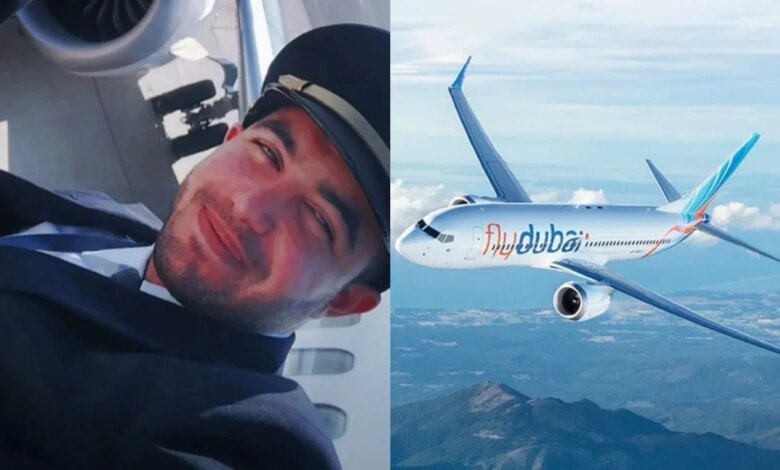
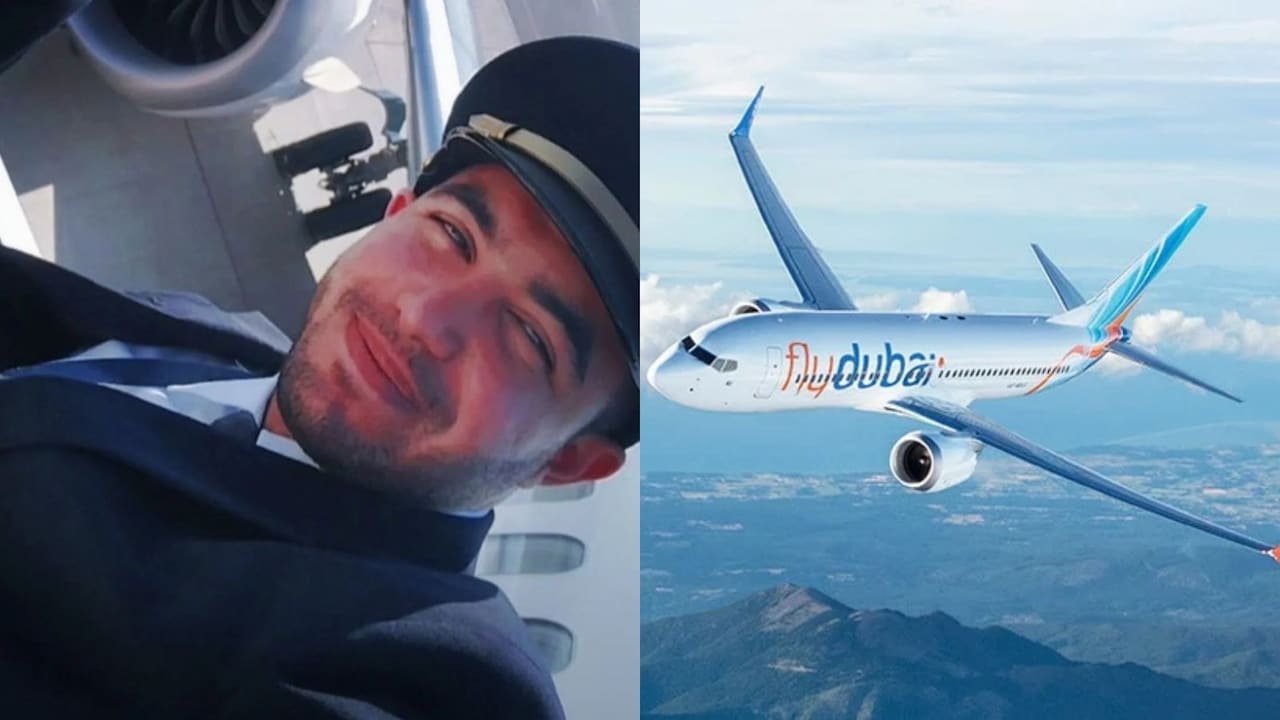
The news that the recent flydubai hijacking was undertaken by an Omani national has shocked much of the world, and with good reason. Oman has distinguished itself in the turbulent region it belongs to as well as in the international community as a model Arab state and a genuine bridge-builder. The Sultunate abhors extremism of any form and has played a significant role in attempts to bridge divides between Sunnis and Shiites, among Iran and the Gulf states, the Arabs and Israel, and between Iran and the US.
It is probably the country’s geographical location that makes it a natural bridge between the Arab world and Iran. Oman is isolated from much of the Arabian Peninsula because of a formidable mountain range, while Iran is just across the narrow Strait of Hormuz. Oman thus becomes a bridge between the Shia and the Sunni world, helped by the fact that the majority of Oman’s Muslims, including the late Sultan Qaboosbin Said Al Said, are followers of the Ibadi sect of Islam, which predates both the Sunni and Shia sects. Perhaps that is why Oman has distinguished itself by its independent foreign policy and role as an intermediary.
Advertisement – Scroll to continue
While Oman’s role in facilitating US-Iran talks that led to the nuclear deal in 2014 stands out the most, it has numerous other feats to its credit. It was Oman, under its late Sultan Qaboos, that was the architect of a Gulf security alliance that later found expression in the Gulf Cooperation Council (GCC). In the 1970s, Oman publicly supported Anwar Sadat’s peace overtures to Israel and was one of the only three Arab states that continued diplomatic relations with it after it recognised Israel. It then went on to play host to Israeli Prime Minister Itzak Rabin – the first public visit by an Israeli leader to an Arab Gulf state. More recently, in 2018, Oman officially hosted Israeli Prime Minister Benjamin Netanyahu and his wife with a delegation of several ministers in Muscat. During the Iran-Iraq war, Oman maintained relations with both states and tried, albeit unsuccessfully, to bring both to the negotiating table. In 2014, Oman became the first Arab country to which Iranian President Hassan Rouhani paid an official visit.
Every time tensions have flared with Iran, Oman has acted as a negotiator, urging peace, facilitating talks, and mediation between different sides. In fact, it was with Omani mediation that talks between Iran and the US were progressing in February this year when the US and Israel began attacking Iran. Since then, Oman has stepped up its diplomacy in the region.
Advertisement – Scroll to continue
The Basic Law of Oman recognises the right to different forms of worship within the country, and Hindus, Sikhs, and Christians have coexisted alongside the native Ibadi Muslims here for decades.
As more details emerge of the flydubai incident, however, and major lapses come to light in both the UAE and Israel, it has been revealed that the copilot of Omani nationality was of mixed parentage. While his father was Omani, his mother was Syrian. It was in Syria that he – Hamam al-Hammimi – underwent radicalisation. While this now seems to be the order of things, it is rather a sad development. For Syria, once, in many ways, was like Oman.
While the Assad dynasty – first father Hafez Al Assad, and then his son, Basher Al Assad – had ruled Syria with an iron fist, they had managed to keep it peaceful, tolerant, pluralistic, and secular. While Syria has always been a Sunni majority country, the Assads belonged to the minority Alawite community – scattered across Turkey, Syria, and Lebanon, and often viewed as heretical in the region. Naturally, it had been in their interest not to encourage religiosity and to keep the country secular.
Under the Assads, with their tilt towards the Soviet Union first and then Russia, Syria achieved almost 100% literacy. Women enjoyed equal rights with men, and its many minorities – the Alawites, the Druze, the Syrian Christians, the Shiites – kept the country plural and secular. Syria had been at the forefront of pan-Arabism even though it was closely allied with Iran. Till the beginning of the Syrian civil war in 2011, it had been a strong champion of the Palestinian cause, hosted thousands of Palestinian refugees, and refused to make peace with Israel till it returned the Golan Heights that it had occupied since the 1967 war. Yet, the Syrian-Israeli border was one of the most peaceful and secure, with many Palestinians accusing it of accepting the status quo with no real intention of fighting Israel. Finally, Syria acted, even at enormous human cost, as a bulwark against Sunni radicalism. After brutally putting down a rebellion launched by Islamists in the 1980s, the Assads broke the backbone of Sunni extremism there.
Till the civil war broke out in 2012.
The civil war saw hundreds of thousands of Syrians killed and nearly fourteen million people – more than half the pre-war population – being displaced. Syria turned into an impoverished and fractured state, with various armed groups led by various powers controlling various parts of its territory. Iran, Israel, Turkey, Russia, and the United States were all drawn into the conflict either directly or indirectly over the years. Valid opposition to the Assads was hijacked by jihadi and extremist groups abundantly bankrolled by America’s CIA and independent Gulf countries, and facilitated by states like Turkey and Jordan. The pluralistic state was dismantled, and in its place, in large swathes of the country’s east and south, rose a monstrosity: the Islamic State of Iraq and Syria. Jihadi groups and aspiring, radicalised individuals flocked to it from different parts of the world. Their passage to Syria was facilitated by Turkey. Dissidents were burned alive, gender segregation was strictly imposed, women were made to veil themselves from head to toe and kept confined to the home.
Just as Pakistan facilitated the transfer of arms, personnel, and training to Afghan jihadists fighting the Soviet Union in Afghanistan in the 1980s, so did Turkey, Jordan, and individual Arab Gulf states support jihadism against the Assad regime in Syria.
A PBS Frontline report detailed how Syrian ‘rebel’ fighters travelled through Turkiye and Qatar for training and coordination. In Turkiye, they met with American handlers and then traveled to Qatar to undergo military training.
At the peak of the conflict in 2014-2015, intelligence estimates, such as those from the CIA, pegged the Islamic State’s total fighting strength at 30,000-80,000, with the fighters split between Syria and Iraq, combining both foreign and local recruits.
According to UN reports, more than 40,000 foreign fighters from 110 countries may have travelled to Syria and Iraq to join terrorist groups. As Iraq intensified the battle against the Islamic State, its members and fighters flocked to Syria.
Declassified documents now reveal that the CIA helped fund, train, and arm many of these jihadi groups, beginning under the Obama administration.
In Afghanistan, jihadism succeeded at installing a Taliban government in the 21st century; in Syria, it has brought an al-Qaeda fighter to power as the country’s president. Today, Syria remains a cauldron of instability, factionalism, and massacres. As new powers seek to consolidate their hold and strive to steer the country away from its jihadist narrative towards nation-building, different groups are again jostling for control. Washington has legitimised President Ahmed Al Sharaa and his Hayat Tehreek e Shams (HTS), relieving Syria from decades of sanctions and allowing Al Sharaa passage to the US. Turkey, meanwhile, continued to control parts of Northern Syria, while Israel has been pushing into the south, trying to carve out a buffer zone in cooperation with the country’s Druze minority. The Druzes, the Alawites, and the Christians have seen massacres. Minority women, including non-Muslims, have taken up the veil for personal safety. While the leadership has tried to accommodate jihadi and foreign fighters into Syria’s army, many of them dissenting have sought refuge in Syria’s difficult topography, while ISIS sleeper cells grow.
Al Hammimi, thus, is a symptom of Syria’s descent into sectarianism and extremism. And the consequences will reverberate far beyond Syria’s borders. For, setting a neighbour’s house on fire inevitably invites the flames to one’s own home.
(The author is a senior journalist)
Disclaimer: These are the personal opinions of the author