Earlier this week, the Supreme Court suggested strict measures to rein in traffic violators, including the possibility of linking unpaid e-challans to electricity bills.
“It is not sufficient to keep issuing e-challans. The question is the recovery of fines sought to be imposed through these e-challans,” the court told the government.
The suggestion has sparked a debate and drawn fresh scrutiny to the mounting number of unresolved traffic violations across the country.
Challans Doubled In 4 Years
According to the Ministry of Road Transport and Highways, the number of traffic challans has been rising since 2021 as traffic police and transport departments intensify enforcement across Indian states.
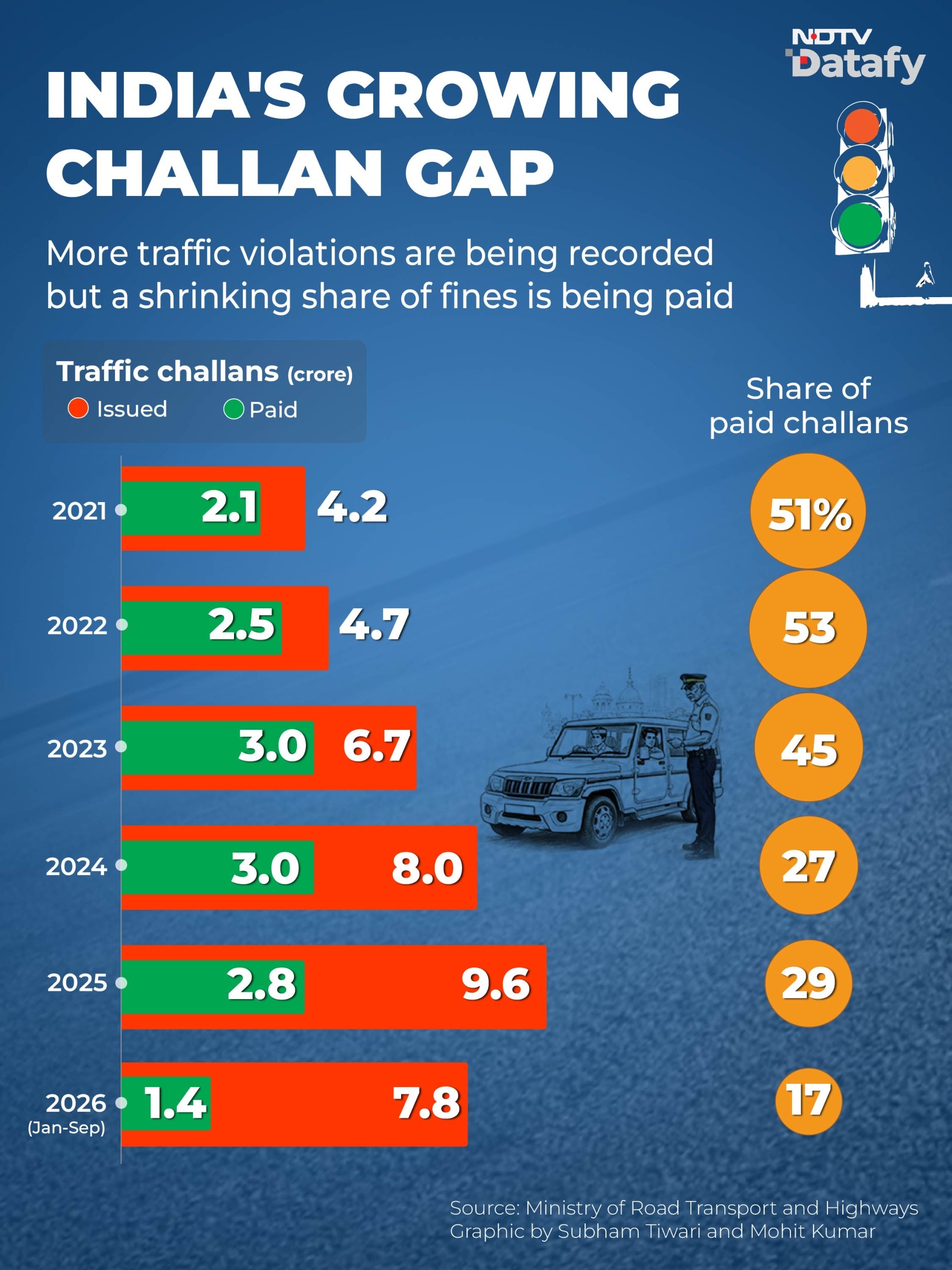
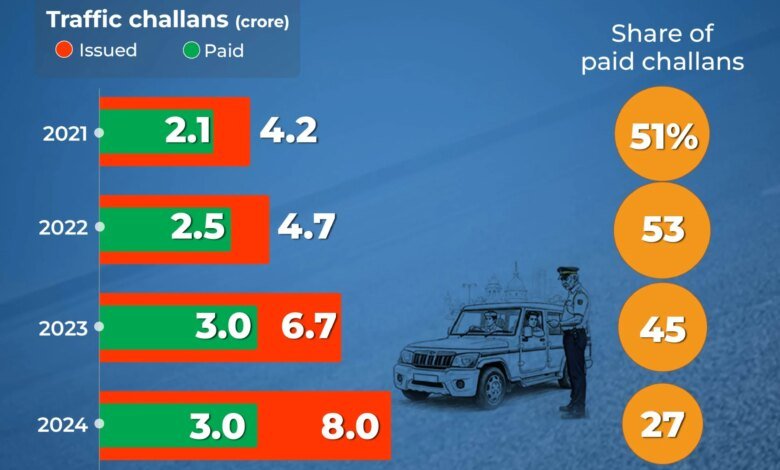
The number of traffic challans jumped from 4.2 crore in 2021 to 9.6 crore in 2025. The figure reached 7.8 crore in the first nine months of 2026.
As the number of penalties rises, so do unpaid dues. The share of unpaid challans has increased steadily and sharply over the years.
In 2022, nearly 48 per cent of all challans issued remained pending. The share rose to 55 per cent in 2023, 63 per cent in 2024, 70 per cent in 2025, and 82 per cent in 2026.
Challan Hotspots
The highest number of traffic-violation tickets was issued in Uttar Pradesh, at nearly 9 crore, followed by Telangana at 8.2 crore, Kerala at 4.7 crore and Haryana at 2.4 crore, according to the ministry’s e-challan dashboard.
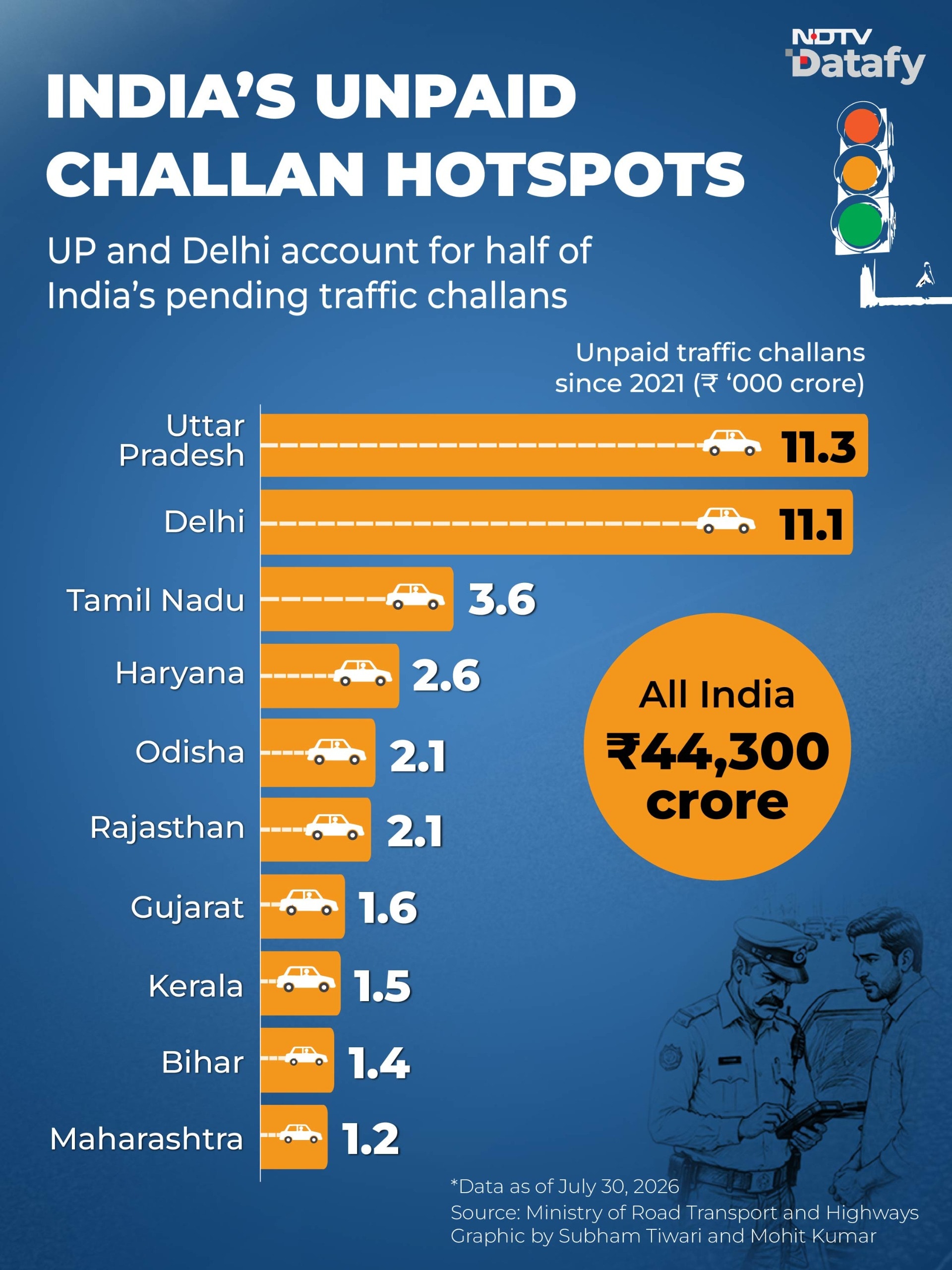
Consequently, Uttar Pradesh has the highest amount of unpaid traffic challans, followed by Delhi, Kerala, Haryana, and Odisha.
Challans sent to courts also face high pendency and a large backlog. Of the nearly 70 lakh challans sent to courts in 2021, only 28 per cent had been disposed of even after five years.
The share of court cases disposed of has declined since 2021. In 2025, only 8.6 per cent of the 2.9 crore challans sent to courts were disposed of.