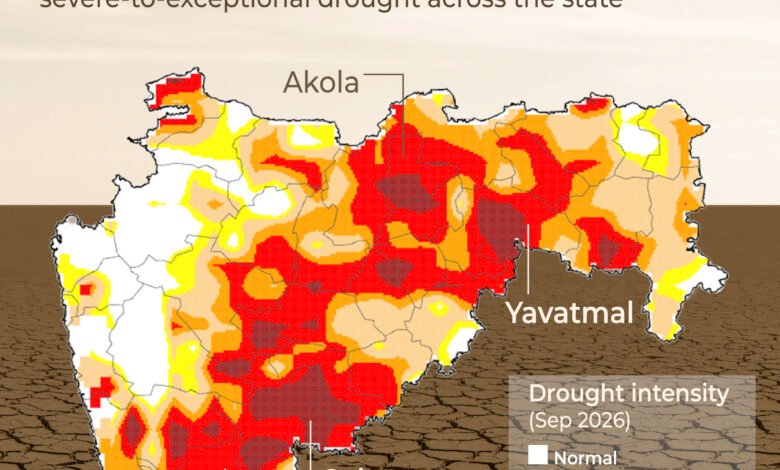
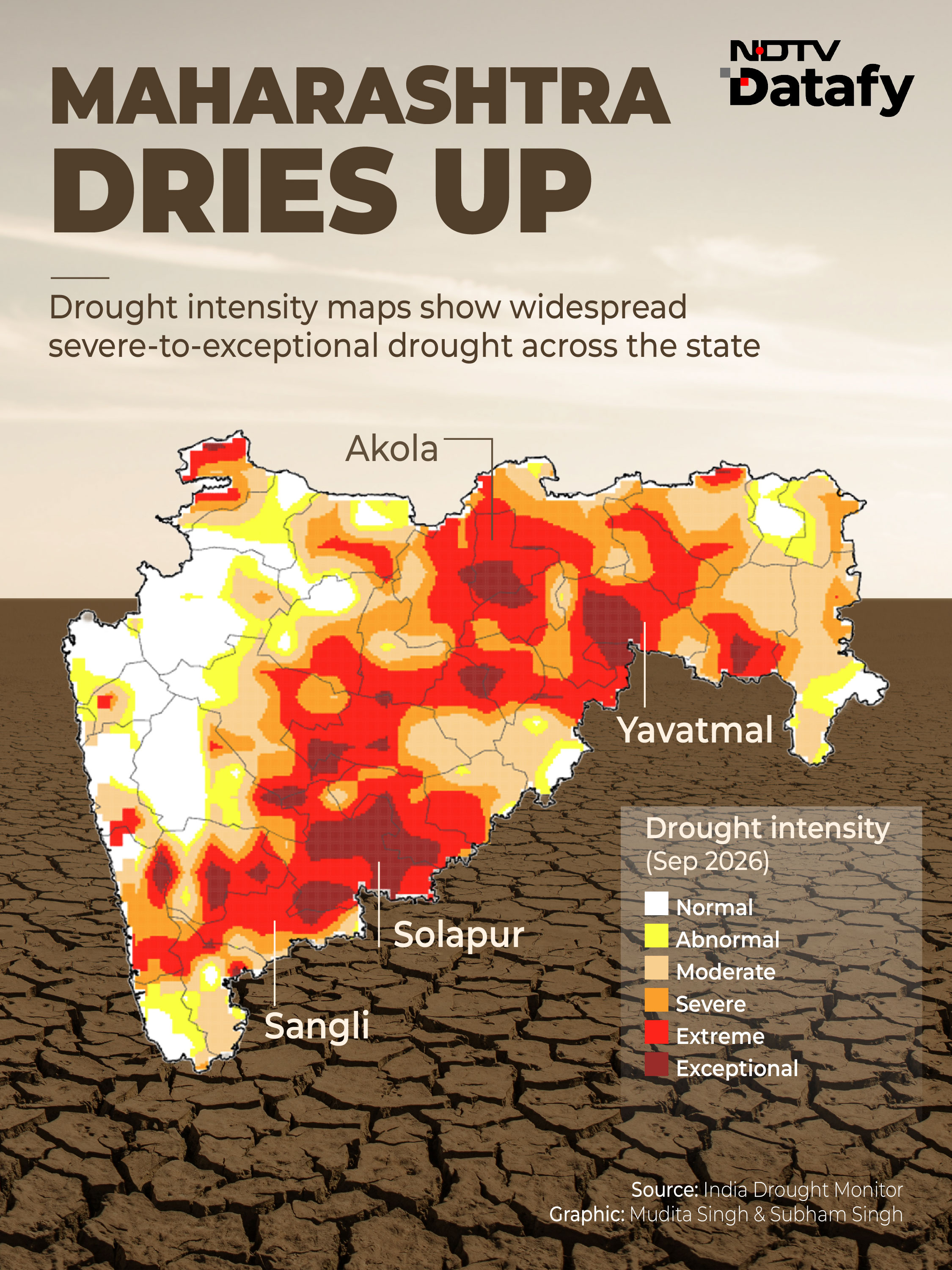
Large parts of Maharashtra are currently facing severe to exceptional drought conditions, raising concerns not just for farmers in the state but also for millions of consumers across the country. As one of India’s biggest producers of onions, soybeans, sugarcane, tur dal and cotton, Maharashtra plays a crucial role in the nation’s farm economy and food supply.
However, not all crops are equally vulnerable to drought. The biggest concern is for soybean, tur dal and cotton, which are predominantly rain-fed Kharif crops and depend heavily on monsoon rainfall during their growth cycle.
Read : Why Maharashtra Minister Has Warned Of A Potential 100% Drought Situation
Maharashtra contributes 38.5% of India’s soybean output, producing 4.85 million tonnes out of the national total of 12.6 million tonnes. Soybean is a key oilseed crop and is used in edible oil production as well as livestock feed.
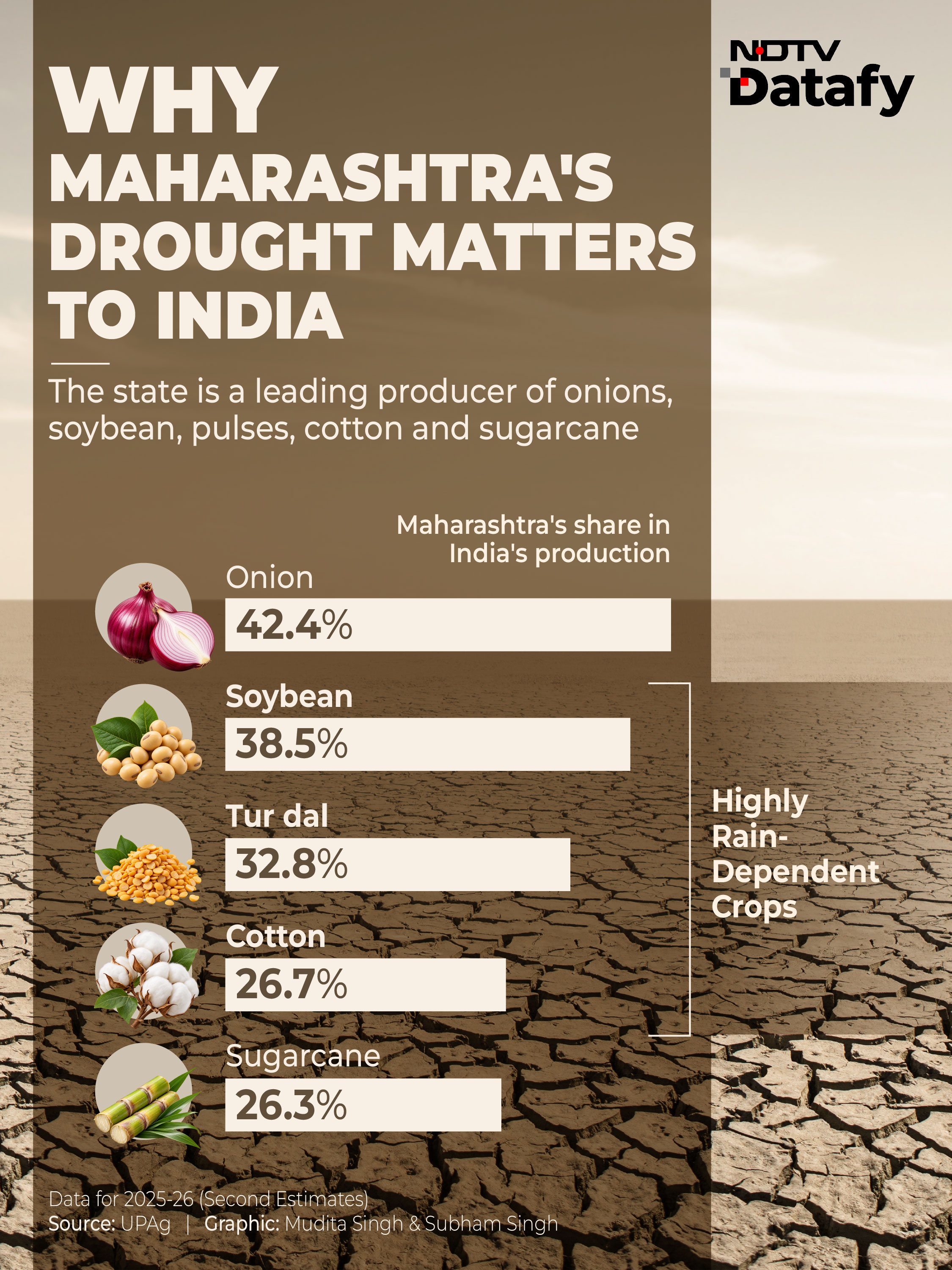
Similarly, Maharashtra contributes 32.8% of India’s tur dal production, accounting for 1.18 million tonnes of the country’s 3.59 million tonnes output. Tur dal is one of India’s most-consumed pulses, making its production highly important for food inflation.
Read : Maharashtra Declares Drought In 74% Of State, 265 Of 358 Talukas Affected
The drought’s impact is also becoming visible in the state’s water reserves. Data from Maharashtra’s Water Resources Department show that live storage across all major dams stood at 75.5% of capacity, down from 88.3% on the same date last year.
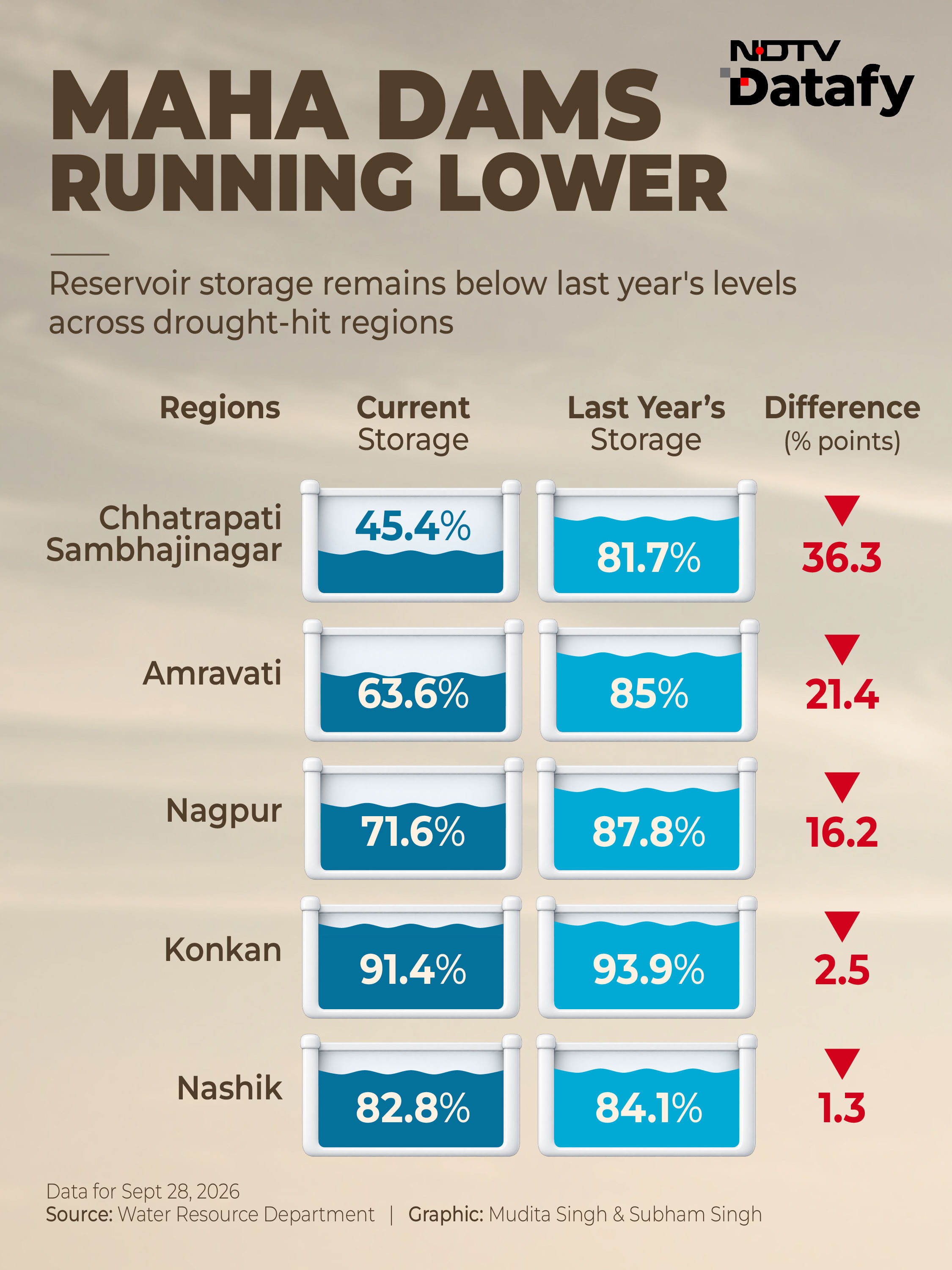
The sharpest decline has been recorded in the Chhatrapati Sambhajinagar region, where live storage has fallen to 45.4%, compared with 81.7% a year earlier. Storage levels have also dropped in Nagpur, Amravati, Nashik, and Konkan regions.
Lower reservoir levels are significant because they determine how much irrigation water will be available in the coming weeks and months. If water availability continues to decline, crops that are currently withstanding the dry spell could face additional stress.
While not every crop will be affected equally, the drought poses the biggest risk to rain-fed crops such as soybean, tur dal, and cotton. With Maharashtra occupying such a large share in the production of several key commodities, a prolonged drought could have consequences that extend far beyond the state’s borders, potentially influencing food supplies and prices across India.