New Delhi:
An “active disagreement” of an entity that holds a 66 per cent stake cannot be ignored by a “runaway board” while making major decisions, argued senior lawyer Abhishek Manu Singhvi, who is representing Tata Trusts in the corporate dispute that broke out over a bid to reappoint N Chandrasekaran as Tata Sons’ chairman.
Singhvi argued that Tata Trusts, with a majority stake, holds primacy in Tata Sons’ decision-making.
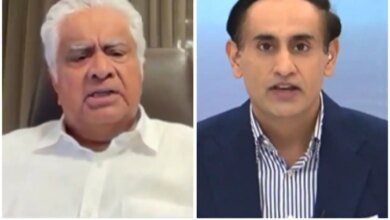
“Tata’s architecture and design is unique from Jamsetji Tata’s time, more than 100 years ago, who created this Tata Trusts as a set of trusts, which then have 66 odd per cent as a shareholder owner of Tata Sons, which in turn controls and runs a series of Tata operating companies, each of which is gigantic. Now, the important point in this architecture is that anything and everything which goes out of Tata Sons, as you know, Tata Sons collects whatever dividends it gets, whatever monies it gets from…Whatever penny Tata’s Sons gets, which it pays out as dividend, pays out in whatever form, every penny of it, to the extent of 66% shareholding, must go only to the charitable philanthropic trust, unlike to a normal shareholder,” Singhvi told NDTV Editor-In-Chief and CEO Rahul Kanwal.
Also read: Why Noel Tata Is Opposing N Chandrasekaran’s Return As Tata Sons Chairman
“And from there, it must travel only to the stated charitable objectives like hospitals, universities, scholarships, research. This was the vision of Jamsetji Tata. And that is why I’m not saying this out of just the charitable part. It’s important, therefore, to remember the hyphenated relationship. To divorce this umbilical cord would be to strike at the very root of the vision and the design and the architecture of Jamsetji Tata. This cannot be ruptured in any casual manner, short of very overwhelming legislation by a sovereign parliament,” he added.
Referring to the decision to announce the passing of the resolution on the Tata Sons chairman’s reappointment for a period of five years, the lawyer said the “runaway board” can’t act independently of an entity that owns 66 per cent of the salt-to-software conglomerate.
“So therefore, I think everything should be done in letter and spirit to promote that original hyphen and the umbilical cord. Here, what has happened unfortunately, is that now you cannot have this famous movie called Runaway Jury. You can’t have a runaway board, which decides things with the active disagreement of a 66 per cent shareholder,” he said.
He said if the board is allowed to take decisions despite the majority shareholder’s express objection, it would be “disastrous” for corporate governance in India.
“How do you have shareholder owners who are nullified, who are sidelined, who ultimately, at the end of the day, do not have any say in the board, in particular any chairman?… There is a practical commercial corporate fact of life which you can’t deny,” he said.
Also read: Tata Sons Reappoints N Chandrasekharan As Chairman: Full Text
Singhvi, one of the top lawyers in the country, said the dispute, which began as a corporate disagreement, is veering towards a courtroom battle.
“It has been brewing for a while. It appears that it is now irreversible, except through a legal battle. I think the ideal situation would be to avoid it some way or the other. But then I am not a principal actor in the dialectics of it. And sometimes, you know, the ideal solutions don’t occur. So be that as it may, I hope it is not too protracted. I hope it is not too nasty or too, you know, brutish. But certainly, I think it is headed for some kind of a legal fight,” he said.
At the board meeting earlier this week, Noel Tata had also raised concerns about Tata Sons’ plans to go public. He said that the Tata Group was conceived as a national service. If listed, he added, it would destroy Tata Sons’ character.
Singhvi said the primary issue that has given rise to the dispute is “shareholder owner primacy”.
“It is a very major principle issue, a matter of the principle of shareholder-owner primacy. It is not about Noel Tata. He is not an individual shareholder. It is not even about Chandra. He is not an individual shareholder. It is about the primacy of a 66 per cent collectivity called a trust. That’s the shareholder-owner,” he said.
Also read: Trustees Put On Notice By Government: Harish Salve On Listing Row At Tatas
While Noel Tata voted against N Chandrasekaran’s reappointment, another trust nominee, Venu Srinivasan, backed it.
“A 66 per cent shareholder can normally pack the board. You are a 66 per cent; you can make whatever, 60-70 per cent of the board in your own liking. The Tata Trust, a charitable object and vision of Jamshetji Tata, put it in reverse. It said, though we can, we are saying that we want only a minimum of one-third representation on the board…Two-thirds can be non-Tata nominees. But in return for not exercising our full power of 66 per cent, you must ensure that any decision of the board has the concurrence of that one-third,” Singhvi argued.
He said the rule mandating concurrence had been changed in 2014.
“Now, earlier it was both, one, two or three trust nominees — all had to concur. Then it (the rule) was changed by an amendment in 2014 to say that only the majority of the trust nominees have to. But, and this is the crux of it, when two people are there, what is the majority? It is 1.1 at least. It can’t be one. One is a stalemate. A majority is 1.1. Whereas, incidentally, in another article, an explanation says that when it is a fraction, it gets rounded to the next one. But forget that. I am not going into that. If you assume that a majority of two is 1.1 or 1.5 or 1.3 or 1.6, then clearly there was no majority,” he said.
The lawyer said when a majority isn’t determined, individual votes act as a veto.
“So there is, in effect, when two people are there, either both have to agree. If anyone disagrees, it’s a veto. A veto means, directly by Article 121, directly and clearly, you cannot have any decision by the board. So there is no question of a casting vote. What has happened here is that the chairman creates a stalemate and adds a vote by a casting vote,” he claimed.
In July 2025, the Tata Trusts passed a resolution appreciating the leadership of Tata Sons’ Chairman N Chandrasekaran. In just 14 months, the entity registered a protest against his planned reappointment.
The lawyer said that shareholders can lose confidence even in an “outstanding performer”.
“Suppose that all your figures, all your operational statistics are perfect. But I, as the shareholder, have lost confidence in you. The law is that you cannot judicially review why there is a loss of confidence in a person,” he said.
What Harish Salve Said
Senior advocate Harish Salve, who is advising Chandrasekaran in the ongoing contest, told NDTV that the row is not about the post of Tata Sons’ chairmanship.
“It is a recognition that a group of trustees who were hoping to control this 270 billion-dollar empire have suddenly been put on notice by the government that, sorry, that’s not how it works,” he told Rahul Kanwal in a separate interview.