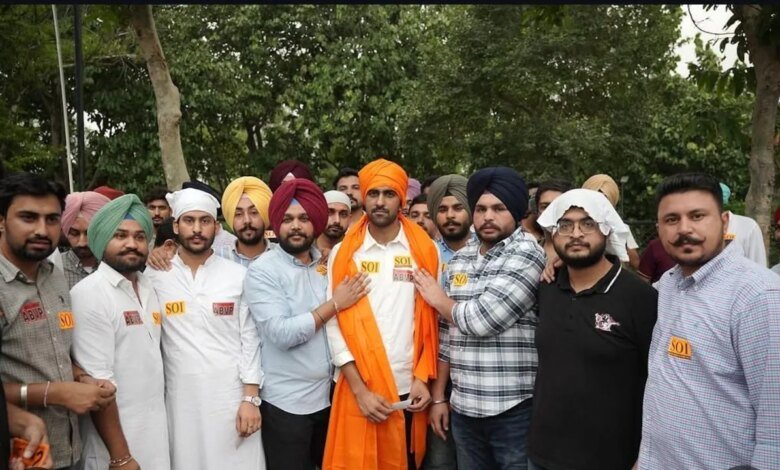
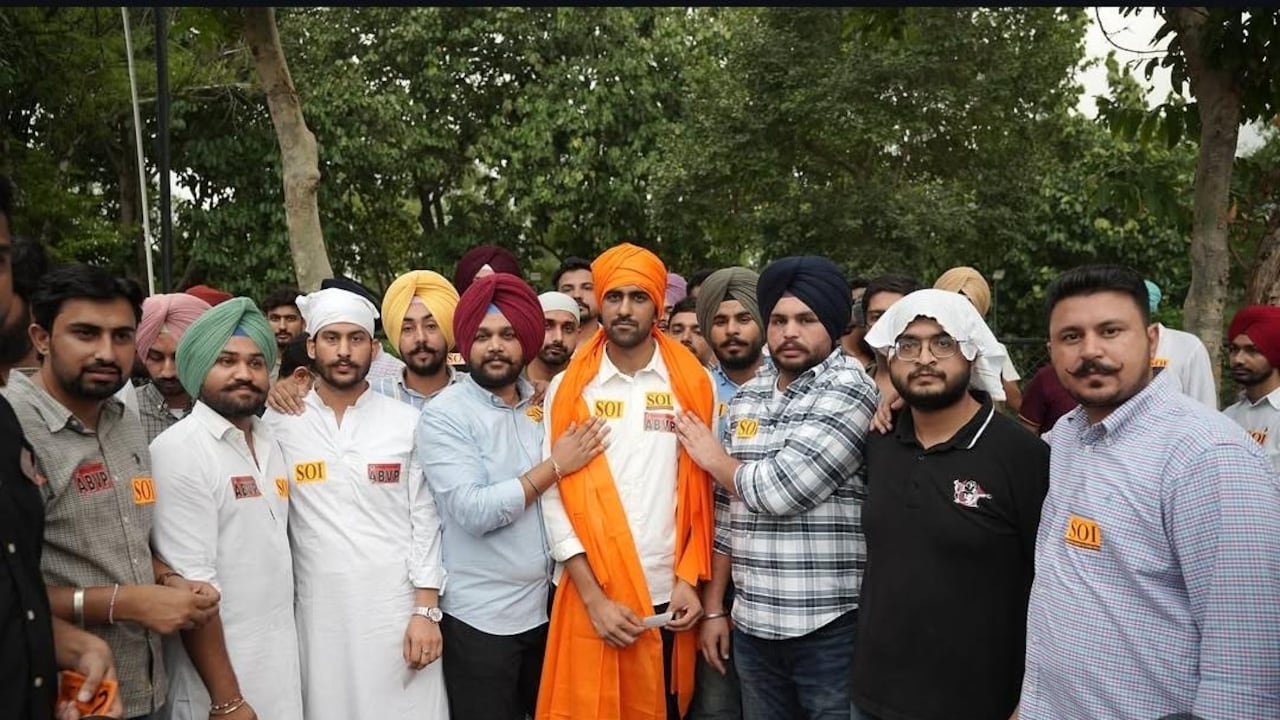
Suspense over a possible political realignment between the Shiromani Akali Dal and the BJP in Punjab still on, their student wings have offered an intriguing campus-level preview: Joining hands at Panjab University just a day before polling for the Panjab University Campus Students’ Council (PUCSC) elections.
The Akhil Bharatiya Vidyarthi Parishad or ABVP, affiliated with the BJP, and the Shiromani Akali Dal-backed Students’ Organisation of India (SOI) announced an alliance on Sunday.
The SOI has decided to support ABVP candidates and mobilise its supporters in their favour.
The tie-up between the campus units demonstrates that electoral arithmetic can still bring the two sides together when interests converge.
The SOI is not contesting the presidential election this year after its candidate’s nomination was rejected over an eligibility dispute.
With its presidential candidate out of the race, SOI’s decision to throw its weight behind ABVP turns its organisational network and potential vote base into a bargaining factor in the final campus contest.
For ABVP, the alliance comes at a crucial moment. With polling scheduled for Monday, the last-minute support of an established campus organisation could strengthen its mobilisation machinery and alter the electoral arithmetic, particularly in a closely fought presidential contest.
But beyond Panjab University, the development carries a broader political subtext.
The Akali Dal and BJP have been signalling different positions while speculation over their electoral equations continues. In that backdrop, the decision by their student organisations to collaborate is unlikely to go unnoticed.
It does not, by itself, indicate that the parent parties have settled their differences. Yet it does underline that the political space occupied by the two organisations can still accommodate tactical cooperation.
Panjab University has traditionally served as a political training ground, with campus contests often reflecting wider ideological and political currents in Punjab.
The ABVP-SOI understanding therefore becomes more than a routine student election arrangement: it provides an early indicator of how cadres and support networks associated with the two parties may respond when faced with a common electoral objective.
The immediate test, however, will be Monday’s polling.
If the alliance succeeds in translating SOI’s support into votes for ABVP, it could give the latter a decisive advantage. It would add another layer to the ongoing question in Punjab politics: If their student wings can find common ground at the campus, can the parent parties eventually find common ground?