New Delhi:
While the Jantar Mantar protest flooded Instagram feeds with videos, the Jharkhand students’ protest is struggling to get visibility. What explains the near blackout of the Ranchi protests on Instagram? Is it the algorithm or something else?
Are we simply watching attention move on, or is the Instagram algorithm effectively deciding which youth uprising becomes a national phenomenon and which one disappears?
NDTV’s Shiv Aroor broke down this digital mystery on his primetime show “India Matters” on Wednesday evening.
NDTV analysed data from ‘DataBeings’ to dig deep into the digital footprint of the two protests – both involving students.
Why is Jharkhand’s student uprising struggling for visibility online? Is it an Instagram blackout, an algorithm blind spot, or something else entirely?@ShivAroor breaks down the data and decodes the digital mystery behind the Ranchi roar on #IndiaMatters. pic.twitter.com/aRK9HFp3h1
— NDTV (@ndtv) August 12, 2026
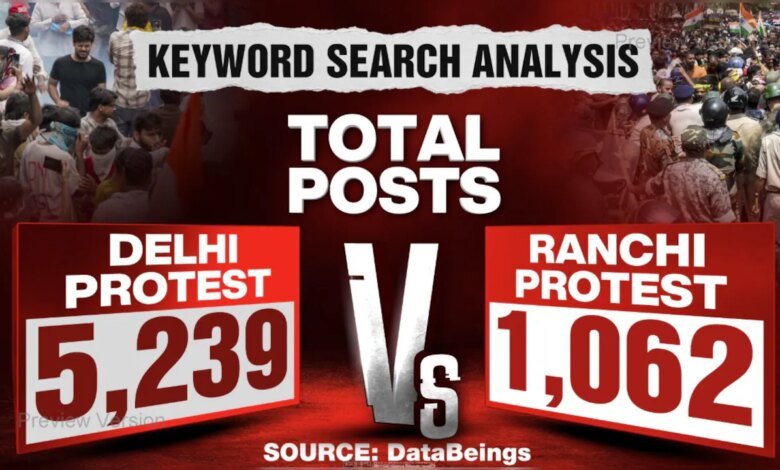
A keyword search analysis showed that while there were over 5,000 posts on the Delhi protest, the Ranchi protest saw just over a thousand.
But those 5,239 posts with the ‘Delhi CJP Protest’ keyword were a negligible fraction of Instagram’s 48-crore-strong user base in India – just 0.001%. And yet, in that week of protest, it felt like all of Instagram was flooded with the Delhi protest.
Data shows that those 5,239 posts came from just 3,100 unique accounts and reached 1.8 crore people, clocking engagement of over 3,500 per post. Result: The Delhi protest became an Instagram sensation.
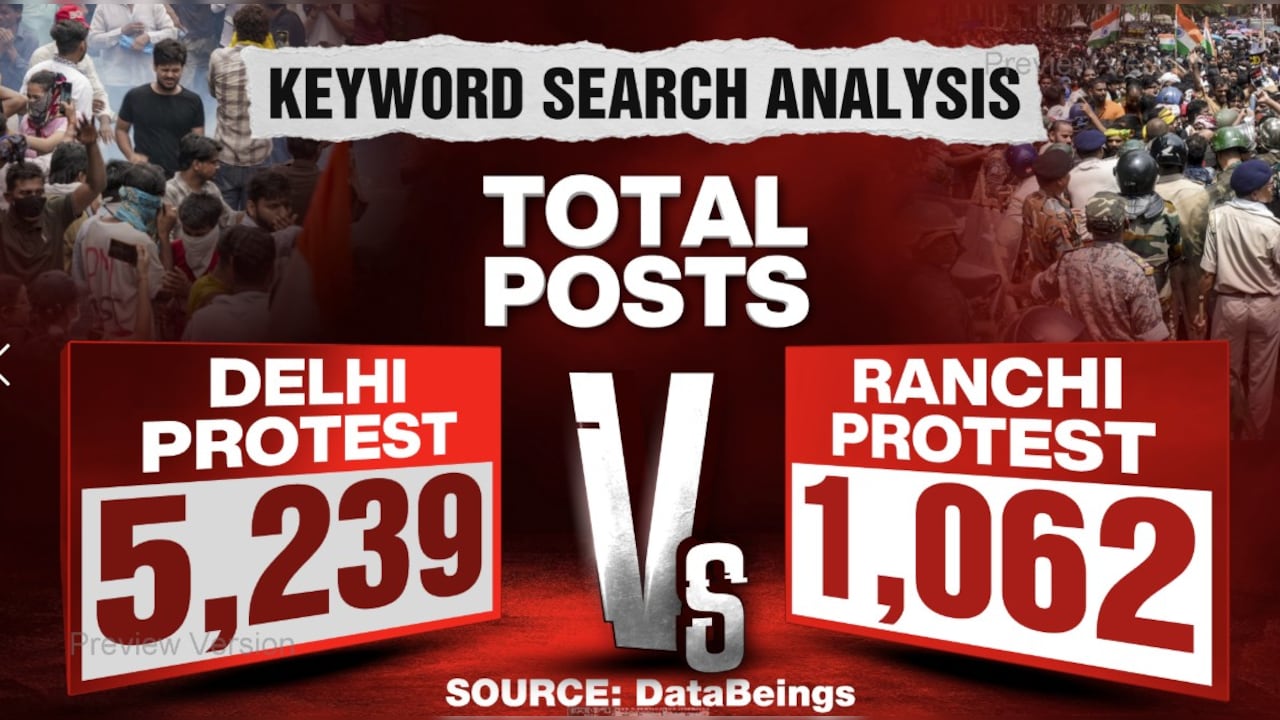
Replacing just ‘Delhi’ with ‘Ranchi’ in the keyword search, the data shows there were 1,062 posts from 290 unique accounts with a total reach of just 6 lakh, compared to 1.8 crore for the Delhi protest.
What made the Instagram algorithm decide that Jantar Mantar needed disproportionately higher amplification compared to Ranchi’s lathi charge?
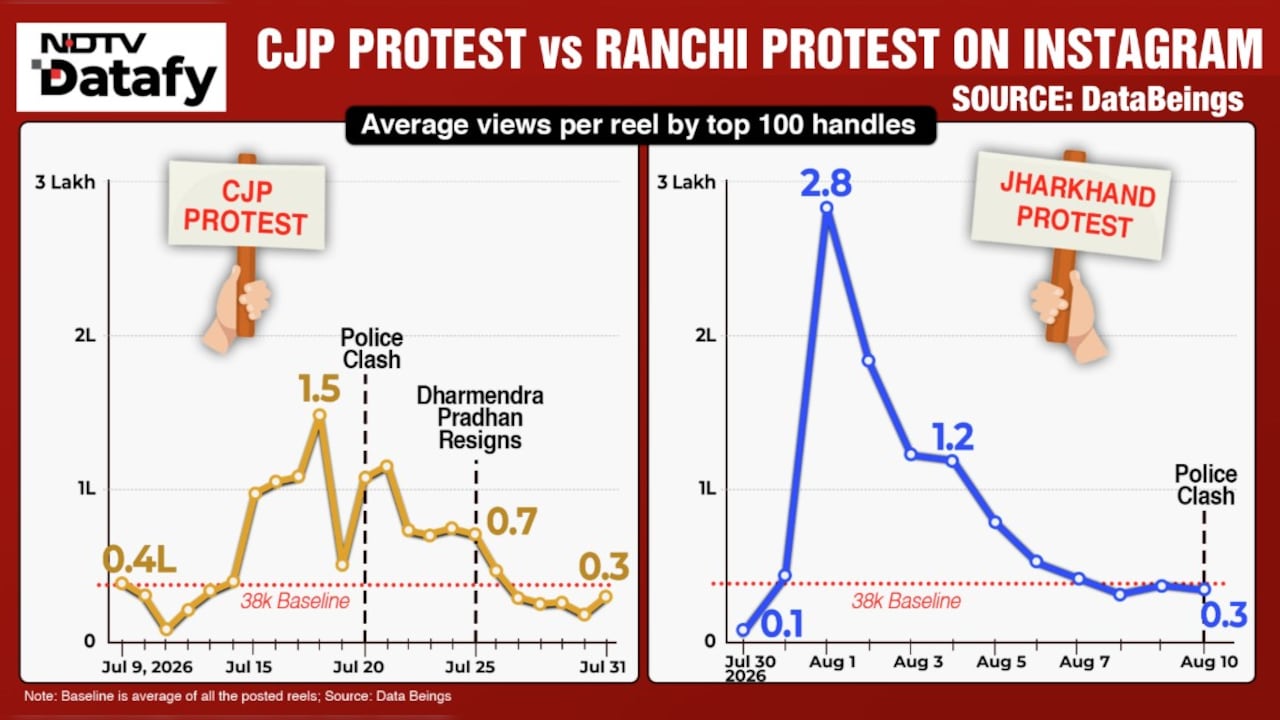
An analysis of views per reel on both protests also shows that Delhi was far ahead of Jharkhand. Delhi showed a slow and steady climb from the day of clashes on July 20 and peaked at 3 lakh views per reel on the day Dharmendra Pradhan resigned.
The Jharkhand curve tells a different story. After peaking at 2.8 lakh views per reel at the beginning of the protest, it saw a dramatic collapse. By the time of the police clash in Ranchi on August 10, the protest had almost disappeared from the algorithm.
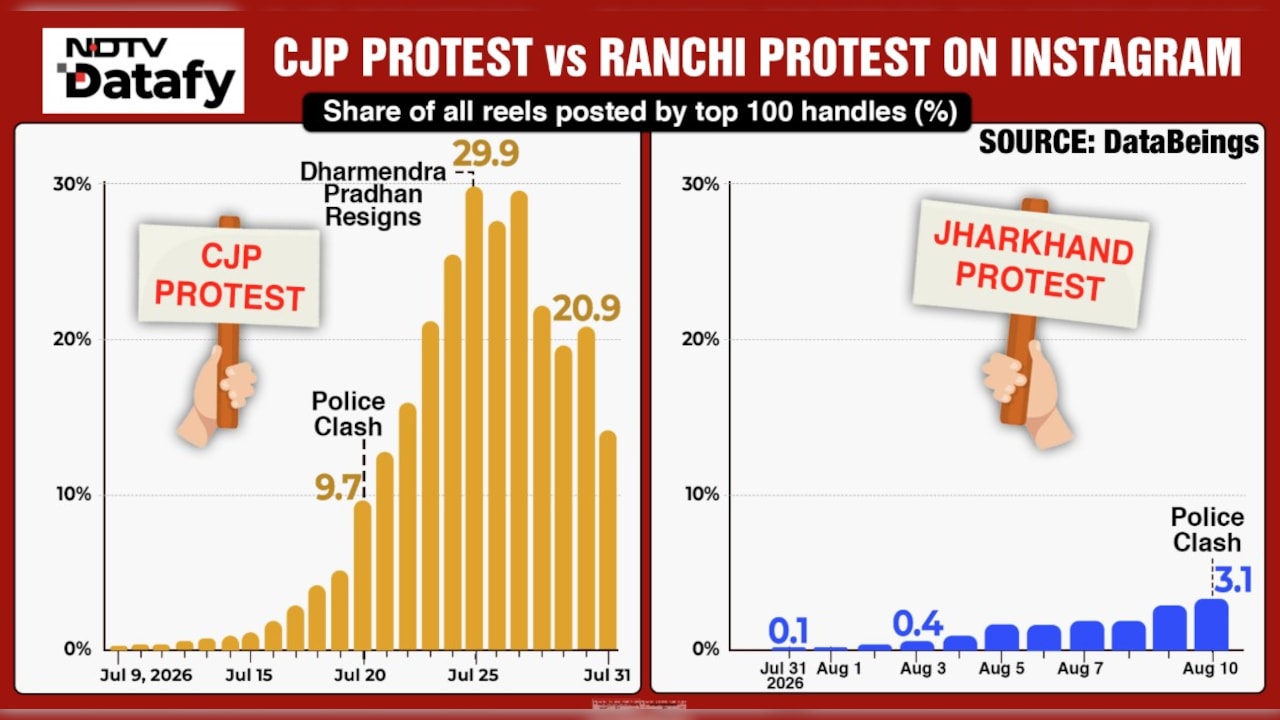
At its peak, 1 in 3 reels posted by the top 100 accounts was on Jantar Mantar. In contrast, Jharkhand at its peak had only a 3% share of posts by the top 100 accounts.
BJP leader Amit Malviya, reacting to the NDTV analysis, has raised questions about Meta’s algorithm. Is there a bias in what content is boosted and what is muted? he asked in an X post on Thursday.
This is a legitimate question for Meta. The allegation that it boosts certain content over others and sits in judgment of India’s public discourse is gaining ground. In the latest instance, it is guilty of suppressing the Jharkhand student protest while boosting the political… https://t.co/WRvX3MQNEr
— Amit Malviya (@amitmalviya) August 12, 2026
“This is a legitimate question for Meta. The allegation that it boosts certain content over others and sits in judgment of India’s public discourse is gaining ground. In the latest instance, it is guilty of suppressing the Jharkhand student protest while boosting the political campaign in the name of students at Jantar Mantar,” the BJP leader posted.
Is social media truly democratic, or is it also picking sides and playing favourites?