Hyderabad:
For decades, space exploration in India was the exclusive domain of the state-run Indian Space Research Organisation (ISRO). Long waiting lists and high costs meant that commercial satellite launches remained out of reach for many. However, a quiet revolution is underway, driven by two former ISRO scientists who decided to step out of the state agency to democratise space.
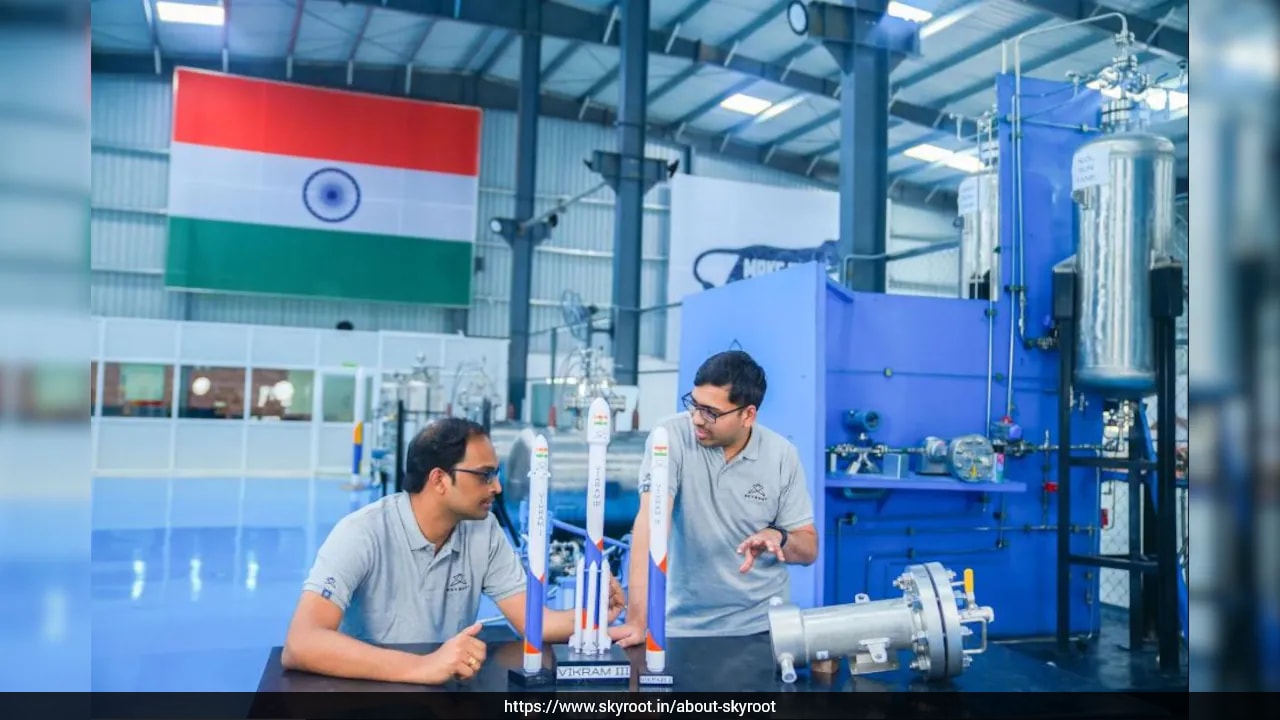
In 2018, Pawan Kumar Chandana and Naga Bharath Daka founded Skyroot Aerospace in Hyderabad. Their goal was simple yet audacious: to make launching a satellite as routine and affordable as booking a commercial flight.
Today, Chandana serves as Chief Executive Officer and Daka as Chief Operating Officer, leading a team of over 1,000 experts. The duo has successfully bridged the gap between traditional Indian space heritage and startup agility.
The enterprise made history in 2022 with ‘Mission Prarambh’, successfully launching Vikram-S, India’s first privately developed rocket. The feat proved that home-grown private companies could build and launch reliable aerospace hardware.
24 hours to lift-off. 🚀
Eight years ago, @SkyrootA started with just two people with an idea.
There was no policy framework for private spaceflight in India, no real funding ecosystem for space startups, and we were taking on one of the world’s hardest engineering challenges.… pic.twitter.com/wRDmgXoRx5
— Pawan (@PawanKChandana) July 17, 2026
Prior to this milestone, Skyroot had already turned heads by successfully testing Raman-1, India’s first private rocket engine, in 2020, followed by the cryogenic engine Dhawan-1 in 2021. The technical momentum has stayed strong, with the company recently clearing critical tests for its flagship orbital vehicle, Vikram-1.
This technological track record has attracted major global financial backing. Skyroot has raised 160 million US dollars from marquee international investors like GIC and Temasek, propelling the startup to a valuation of 1.1 billion US dollars.
As India opens its space sector to commercial players, Chandana and Daka are proving that the country can be a dominant global hub for cost-effective satellite launches, altering the global space race forever.