New Delhi:
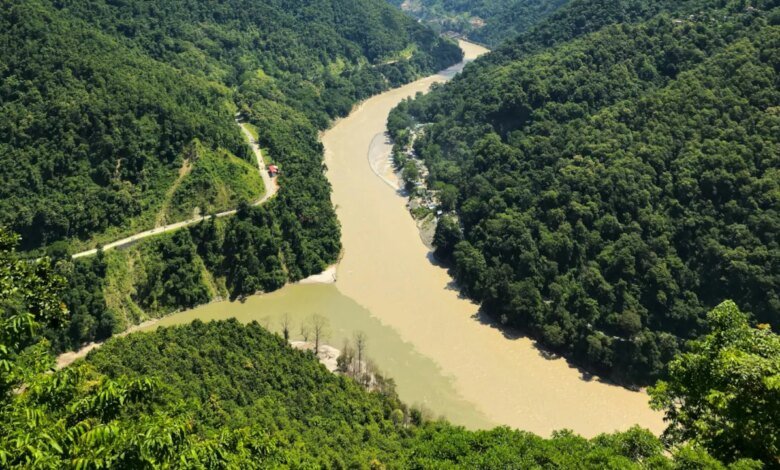
The Teesta project and the announcement of the Mongla Port signal Bangladesh’s pivot towards China. The Chinese Ambassador in Dhaka, however, said India can join a key economic corridor if it wants to. With the remark, China has left the door open for New Delhi, but it leaves itself in greater control of the power dynamics between the two nations.
“We proposed the Bangladesh-China-India-Myanmar Economic Corridor about 15 years ago and achieved some progress. But due to various reasons, we have not achieved the results China had expected,” Chinese Ambassador to Bangladesh Yao Wen said.
Asked if India could join the corridor, he said that it is open to other countries “if they are willing to join”.
“We are open-minded about other countries. If they are ready, we are prepared to include them. It depends on their decision. But China is now determined to move forward with an economic corridor involving Bangladesh and Myanmar,” the official added.
Also read: Bangladesh PM Tarique Rahman Meets Chinese President Xi Jinping In Beijing
Talking about China’s recent agreements with Dhaka, including Teesta, he said, “The previous Memorandum of Understanding was between a Chinese company and a Bangladeshi government entity. But we are talking about cooperation at a governmental level in this project. Chinese companies can conduct their surveys. We will conduct surveys with the best scientists. If the project is to move forward, surveys are necessary. The Chinese government will work with the Bangladesh government to advance these surveys. We are committed in this regard.”
India’s Ministry of External Affairs has made its position clear on the Teesta project. “On the question of Teesta, India’s development assistance for projects in Bangladesh is based on a mutually agreed roadmap, which is regularly reviewed. Our views on the Teesta River project have been conveyed to the Bangladesh side. We will factor all related developments in our overall approach to the Teesta issue,” it has said.
From procuring fighter planes to economic corridors to river basin management, the Bangladesh-China partnership has definitely progressed to a stage where the two countries have established ties in sectors that can worry New Delhi.
Xi Jinping, Tarique Rahman Meeting
Chinese President Xi Jinping and Bangladeshi Prime Minister Tarique Rahman jointly announced the decision to build a China-Bangladesh community with a shared future in the new era, elevating bilateral relations to a higher level.
Xi Jinping said after the meeting that no matter how the world changes, China will not waver in its commitment to the overall direction of China-Bangladesh friendly relations and will always be a trustworthy good friend, good neighbour, and good partner.
Also read: Opinion | Why India Should Be Very, Very Alarmed About China’s Teesta Move In Bangladesh
Takeaways For India
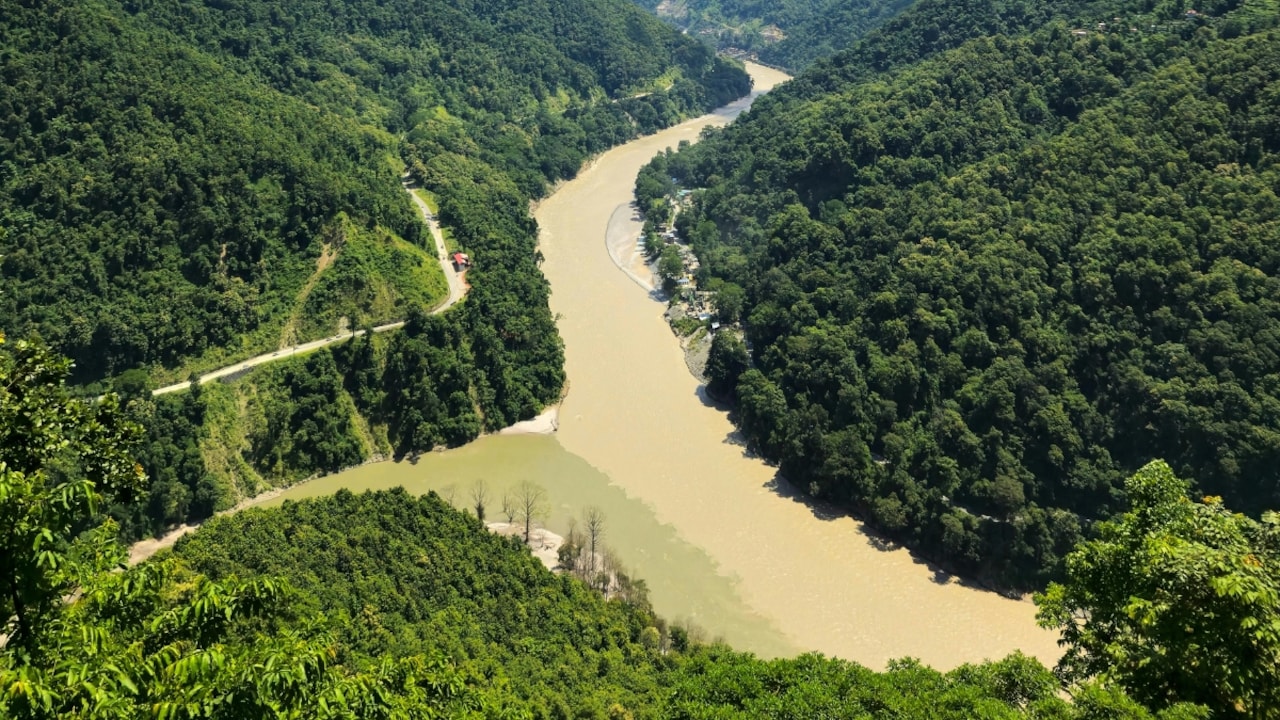
The statement has takeaways for India as it signals China’s permanent presence in Bangladesh, especially in the Teesta region.
The statements show a shifting of the scales, as Bangladesh gradually pivots towards China. However, many analysts still feel that the current statements emanating from Bangladesh, when it comes to building ties with India, are to give it a stronger position to negotiate from.
It is also partly driven by Bangladesh’s domestic politics and emboldening of anti-India voices, and New Delhi’s sustained assistance, especially during the fuel crisis triggered by the West Asia war.
During Rahman’s visit, China also offered to develop the China-Myanmar-Bangladesh Economic Corridor, which is again a project that India would be closely interested in. The CMBC economic corridor promises Beijing a new route to the Bay of Bengal.
The current proposal of CMBC is a re-drawing of an older, more ambitious plan, which involved India as well. In the 1990s, the Bangladesh-China-India-Myanmar (BCIM) corridor was proposed to connect Kunming to Kolkata via Mandalay and Dhaka.
Tarique Rahman and Xi Jinping have discussed advancing the corridor “for greater regional connectivity”, according to China’s foreign ministry.
When it comes to Myanmar, both India and China already have a presence, but it is not a joint programme. Sittwe and Kyaukphyu are key points where both India and China have sought to establish connectivity and economic hubs.
India’s long-term strategic presence is through the Kaladan Multi-Modal Transit Transport Project, which connects Kolkata to Sittwe seaport in Myanmar by sea, proceeding to Paletwa via the Kaladan River, and finally by road into Mizoram in Northeast India. It is a key project for India’s northeast region and is expected to cut transportation time and costs by half and also end dependence on the strategically sensitive Siliguri Corridor (Chicken’s Neck).
China’s presence is not very far from Sittwe, in Kyaukphyu. Kyaukphyu, a coastal town in Myanmar’s Rakhine State, is a strategic hub for China’s Belt and Road Initiative. It offers China direct access to the Indian Ocean via the Bay of Bengal, circumventing the congested Malacca Straits. The project includes the Kyaukphyu Deep-Sea Port and a Special Economic Zone (SEZ).