New Delhi:
For decades, a Bachelor of Education (B.Ed) has been the gold standard for aspiring teachers in India. But as artificial intelligence enters classrooms and coding concepts reach children as young as Class 3, the question is becoming harder to ignore: Is a B.Ed alone enough for the teaching jobs of the future?
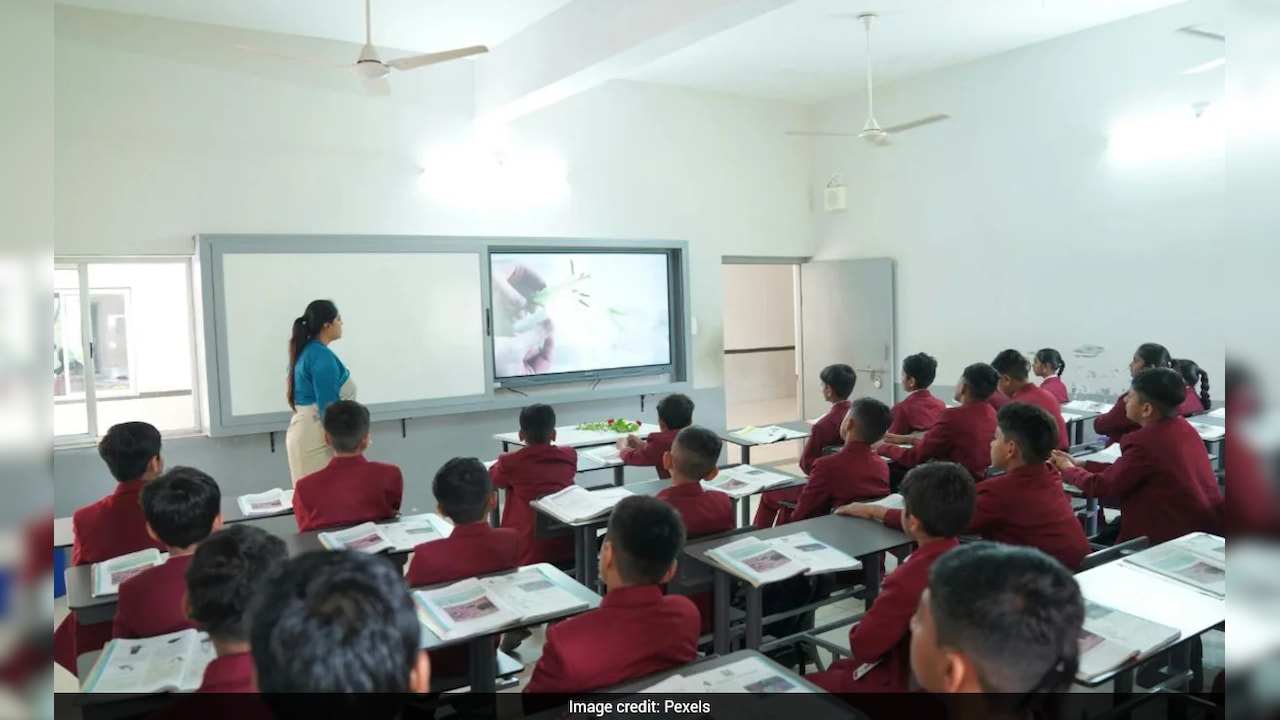
That debate has gained fresh momentum after the Central Board of Secondary Education (CBSE) introduced a new curriculum on Computational Thinking and Artificial Intelligence for students from Classes 3 to 8 from the 2026-27 academic session. The initiative is aligned with the National Education Policy (NEP) 2020 and is accompanied by a nationwide teacher-training push focused on AI and computational thinking.
The move signals something bigger than a curriculum change. It points to a transformation in the skills schools may increasingly seek when hiring educators.
The New Hiring Reality
Education experts say AI will not replace teachers. But it could widen the gap between teachers who adapt and those who do not.
“AI will not replace India’s teachers, but it will relentlessly expose the difference between those who merely deliver content and those who design learning,” said Dr Abhinav P Tripathi, Associate Professor at Christ University, Delhi NCR Campus.
According to him, educators who can use AI as a teaching assistant — rather than view it as a threat — will be better positioned in the years ahead.
“In a CBSE and NEP era where children meet computational thinking and AI from Class 3 onwards, the ‘safe’ teacher is the one who learns fast, curates wisely and models ethical, human-centred use of intelligent tools,” Tripathi said.
The CBSE curriculum itself is designed to build foundational AI literacy, logical reasoning and problem-solving skills among students from an early age. Teacher training has also been made a key part of the rollout.
What The Job Market Is Already Showing
The shift is no longer theoretical.
Hiring platform Apna.co says demand for educators with digital and technology-enabled skills is rising sharply.
Kartik Narayan, CEO of Apna.coAttachment.png, said demand for educators with digital and technology-enabled skills grew 148% between 2024 and 2025 on the platform.
By early 2026, nearly one in every 15 teaching job postings carried a specific requirement related to AI, coding or robotics. Just two years earlier, that figure stood at roughly one in 55.
Demand for robotics and STEM educators increased 113 per cent year-on-year, while openings for AI and data science trainers rose 81 per cent, according to Apna’s data.
“The B.Ed is not broken. It’s just incomplete,” Narayan said.
“The signal is clear. B.Ed remains an important foundation, but it is no longer the whole story.”
Those numbers highlight a growing business opportunity as well. Schools, edtech firms, teacher-training institutes and certification providers are all likely to benefit from rising demand for AI-ready educators.
A Bigger Education Economy Is Emerging
India’s education sector is increasingly being shaped by technology.
The government’s push under NEP 2020 towards experiential learning, multidisciplinary education and technology-enabled classrooms has already encouraged schools to invest in digital infrastructure and teacher upskilling.
Now, with AI becoming part of mainstream school education, a parallel market for teacher reskilling could expand rapidly.
From AI certifications and coding bootcamps to classroom technology training programmes, a new ecosystem is emerging around educator readiness.
Experts believe this could create a fresh layer of demand in the education-services industry over the next decade.
Why Human Skills Matter More Than Ever
Yet the experts caution against viewing AI skills as a substitute for teaching ability.
Narayan argues that schools still need educators who can develop curiosity, judgement, confidence and critical thinking in students.
“There’s a difference between a teacher who uses AI to think better and one who uses AI instead of thinking. That difference is everything,” he said.
He warns that education systems must avoid producing teachers who are highly skilled at prompting machines but weak at independent thought.
Tripathi echoes that view. He believes AI can free teachers from repetitive tasks, allowing them to spend more time mentoring students and providing socio-emotional support-areas where technology still falls short.
“The most secure jobs in education will belong to educators who can turn AI from a threat into a teaching assistant,” he said.
The Real Question
The discussion, experts say, should no longer focus on whether a B.Ed. remains relevant. It does.
The bigger question is whether teacher-training programmes can evolve quickly enough for classrooms where AI, personalised learning and digital tools are becoming everyday realities.
As CBSE pushes AI literacy deeper into the school system, the future teacher may need two qualifications: the pedagogical foundation of a B.Ed. and the technological fluency to navigate an AI-driven classroom.
For India’s education sector, that shift could reshape not just what students learn — but also who gets hired to teach them.