New Delhi:
As Delhi continues to grapple with its three towering landfill sites, a community-led waste management initiative in a South Delhi colony is emerging as a potential model for the rest of the city.
Navjeevan Vihar, a residential colony in South Delhi, has kept more than 10 lakh kilograms of waste out of landfill sites over the past eight years through a decentralised “zero-waste” system. The model has now caught the attention of Delhi Lieutenant Governor Taranjit Singh Sandhu, who has directed the Municipal Corporation of Delhi (MCD) to help replicate similar initiatives across the capital.
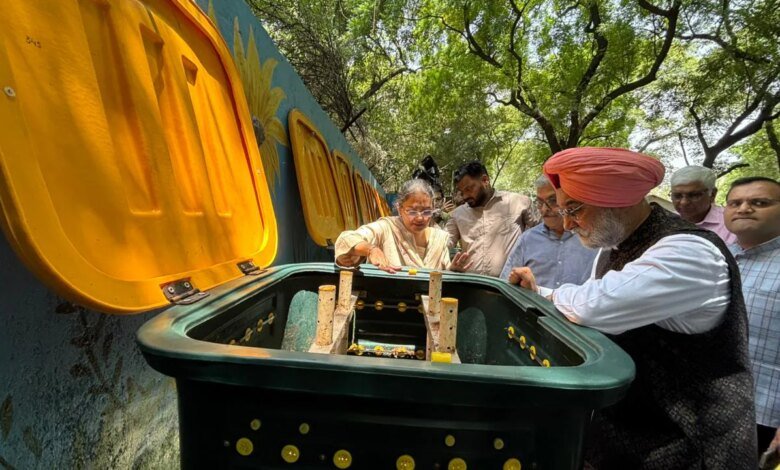
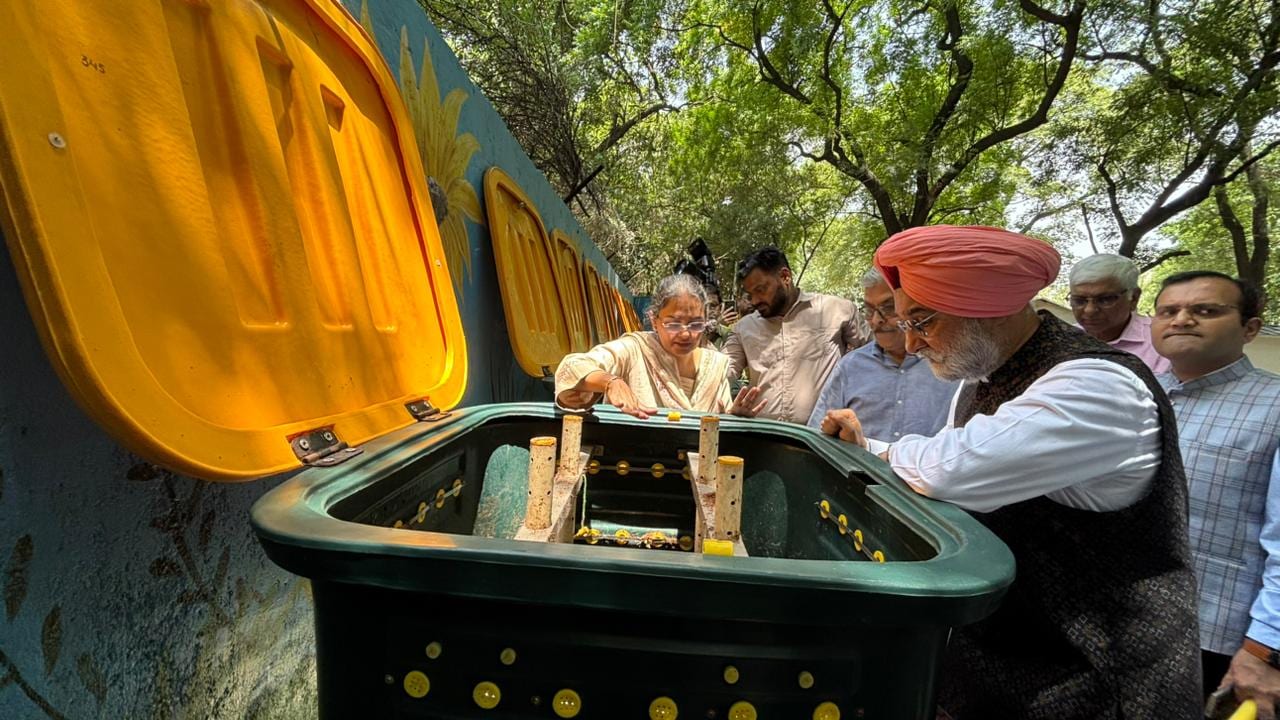
During a visit to the colony on Tuesday, Mr Sandhu reviewed its Reduce-Reuse-Recycle (RRR) Centre, aerobic composting units, source-segregation mechanisms and rainwater harvesting system. Calling it one of Delhi’s best practices, he said the initiative demonstrated how active citizen participation can help address the city’s growing waste challenge.
What Is The ‘Zero-Waste’ Model?
The model focuses on managing waste within the community instead of sending it directly to landfill sites.
Residents segregate waste at home, biodegradable waste is composted locally, and recyclable material is channelled for reuse and recycling. The aim is to ensure that as little waste as possible ends up in landfills while turning waste into a resource.
According to officials, Navjeevan Vihar has sustained this approach for nearly eight years, significantly reducing the amount of waste transported to dumping grounds and helping divert more than 10 lakh kilograms of garbage from landfill sites.
MCD Asked To Replicate Model Across Delhi
Highlighting the need to scale up the success story, the LG directed the MCD to actively encourage Resident Welfare Associations (RWAs) across Delhi to adopt similar decentralised waste management systems.
To ensure the model reaches economically weaker areas, he asked the civic body to explore dedicated funding mechanisms for implementing such projects in not-so-well-off colonies, particularly unauthorised and low-income group (LIG) localities.
The LG also directed officials to systematically explore Corporate Social Responsibility (CSR) funding to create infrastructure such as Aerobins and RRR centres needed for decentralised waste processing in these areas.
“Government Efforts Alone Are Insufficient”
Emphasising the need for a behavioural shift, LG Sandhu said sustainable waste management cannot be achieved through government action alone.
“Government efforts alone are insufficient. Sustainable waste management requires active public participation and a deep sense of ownership among citizens,” he said.
Stressing the importance of teamwork between residents and civic agencies, the LG said the journey from “waste to wealth” begins at home through proper segregation of waste at source.
“There is no need to look at other cities or nations for solutions when such best practices are emerging from our own people,” he said, urging RWAs across Delhi to take the lead in community-driven waste management efforts.
CSR Funds To Be Explored For Expansion
The LG said CSR funding should be systematically tapped to help create infrastructure required for decentralised waste management, particularly in colonies that may lack adequate resources.
Officials said this could include support for facilities such as Aerobins, composting units and RRR centres that help process waste closer to where it is generated.
Can A Colony-Level Solution Help Delhi’s Waste Crisis?
Delhi’s waste management challenge remains one of the city’s biggest civic concerns. The capital continues to rely on its three major landfill sites- Ghazipur Landfill, Bhalswa Landfill and Okhla Landfill, even as authorities work to reduce their size and process legacy waste.
Officials believe decentralised models such as the one adopted by Navjeevan Vihar can help reduce the amount of waste reaching landfill sites by processing it closer to where it is generated. Such systems also encourage segregation, composting and recycling at the household and community levels.
The LG said initiatives like these deserve full institutional support and called on citizens, RWAs and government agencies to work together towards building a cleaner, greener and more sustainable “Viksit Delhi”.
The success of Navjeevan Vihar has shown what a motivated community can achieve. The challenge now is whether Delhi can replicate that success across hundreds of colonies and turn its ‘zero-waste’ ambition into a meaningful dent in its three garbage mountains.