While the media spotlight is firmly on the Congress-Samajwadi Party (SP) seat-sharing talks ahead of the Uttar Pradesh Assembly elections, the BJP could face far tougher negotiations with its own allies in the state.
The ruling party has to manage the expectations of at least four regional players, two of whom were part of the SP-led alliance in the last Assembly elections.
Advertisement – Scroll to continue
Jayant Chaudhary’s Rashtriya Lok Dal (RLD) and Om Prakash Rajbhar’s Suheldev Bharatiya Samaj Party (SBSP) were part of the SP alliance in 2022 before switching sides. Meanwhile, Anupriya Patel’s Apna Dal (S) and Sanjay Nishad’s Nishad Party contested the last Assembly elections in alliance with the BJP and continue to be part of the ruling NDA.
This time, the BJP has to accommodate all four partners, each with its own electoral ambitions and areas of influence across western and eastern Uttar Pradesh.
Advertisement – Scroll to continue
As part of the SP alliance in 2022, the RLD contested 33 seats in western UP and won eight. The party was in direct contest with the BJP in these constituencies, where the ruling party has consistently sought to consolidate its position since 2014.
The SBSP, meanwhile, contested 19 seats in eastern UP and won six.
Read | List Of 130, Then Tea: Congress Gets ‘Can’t Take Risk’ Reply From Samajwadi Party
Having established their own caste and community-based support bases, both regional outfits are now expected to drive a hard bargain with the BJP.
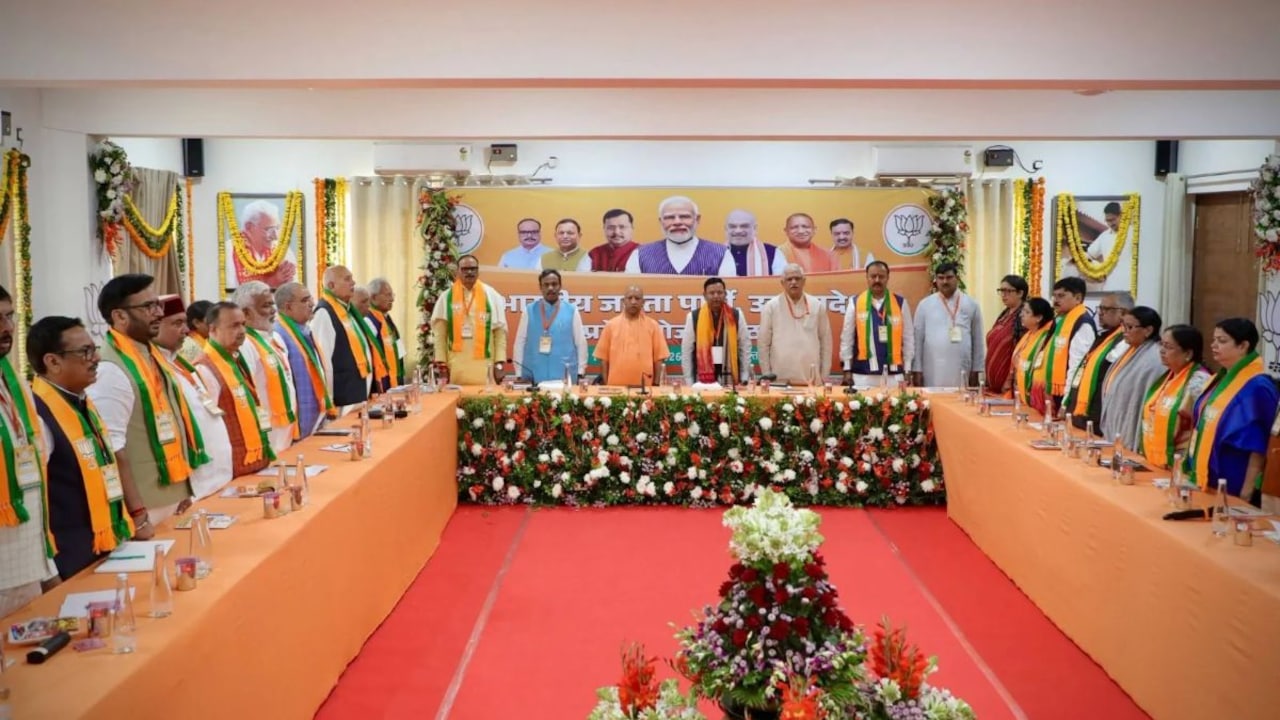
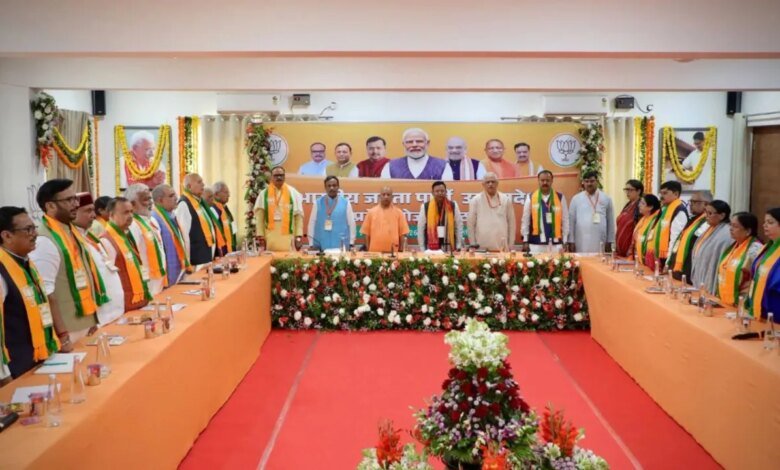
BJP strategy meet in Mathura
Photo Credit: @BJP4UP
In the last Assembly elections, the BJP contested 376 of the 403 seats, leaving 27 for its allies. It won 255 seats. According to media reports, the BJP is planning to contest around 350 seats this time and leave approximately 50 for its allies.
The question is: Can the BJP accommodate the rising aspirations of four regional partners within this limited pool of seats?
The BJP is aware that managing these competing demands will be a tall order. The party has, therefore, deputed some of its senior leaders to negotiate separately with each ally.
Chief Minister Yogi Adityanath, his two deputies and state BJP president Pankaj Chaudhary have been assigned the task of holding discussions with the four major alliance partners.
According to reports, Yogi Adityanath will hold talks with RLD chief Jayant Chaudhary, while Deputy Chief Minister Brajesh Pathak has been tasked with negotiating with Apna Dal (S) chief Anupriya Patel.
Similarly, Pankaj Chaudhary will engage with Nishad Party chief Sanjay Nishad, while Deputy Chief Minister Keshav Prasad Maurya will negotiate with SBSP chief Om Prakash Rajbhar.
The allies, meanwhile, have already begun pushing for a bigger share of the electoral pie. According to reports, Anupriya Patel has sought 25 seats, the RLD 30, the SBSP 25 and the Nishad Party 36.
Past Performance Versus Ambitions
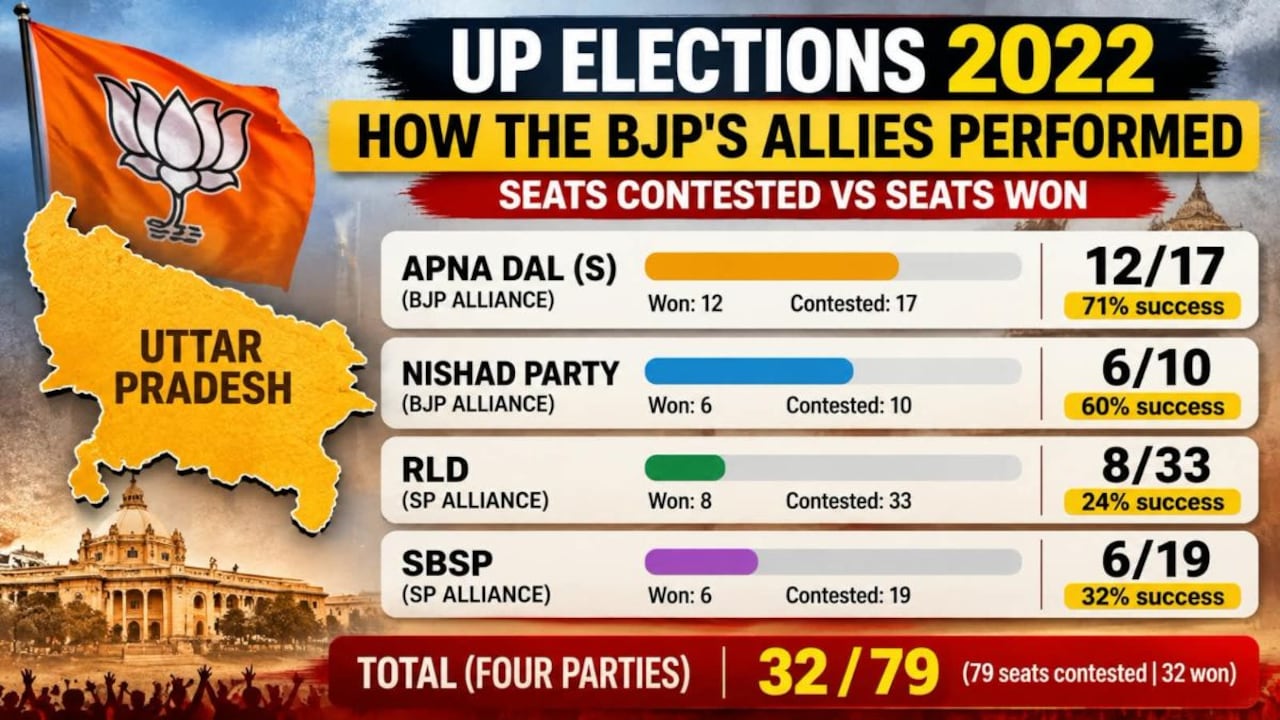
The BJP’s older allies have their previous electoral performances to fall back on while negotiating.
Apna Dal (S) had a success rate of around 70 per cent in 2022, when it contested 17 seats and won 12. The Nishad Party, meanwhile, had a strike rate of 60 per cent, winning six of the 10 seats it contested. Additionally, six Nishad Party candidates contested on the BJP symbol, five of whom emerged victorious.
Read | Real-Life Mirzapur? Story Of UP’s Tiwari Haata That Akhilesh Yadav Visited
The two relatively new allies, the RLD and SBSP, did not fare as impressively.
The RLD’s success rate was around 24 per cent, having won just eight of the 33 seats it contested. The SBSP of the outspoken Om Prakash Rajbhar, had a strike rate of approximately 31 per cent, winning six of the 19 seats it contested.
Conventional wisdom would suggest that the two parties should settle for fewer or a similar number of seats this time. However, the 2024 Lok Sabha election results are likely to weigh heavily on the negotiations.
The allies are aware of the BJP’s diminished performance in the parliamentary elections, the 10-year anti-incumbency that the party faces and the caste equations in the state. They will, therefore, be keen to use the BJP’s electoral vulnerabilities to demand a bigger slice of the seat-sharing pie.
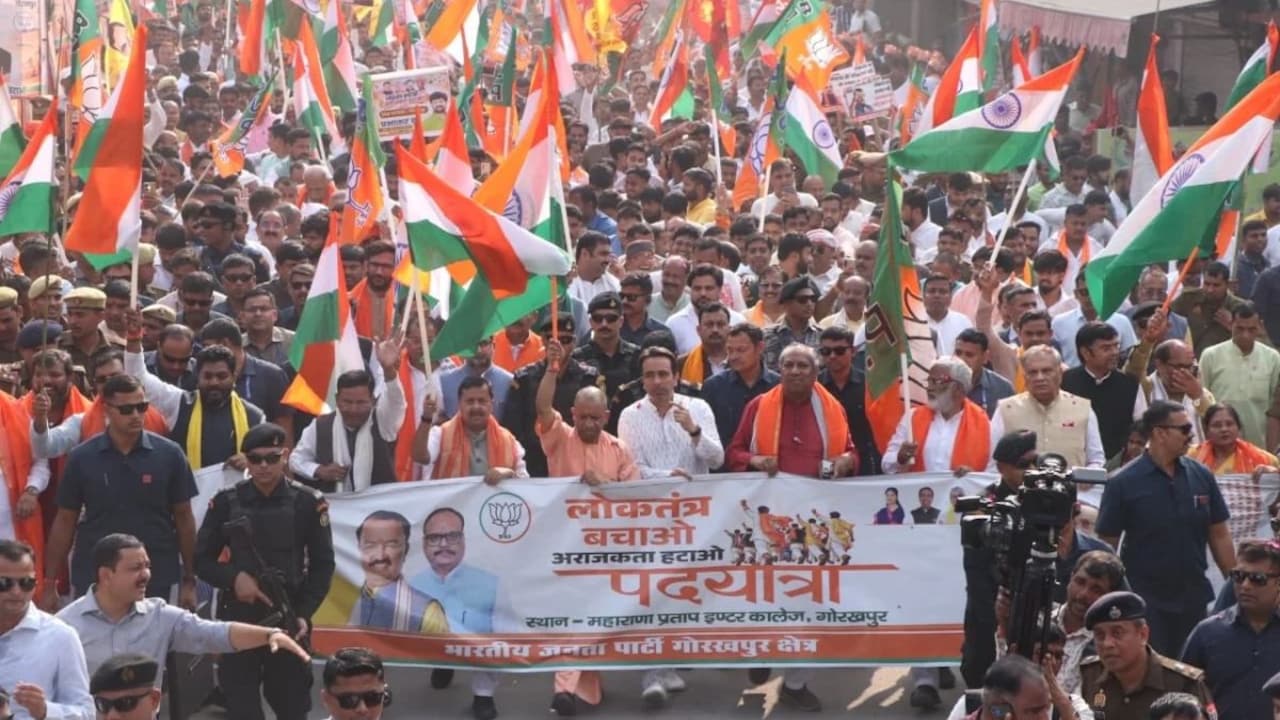
Jayant Chaudhary and Sanjay Nishad with Yogi Adityanath at a march in Gorakhpur
Photo Credit: @jayantrld
Purvanchal: A Crowded Political Playing Field
The BJP’s challenge is further complicated by the fact that three of its regional allies have their strongest areas of influence in eastern Uttar Pradesh, or Purvanchal. This could create overlapping claims over constituencies and make the seat-sharing exercise even more complicated.
The Nishad Party, founded by Sanjay Nishad in 2016, seeks to mobilise riverine OBC communities, including Nishads, Kewats, Binds, Beldars, Mallahs, Sahanis, Kashyaps and Gondis. Its strongest base is in eastern Uttar Pradesh and parts of central UP.
These communities have a significant presence in districts such as Gorakhpur, Basti, Ayodhya, Azamgarh, Prayagraj and Varanasi, particularly along the Ganga and Yamuna river basins.
Read | “Radhe Radhe, Kamal Khila De”: BJP’s Slogan For 2027 UP Elections
The Suheldev Bharatiya Samaj Party, led by Om Prakash Rajbhar and founded in 2002, draws much of its support from the Rajbhar community and other non-Yadav OBC groups in Purvanchal. The Rajbhar community is estimated to account for around 4 per cent of Uttar Pradesh’s electorate. The party’s influence is concentrated in eastern UP districts such as Ghazipur, Ghosi, Ballia and Jaunpur.
Akhilesh Yadav recently took a swipe at the SBSP-BJP alliance by posting a list of 36 constituencies, claiming it was Rajbhar’s wishlist for the upcoming elections. The SBSP chief subsequently made light of the SP president’s post.
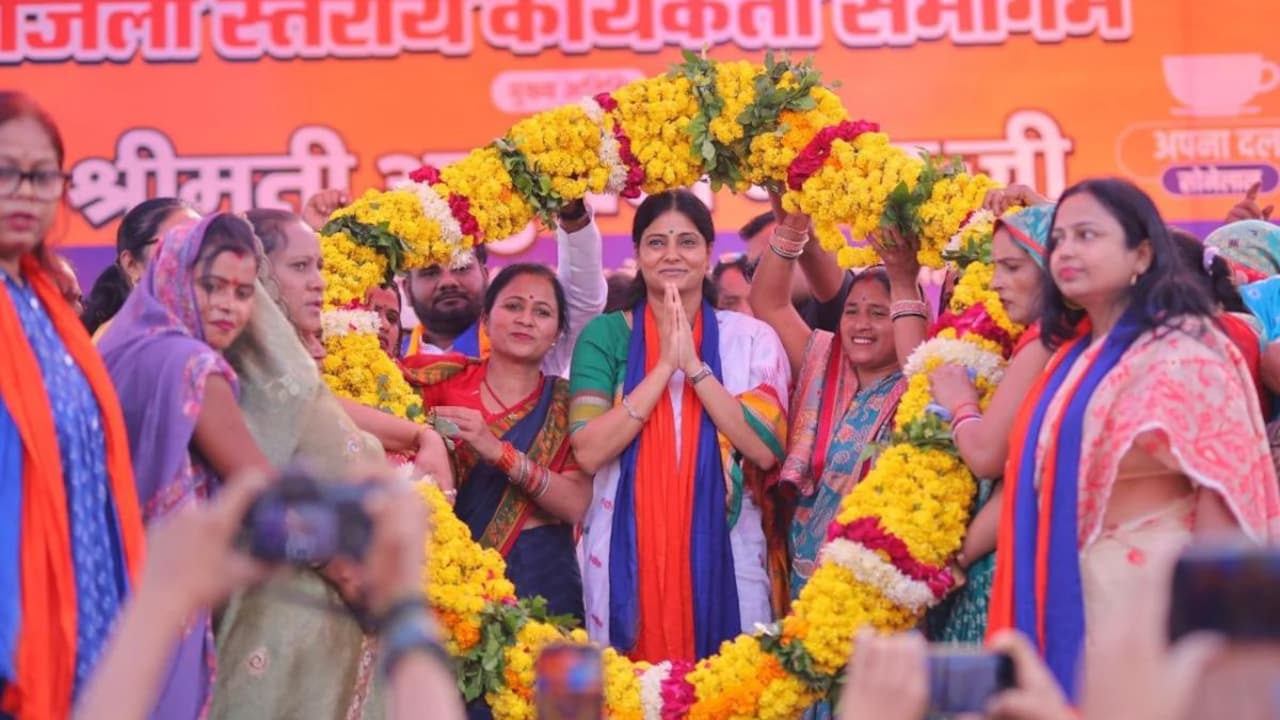
Apna Dal (S) chief Anupriya Patel at a rally
Photo Credit: @AnupriyaSPatel
Apna Dal (S), led by Union Minister Anupriya Patel, also has a concentrated electoral base in eastern Uttar Pradesh, particularly across the Vindhya region and Mirzapur, where it draws support from Kurmi and other OBC voters.
The BJP, therefore, faces the challenge of accommodating three regional players with overlapping areas of influence and competing electoral ambitions in the same broad geographical belt.
Chirag Paswan Adds To The BJP’s Headache
The cohesion of the NDA will face another test in Uttar Pradesh, with yet another ally, Chirag Paswan’s Lok Janshakti Party (Ram Vilas), flexing its muscles.
Paswan has indicated that his party could go it alone if a seat-sharing arrangement with the BJP fails to materialise. With an established support base among Dalit voters in Bihar, the LJP is looking to expand its footprint in Uttar Pradesh, potentially adding another layer of complexity to the BJP’s alliance arithmetic.
Paswan recently cited the example of Nagaland to underline his party’s willingness to contest independently.
“In Nagaland, LJP contested the elections without an alliance. I have two MLAs in Nagaland. If an alliance cannot be worked out in UP, the Lok Janshakti Party (Ram Vilas) will possibly contest candidates on all 403 seats,” he said.
For the BJP, therefore, the challenge goes well beyond negotiating numbers. It must balance the ambitions of its allies, manage competing caste equations and prevent disgruntled partners from turning into electoral rivals.
The Congress-SP seat-sharing negotiations may be attracting the headlines, but the BJP’s own alliance management could prove to be the bigger political test.