In 1361, Delhi was the seat of Sultan Feroz Shah Tughlaq; the Mughals were a century and a half in the future, the British Raj five centuries away. That year, in an England emerging from the first phase of the Hundred Years’ War, Parliament grew anxious about soldiers drifting home from France, labelling them potential “pillers and robbers”. It passed a law assigning to every county “one lord, and with him three or four of the most worthy”, with the power to restrain them and demand guarantees of their good behaviour. It was an age of harsh laws. That same statute allowed labourers who ran away from their employers to be branded on the forehead with the letter ‘F’, for “falsity”.
The Tughlaqs’ city on the Yamuna is now a ruin, Feroz Shah Kotla, best known today for the cricket ground that carried its name. The ‘F’ branding law is long gone.
Advertisement – Scroll to continue
The peace law has had to evolve to some degree but survives, and so does its idea, in Delhi.
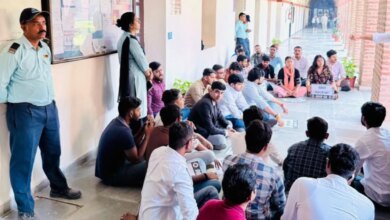
This month, the law held two young Cockroach Janta Party (CJP) leaders in jail for a week for allegedly breaking a promise to “keep the peace”. Student leader Neha Bora, who has refused to make that promise, is asking the question at the heart of it all: “Whose peace am I being asked to keep?”
Advertisement – Scroll to continue
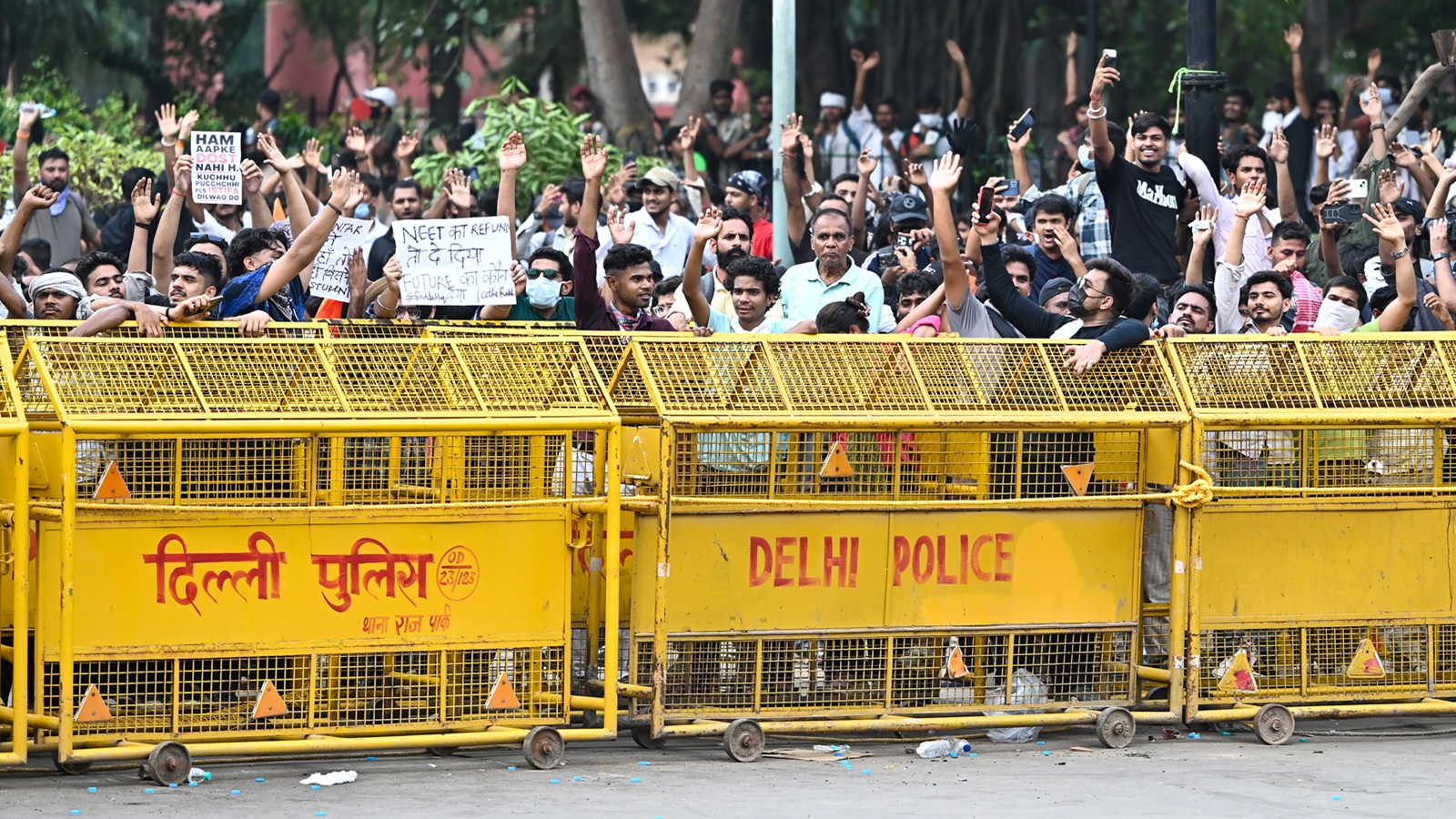
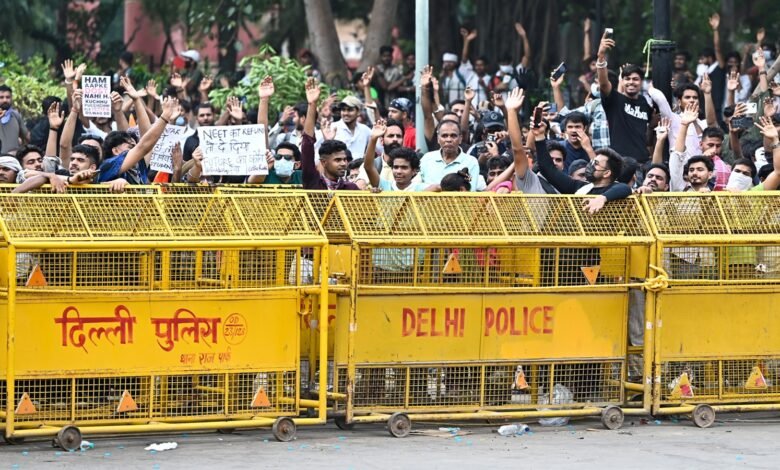
Delhi and other places have been seeing a series of protests, starting in July over paper leaks and currently over alleged electoral fraud. Photo: NDTV
Two Cases, One Question
The CJP’s Abhijeet Dipke, Saurav Das and Ashutosh Ranka were detained at Delhi airport on October 10, ahead of a planned protest demanding the resignation of Chief Election Commissioner Gyanesh Kumar. In the early hours of October 11, a Special Executive Magistrate (SEM), a police officer in Delhi, released them after they signed peace bonds valid for a year.
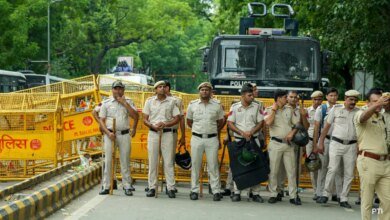
Two days later, amid a wider police crackdown, Das and Ranka scaled locked gates to reach the protest area beside Jantar Mantar, the 18th-century observatory. The area had been denotified as a protest venue. They have said they only waved the national flag, but committed no offence. An SEM sent them to judicial custody for five days over an alleged breach of the bond. On October 19, another SEM extended it by two days. The Delhi High Court said they could go to the local judicial court. That evening, the SEM released them after accepting their sureties. The breach proceedings continue.
All India Students’ Association (AISA) president Neha Bora faces the same process differently.
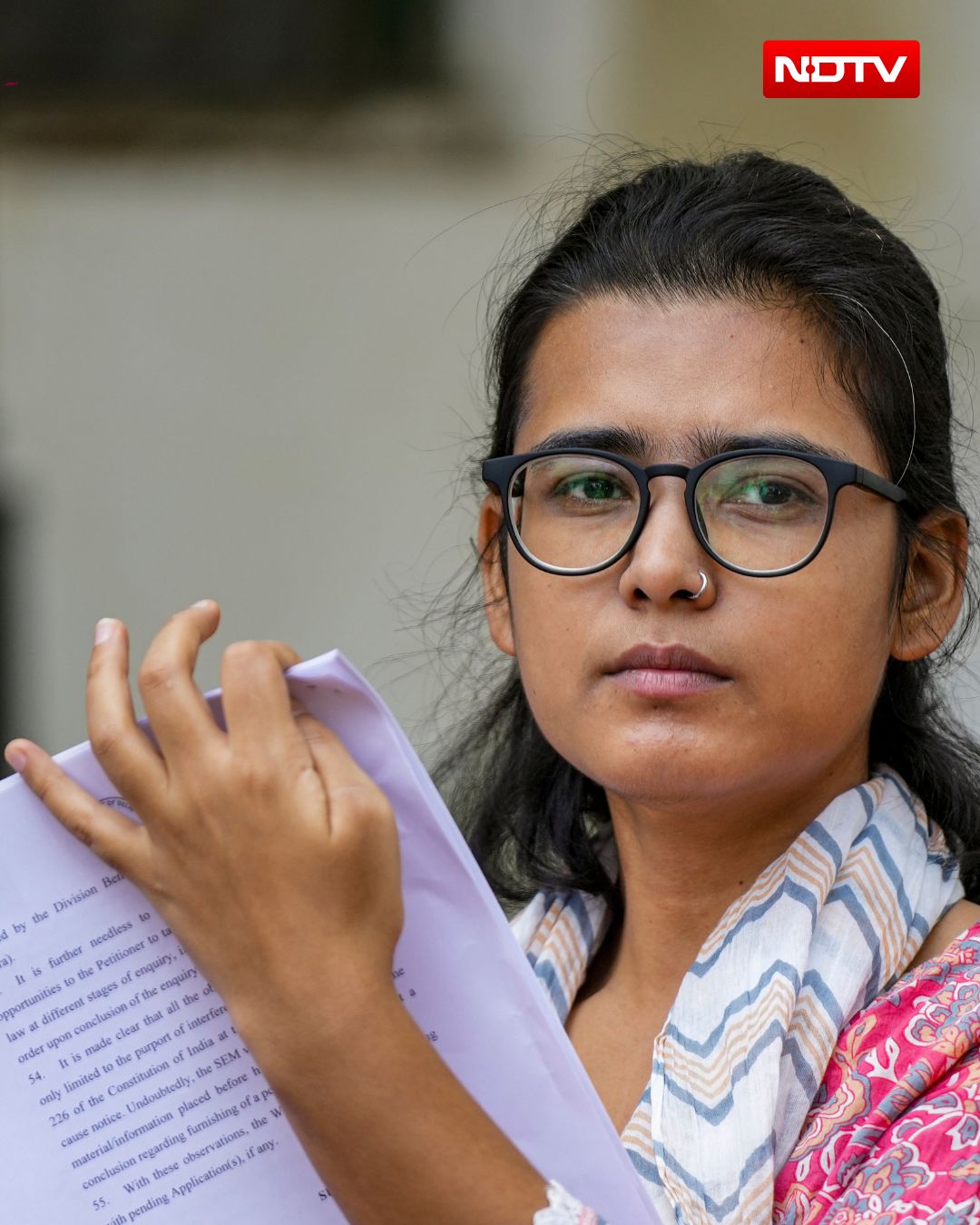
AISA’s Neha Bora has been one of the key leaders of recent protests by groups led by the Congress, CJP and others.
Photo: NDTV
READ | A Step Behind Neha Bora: What Rahul Gandhi’s Gesture Says About Congress’ Gen-Z Pitch
Detained at Mandi House on October 16, Bora was asked to sign a peace bond but challenged the notice in court, saying that the alleged disregard of prohibitory orders did not mention specifics. The court dismissed the petition but said Bora was entitled to the material behind the notice. Bora has so far resisted signing the bond.
Both cases raise the same question: who decides that a person is likely to disturb the peace, and on what basis?
The Name Is Bond
A peace bond is a written promise to stay out of trouble for a fixed period, often backed by money or by guarantors who agree to pay if it is broken.
“In its current state, the bond is a blanket form with standard fill-in-the-blanks, which leaves the idea rather vague,” said Arjun Sheoran, a lawyer at the Punjab and Haryana High Court.
Under Section 126 of the Bharatiya Nagarik Suraksha Sanhita (BNSS), an executive magistrate who receives information that a person is “likely to commit a breach of the peace or disturb the public tranquillity” can issue a show-cause notice, like the one Bora challenged, asking why they should not sign such a bond for up to a year. “Habitual offenders” can be bound for up to three years. No crime needs to have been committed, only a likelihood, as the magistrate sees it.
A person who cannot arrange the bond, or is found to have broken it, can be jailed for the rest of its term. Sheoran said the system is also flawed because an “executive” magistrate, sometimes a police officer, makes these decisions instead of a judicial officer.
How The Power Changed Hands
The 1361 idea travelled with the British Empire into colonial criminal codes, India’s among them. In Kenya, which inherited the same tradition, the High Court said in 2015 that most of the bond provisions were written in the late 1950s, a period marked by “attempts by the colonial state to suppress dissent”.
When India rewrote its criminal procedure in 1973, it split magistrates into two wings: judicial to try cases, and executive, which kept preventive powers, including peace bonds. Today, the law lets state governments appoint senior police officers as SEMs.
Piloting the BNSS through Parliament in 2023, Union Home Minister Amit Shah said such changes would “free people from a colonial mindset”. Since 2014, the government of Prime Minister Narendra Modi has also repealed more than 1,500 obsolete laws, listing that as one of its moves towards “de-colonisation of the mind”. Other moves include renaming major roads. The peace bond chapter, however, was carried into the BNSS largely intact.
READ | 12 Years Of ‘Decolonisation’: How Modi Government Shed British-Era Practices
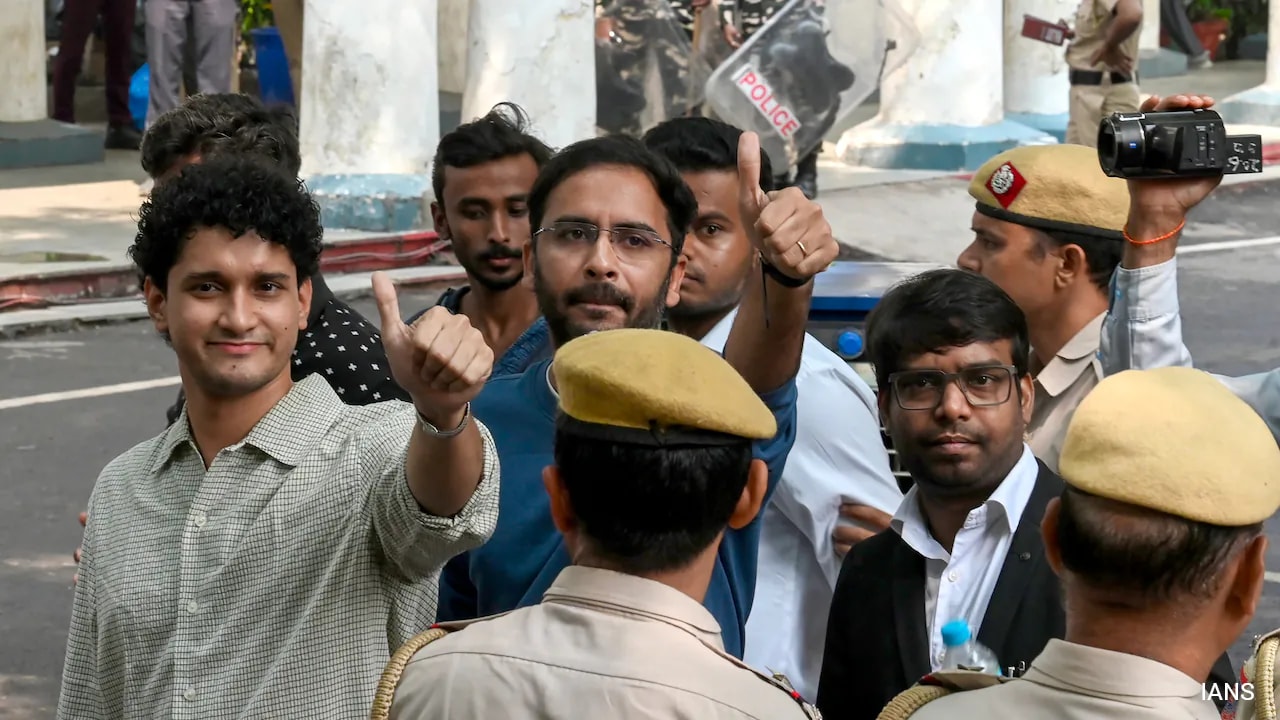
Saurav Das and Ashutosh Ranka spent a week in jail. Photo: IANS
What Courts Have Said
The Supreme Court upheld the old peace bond provision in 1970, while insisting that its procedure be strictly followed, in a case involving activist-politician Madhu Limaye.
Sheoran pointed towards another argument in a later ruling, ‘Shreya Singhal vs Union of India’, though not directly linked. In that judgment, the SC struck down Section 66A of the IT Act, which criminalised “offensive” online messages. “The law was cancelled because its wording, such as ‘offensive’, was considered too vague and undefined, making it easy for authorities to misuse it,” he said. The same test of clear definitions should apply to peace bonds, he argued.
The Delhi High Court, hearing Bora’s challenge, observed that the issue “has a facet in Article 21” of the Constitution that guarantees that no person shall be deprived of life or personal liberty except according to procedure established by law.
Why Even Have The Power
The government’s case is that peace bonds prevent harm rather than punish it. Additional Solicitor General Chetan Sharma told the Delhi High Court that the law empowers authorities to act when a breach of the peace is likely.
Sheoran does not dispute the idea of prevention as such, “but separating powers of the executive and the judiciary is important”. He terms the current system reverse-engineering of offences, rooted in a “paternal” idea of the state defining what ‘order’ in ‘law and order’ means.
READ | Jantar Mantar Tells Time. The Clock Just Stopped On Its Time As An Iconic Protest Site
He said prohibitory orders banning gatherings are routinely issued, “and those are hardly ever challenged in an actual court, because the process is already in motion on the ground, people have been detained, and sometimes the whole thing has run its course within the same police station even before you reach court”.
What Happens Elsewhere
England, where the law essentially took birth, has narrowed it. Courts are now directed to specify the conduct a person must avoid, and breaking a bond usually costs money, not liberty.
Canada has expanded the idea of peace bonds to cover sexual offences, organised crime and terrorism, but a judge decides, after a hearing. “There are conditions like not getting near a particular person or not being allowed to do certain things, or being asked to carry out community service. All of that is well defined, specific,” Sheoran said.
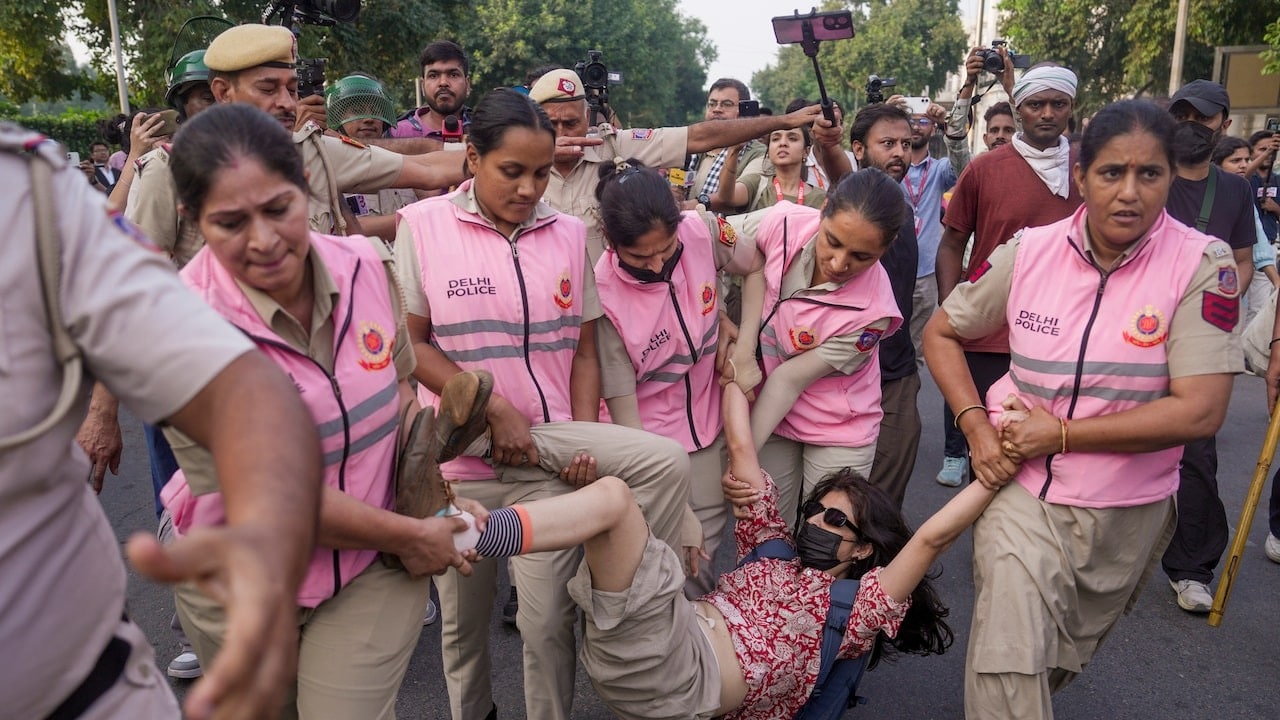
A protester being detained by police near Jantar Mantar in New Delhi on October 10: Photo: PTI
Kenya’s High Court struck its version down in 2015, in a case involving a man who had spent 21 months in jail because he could not raise the bond amount. “How, one may ask, do the police determine who is likely to commit an offence…? Is it by one’s dress? Their height or weight? Their manner of walking? Their hair?… If one is suspected of having committed a specific crime, then by all means let him be arrested and charged,” the judge said.
Pakistan, which inherited the same criminal procedure code as India, abolished its executive magistrates in 2001. That did not end peace bonds, but moved them to the judiciary. Governments there have since tried to make a U-turn.
“India should simply go by how the law has evolved in advanced economies and democracies,” Sheoran said.
For now, Das and Ranka’s case proceedings continue as they argue that peaceful protest is no breach. Bora is holding firm, willing to go to jail over signing the peace bond. Hearings continue.