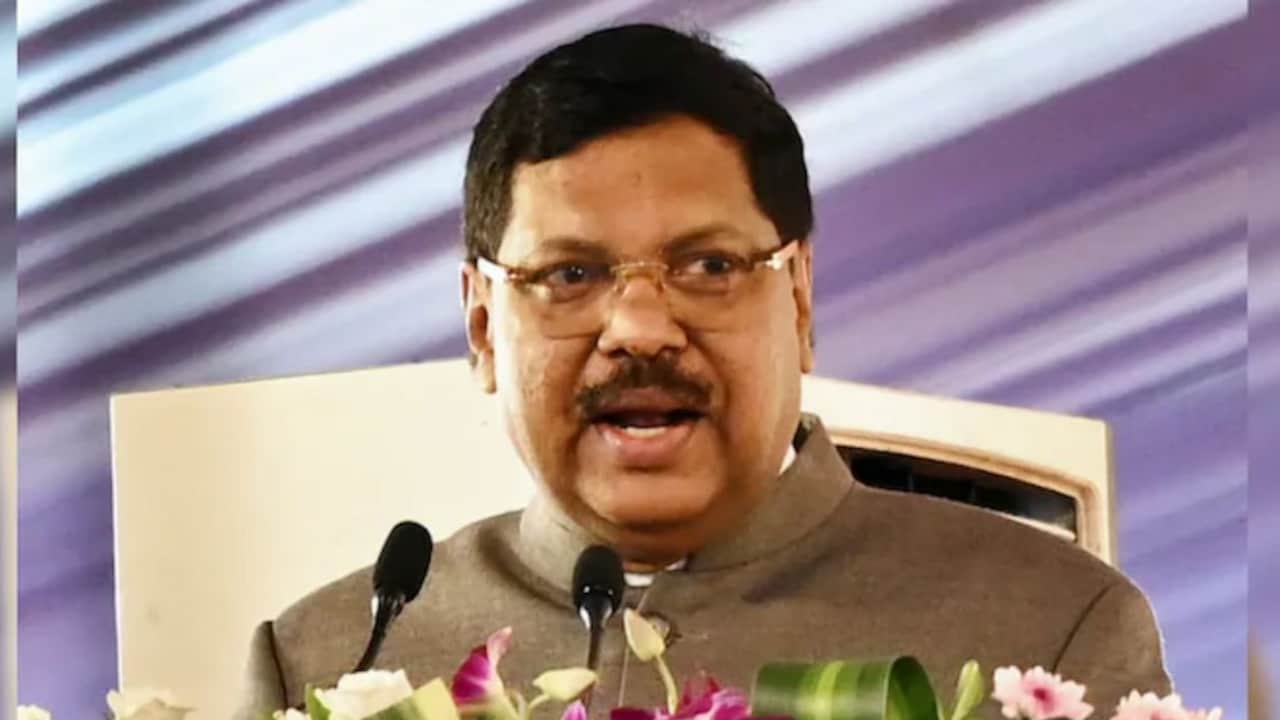
Former Chief Justice of India (CJI) BR Gavai on Wednesday said he had seen misuse of the Scheduled Castes and Scheduled Tribes (Prevention of Atrocities) Act, but that’s rare and cannot be a ground to strike down the law. He added that it’s for Parliament to amend the law with stringent penal action against those who file false complaints.
“Merely because the law is being misused can’t be a ground to do away with that law. The better course would be to find out the ways and means as to how the people are prevented from misusing the law,” Gavai, only the second person from a Scheduled Caste (Dalit) community to have served as CJI, told NDTV’s Padmaja Joshi in an exclusive interview.
“By way of an amendment, if the Parliament comes with a stringent penal action against persons who are misusing the law, (that) would be a better way,” he said.
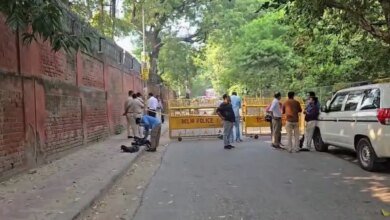
The remarks come amid a row over the death of a student by suicide at IIT Bombay, in which a professor has been booked under the SC/ST Act. Gavai declined to comment on that case expressly. “Any such comments, in my view, would turn the case into a media trial, and I have always been opposed to media trials,” he added.
#NDTVExclusive | Caste, Reservations & Fear In Classrooms: BR Gavai Speaks Out
The former CJI weighs in on the IIT-Bombay suicide case, the creamy layer debate for SC/ST reservations, and claims that teachers and employees are increasingly afraid to speak and act freely.… pic.twitter.com/DbFHcoPScG
— NDTV (@ndtv) September 23, 2026
On Fears Of Victimisation
Asked about faculty members at IIT Bombay who have said they are afraid to take classes, Gavai said such fears were overstated. “I don’t think that the Act has been so misused that every professor in a particular institution should be scared of going to those colleges. Fortunately, such incidents of misuse are not that common. We have seen it in very, very rare cases,” he said.
He said it’s up to political leaders to maintain harmony between two sections of society. “It should not be permitted to be converted into a clash between one section and the other section. Because the unity of the country is paramount,” he said.
‘Court Not Powerless’
Asked more generally whether the law is misused in some cases, he drew on his career as a lawyer and a judge, and said, “But this happens in even the (Section) 498A (of the erstwhile Indian Penal Code, about dowry harassment). Many of the relatives of the husband are roped in by the wife,” Gavai said, referring to the provision that’s now Sections 85 and 86 of the Bharatiya Nyaya Sanhita (BNS). “Similarly, in the Domestic Violence Act also, we find that many, many false allegations without any basis are made,” he added.
“But merely because the provisions of a particular statute are being misused, in my view, that can’t be a ground to hold that the statute is invalid law,” he asserted.
Gavai rejected the suggestion that the court should step in. “The Supreme Court’s powers under judicial review are very limited. We are not supposed to enact the laws. Enacting the law is the domain of the Parliament, the legislature,” he said.
“Only when such an Act has been found to be ultra vires the Constitution, the court can strike down such a law. And the provisions of the SC/ST Act have been found to be valid by the judgments of this court,” he said.
On whether arrest was mandatory once an FIR was registered under the Act, Gavai said, “No, no, if they find that these provisions have been misused only to harass them, the person can always knock the doors of the court, and the court is not powerless to give its protection.”
‘Creamy Layer’ Contention
Gavai also reiterated his view, set out in the Supreme Court’s 2024 judgment in ‘State of Punjab v Davinder Singh’, that a ‘creamy layer’ exclusion should apply to Scheduled Castes and Scheduled Tribes, too, in matters of reservation in education and jobs. He said he was heavily criticised by the people from his community for it.
“Unfortunately, society, at least the people from the Scheduled Castes, are not ready for that conversation,” he said. “Out of the seven (judges on that bench), four of us took a view that even in Scheduled Caste, Scheduled Tribe, the creamy layer concept has to be implemented.” There’s already such a provision in the Other Backward Classes quota.
“Persons who have reached a particular level, if they continue to enjoy the reservation, that is against the concept of social and economic justice as envisioned by Dr Ambedkar,” he said, invoking Bhimrao Ambedkar, the Dalit icon and jurist who led the drafting of the Constitution of India.
Gavai declined to comment on demands for reservation in the private sector, saying it was “within the domain of politicians”.