New Delhi:
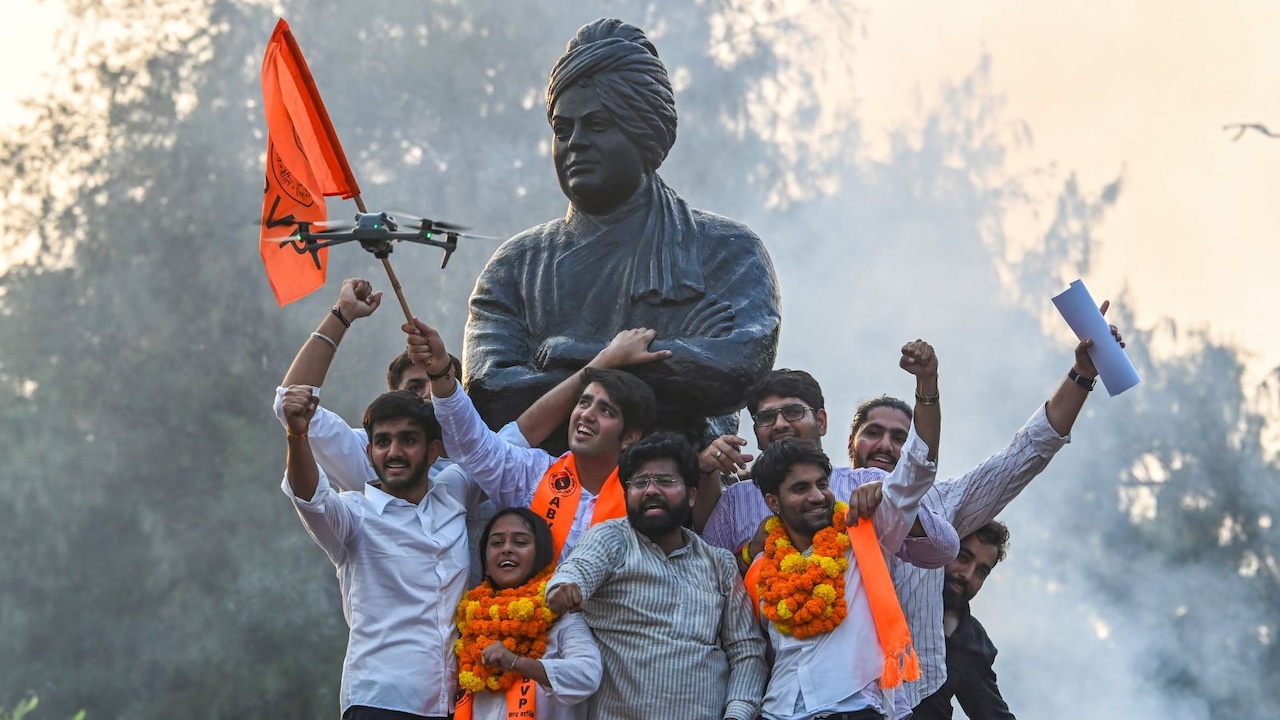
The Congress party’s student wing, National Students’ Union of India (NSUI), did not win a single seat in this year’s Delhi University Students’ Union (DUSU) election. Its rebel candidate did, taking the vice-president’s post by more than 13,000 votes after the party’s own leadership dropped him from the ticket. The Akhil Bharatiya Vidyarthi Parishad (ABVP) took the rest — president, secretary and joint secretary.
What followed was an internal reckoning, with Congress general secretary KC Venugopal calling an emergency meeting and Rahul Gandhi reportedly demanding an explanation from the NSUI’s in-charge, Kanhaiya Kumar.
Insiders say the difference between a Congress win and a Congress wipeout came down to two decisions the party’s top brass never made, naming Shokeen the official candidate and backing Vishesh Yadav over Gopal Chaudhary.
The president’s race and the joint secretary’s race were both tight contests. The NSUI finished third in both the joint secretary and vice-president races, with its official vice-presidential candidate polling behind NOTA, while its rebel candidate for joint secretary came second. Had the organisation entered the field united rather than divided, the outcome in at least one of these contests could easily have gone the other way. Instead, ticket distribution turned a winnable election into a clean sweep for the opposition.
Why This Election Mattered So Much
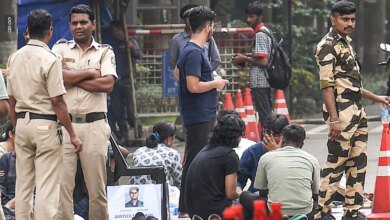
The run-up to polling day should have worked in Congress’ favour. Students held a large protest at Jantar Mantar over the NEET paper leak. Rahul Gandhi kept up a strong campaign against the government on education and jobs, which put pressure on the BJP-backed ABVP.
Days before voting, a private hostel near the university’s South Campus collapsed, killing several students. This added to the pressure on the ruling side. None of it helped NSUI at the ballot box. Hours after the results came in, Gandhi spoke at a separate student event in Indore called “Chhatron Ki Goonj”. But it was the DUSU result that everyone was talking about.
Attention has now turned to Kanhaiya Kumar, who has led the Congress student wing for three years. The party high command has reportedly asked him for a full report on what went wrong. Kumar, who started his own political career as a student leader, is now facing questions on how the tickets were given out, and why one of NSUI’s strongest candidates did not get one.
Read: ABVP Wins 3 Of 4 Delhi University Posts, Independent Makes History
NSUI sources say Shokeen was first asked to stand for president but did not want to. He told senior leaders he would rather contest for vice-president. Sources say he was worried he could not beat the ABVP’s Yash Dabas for president, since both men are from the Jat community and the same part of Delhi.
A senior NSUI source told NDTV, “Deepanshu was our strongest candidate this time. He had been active on campus for a long time and had a strong team behind him. That’s why we wanted to field him for the post of president and make him the face of our panel.”
The original NSUI line-up had Shokeen for president, Vijay Shankar Meena for vice-president, Namrata Chaudhary for secretary and Vishesh Yadav for joint secretary. When Shokeen was told this just before the deadline to withdraw nominations, he refused to stand for president. He pushed instead for the vice-president’s post and pulled out of the other three positions. Kanhaiya Kumar saw this as indiscipline, close to working with the opposition, and dropped him from the panel. Meena moved up to contest for president. Veer Chatrath, who was not on the original panel, was brought in for vice-president.
Jat votes carry weight in DUSU elections, and once Shokeen was out, the NSUI replaced Vishesh Yadav with Gopal Chaudhary for joint secretary to try to hold Jat votes together. Yadav responded by rebelling. A separate rebel candidate, Samarth Beniwal, had also entered the presidential race but largely stepped back from campaigning as the contest went on. By the time campaigning began, the NSUI camp was already in disarray.
Once word of the rebellion reached Delhi, Congress general secretary KC Venugopal called an emergency meeting, reportedly voicing frustration over how tickets had been handed out and noting that Rahul Gandhi wanted answers. Kanhaiya Kumar came under direct pressure. Also present were Sachin Pilot, Deepender Hooda, the national presidents of the NSUI and Youth Congress, and the Delhi Pradesh Congress chief, all instructed to do whatever they could to limit the damage once it became clear DUSU was slipping away.
Some youth leaders at the meeting reportedly floated the idea of formally declaring Shokeen and Yadav as official candidates, though this was never openly discussed. One person present described the election as having become “a mere formality”, with “so-called discipline and preserving one’s reputation” taking precedence over actually winning.
Sympathy Builds For Shokeen
As the campaign went on, support for independent candidate Shokeen kept growing, both on campus and online. He denied that NSUI had ever offered him the presidency. Veer Chatrath, the man chosen over him, is the son of Manish Chatrath, a national Congress leader who runs the party’s Indira Bhawan headquarters and is seen as close to the Gandhi family.
Shokeen’s own father works as a DTC bus conductor. His supporters used this difference a lot, framing the contest as grassroots workers being passed over for a “leader’s son”. The Samajwadi Party’s student wing added to NSUI’s troubles by naming Vishesh Yadav as its candidate for joint secretary.
Sensing the mood shift, NSUI put its full weight behind the presidential race. It paired Meena, who is from a tribal community, with national president Vinod Jakhar, who is Dalit, and framed the ticket around social justice.
Online sympathy for Meena grew, and the campaign worked to win over non-Jat voters. Meena led through most rounds of counting but lost in the end by around two thousand votes. In the vice-president’s race, ABVP’s Ishu Maurya could not beat Shokeen, while NSUI’s own candidate, Chatrath, finished behind NOTA. For secretary, ABVP’s Riya Chawri beat her NSUI rival by around seven thousand votes.
The joint secretary’s race turned into a three-way fight between ABVP, NSUI and Yadav’s independent campaign. After trailing for most of the count, ABVP’s Lakshya Raj moved ahead in the final round. Yadav came second, and NSUI’s Gopal Chaudhary came third. NSUI has since alleged rigging, though the wider picture points to a string of internal mistakes that left the party exposed.
A leader close to Kanhaiya Kumar pushed back on the criticism. He argued that DUSU elections have long been shaped by an informal network of senior figures and caste-based calculations, who try to fix candidates and posts to suit themselves. Part of that arrangement, he said, was to install ABVP’s Yash Dabas as president and Shokeen as vice-president, an outcome he claimed has been fixed this way for years.
He said, “Should we become mere election-handling machines, chosen by these caste-regional lobbies? We did not succumb to their pressure this time.” He also admitted that senior party leaders failed to accommodate the rebel candidates when they had the chance. But he had no clear answer for why Chatrath was fielded in the first place, or why leaders did not step in once it was clear early on that he would lose.
The mishandling of one ticket left NSUI without a single seat in the country’s largest student union election. This is being seen as a setback for both Congress and Rahul Gandhi personally. A more sensible approach to ticket distribution, observers say, could have given Gandhi a real political win to point to from the capital.
Kanhaiya Kumar himself has a history in student politics, having become JNU Students’ Union president in 2015 as a left-aligned AISF candidate, winning largely on the strength of his oratory despite limited organisational backing.
NSUI president Vinod Jakhar has a similar background. He rebelled against NSUI to win the Rajasthan University Students’ Union election as an independent in 2018. Both men are experienced in student politics, but sources say the relationship between them has been strained, and that this tension is at the root of the confusion that ultimately cost NSUI the election.